Book Now
Price from
US$1799

Everest Base Camp Yoga Trek-15 Days

1087 reviews in TripAdvisor
238 reviews in Google
19 reviews in TrustPilot
Trip Facts
Duration
15 Days
Difficulty Level
Moderate
Maximum Altitude
5545 m
Starts
kathmandu
Ends
kathmandu
Group Size
2+
Activities
Trekking, Historical And Cultural Excursion And Yoga As Per Itinerary
Season
March-June and Sept-Dec

Introduction: Everest Base Camp Yoga Trek

Are you seeking the spiritual experience of penancing under the towering mountains abroad? Are you searching for an opportunity to explore Mother Nature's natural and cultural splendors while practicing yoga? Then, the Everest Base Camp Yoga Trek in Nepal is one of the best places to revitalize your mind, body, and soul. 

Highlights of Everest Base Camp Yoga Trek

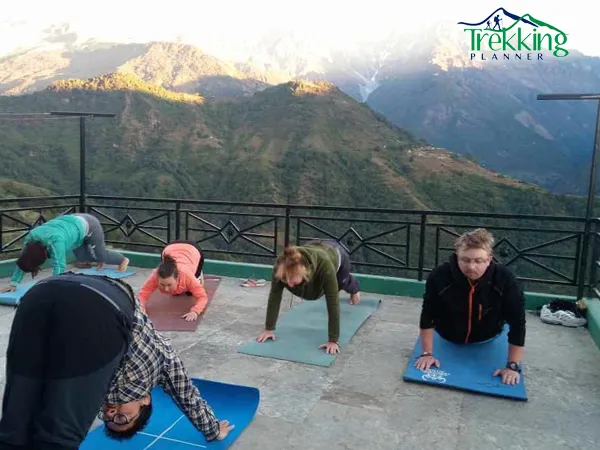
  • Daily yoga sessions and meditation facing some of the world’s famous mountain in the morning and the evening.
  • Guided sightseeing tours in UNESCO World Heritage sites in Kathmandu.
  • Witness an aerial view of the vast landscape with lush valleys and hills.
  • Return domestic flights from Kathmandu to Lukla.
  • Daily delicious healthy meals, vegetarian and non-vegetarian.
  • Fourteen nights of accommodation (11 nights on the entire board in the mountain and 03 nights on BB in Kathmandu).
  • Explore highlander Sherpa villages and monasteries of impressive culture and age-old customs.

Advantage of booking EBC Yoga Trek with Trekking Planner Nepal

  • Private vehicles pick up and drop off passengers at all airports.
  • First-aid kit box.
  • Trekking Planner’s down jackets, t-shirt, and cap, if necessary.
  • Arrangement of emergency evacuation service (you should have insurance for emergency evacuation, which your travel insurance company will pay).
  • We use an oximeter to check your pulse, oxygen saturation, and heart rate, and we can provide oxygen cans as per request.
  • Our company provides sim cards for travelers, so there won’t be any networking issues.

What is yoga trekking, and what are the benefits?

Yoga is an ideal concoction and an excellent amalgamation of the subtle soul with the supreme soul. Yoga Trekking combines the inner self with the natural elements. It ideally creates a fulfilling adventure that revitalizes senses for greater relaxation and deeper awareness lapped under the lofty Himalayas. The benefits that yoga possesses are diverse subtle and immensely supreme. It improves flexibility and strength. Yoga stretches your muscles and reduces stress, anxiety, and low back pain. It also improves your sleep. Moreover, the Yoga Trekking Program is suitable for all age levels and an opportunity of a lifetime to gain sound health and mental well-being.
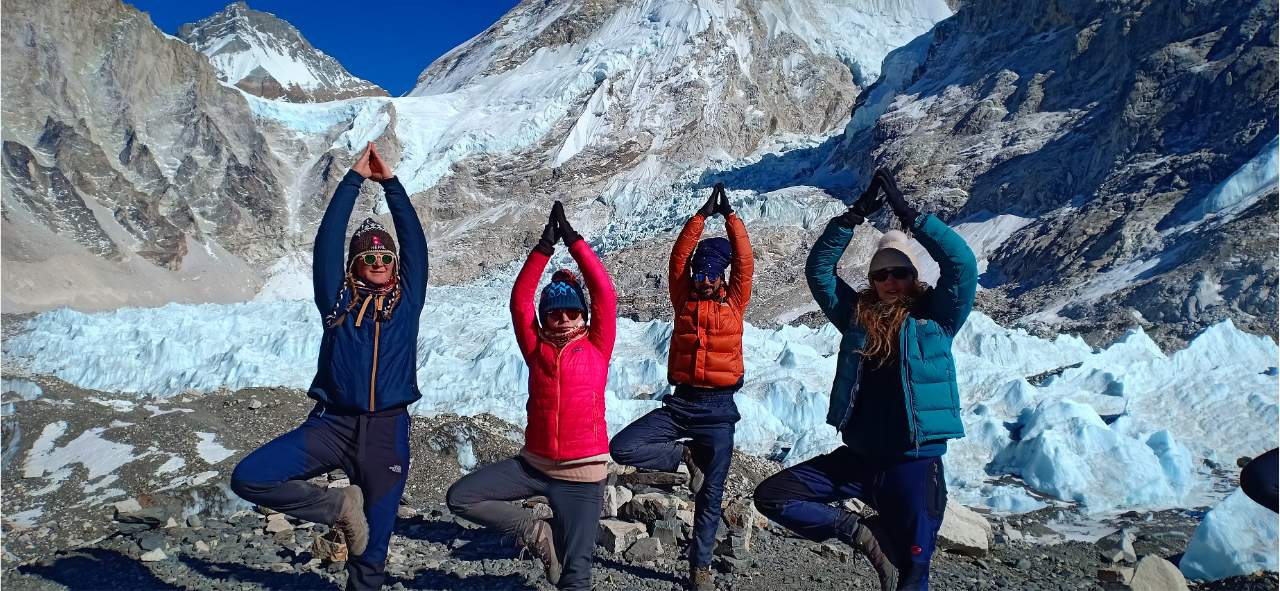
Yoga in everest

What is the specialty of Everest Base Camp Yoga Trek?

The sacred land of Nepal is believed to be the origin place of Tantra, Yoga, and Meditation. It is believed that Yoga was ardently practiced some 28,000 years ago in Nepal. The idea behind selecting the Himalayan region of Everest Base Camp Yoga Trek is for its distinct natural habitat. Performing Yoga under the shades of the mighty Everest is a thrilling experience that rejuvenates your soul mind and body. It is a distinctively intimidating experience where you can explore the beauty outside and within the self. 

Everest Base Camp Yoga Trek offers you comprehensive physical, mental, and spiritual benefits. It gives you physical health, mental peace, and spiritual awareness. For ages, mountains have been known to have a divine energy source our ancient sages used to practice yoga and meditation. Trekking through the Himalayas is a splendid experience. To be spiritual is to adapt nature to unite you with it. Nepal Trekking Planner exclusively offers a wonderfully spiritual Everest Base Camp Yoga Trek, where we combine culture, nature, landscape, and spirituality into a lifetime experience. During the trekking, our days start with the practice of yoga under the guidance of an instructor. The guide and yoga instructor will be traveling with you during the trek.

Each day of your Everest Base Camp Yoga Trek begins with channelizing the mind and body to be present in the peaceful environment of the mountain. Your Yoga Trek begins in Kathmandu. It is not only the capital city but fascinating and one of the ancient cities which is known for its incredible beauty. We will spend a day touring the beautiful sites around the Kathmandu valley which is listed as a world heritage site of UNESCO.

This uniquely exclusive trek tour is your best chance to meet diverse flora and fauna all along your trek. Besides observing pack animals, you get to see musk deer, birds, flowers, and other beings of the Himalayan ecosystem. The key to immersing your-self in the full colors and flavors of the Everest Base Camp region is to go slow. It is advisable to pace your walk in such a way that you absorb and store the refreshing memories of nature around you. During your 15 days of trekking you will indulge in summiting the Everest Base Camp. Also, catch hold of awe-inspiring glimpses of glorious mountainous landscapes and various peaks from the renowned Kalaphatar. Later we will make our way to Kathmandu through a scenic flight from Lukla, Tenzing–Hillary Airport.
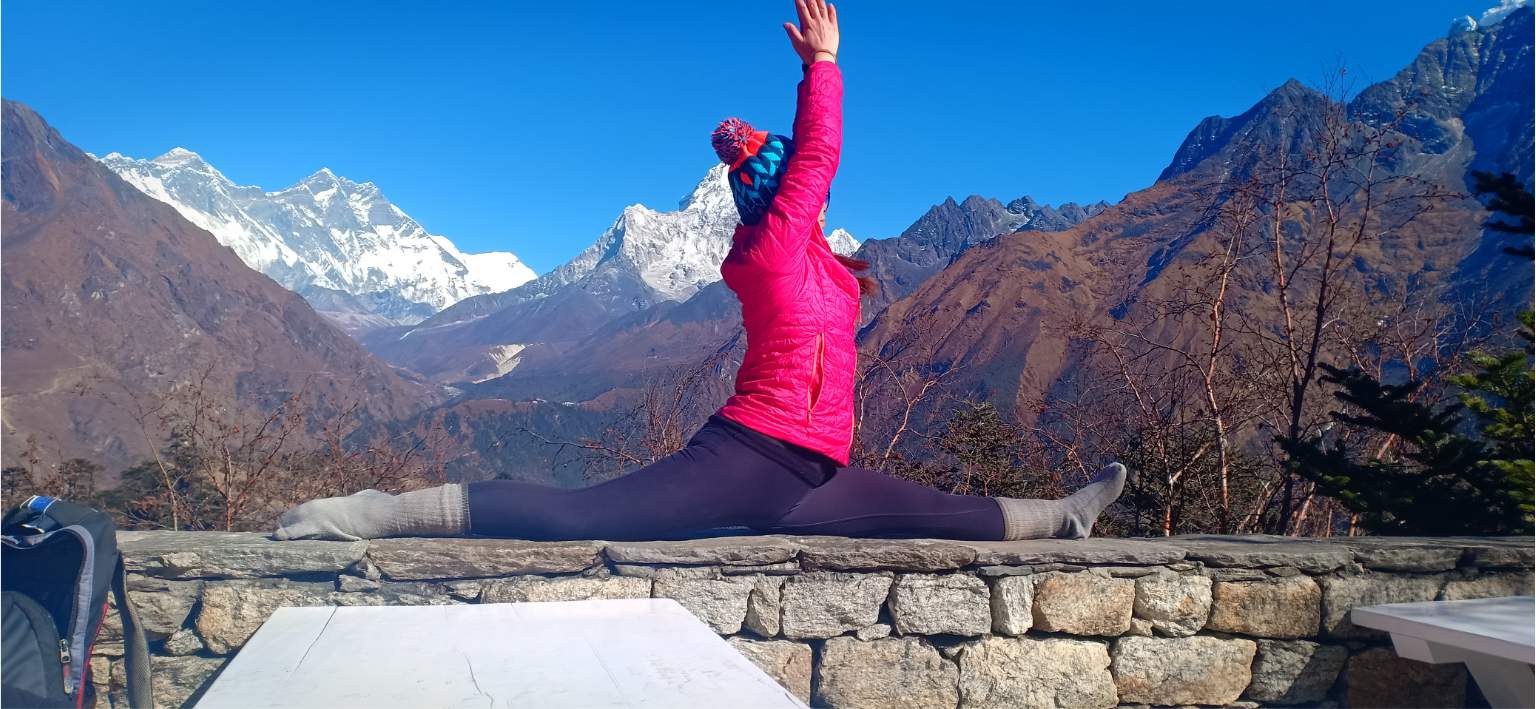

 

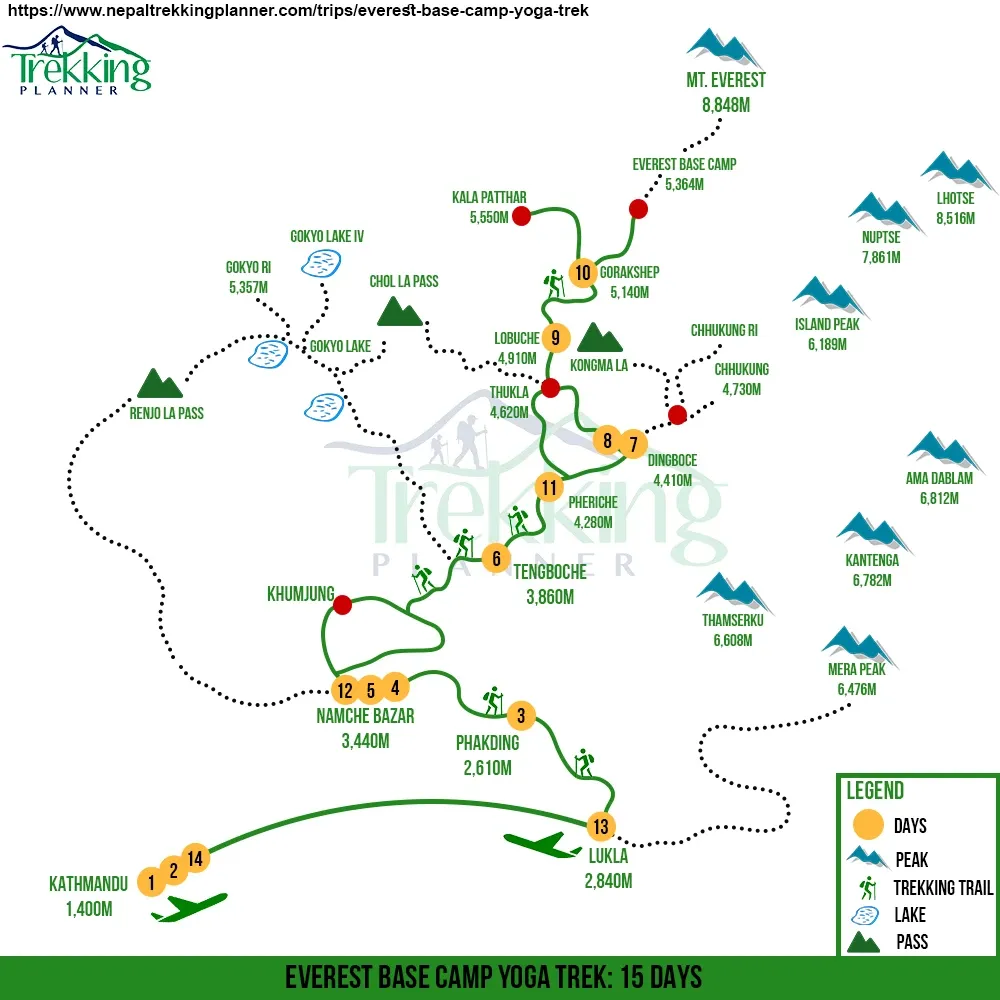
Everest Base Camp Yoga Trek-15 Days Itinerary

Day 1

Arrival in Kathmandu (1350m/4430ft)

Max Altitude: 1,350m (4,429ft)
Meals: welcome Dinner
Accommodation: Hotel Lo Mustang,/Hotel Thamel Park/Hotel Moonlight

A representative of Nepal Trekking Planner will receive you at the Tribhuwan International Airport in Kathmandu and escort you to the hotel. After you complete the necessary formalities at customs, you will have dinner and enjoy the warm hospitality of the hotel staff. You will stay overnight in Kathmandu.

Day 2

Full day in Kathmandu; 5/6 hrs tours

Max Altitude: 1,350m (4,429ft)
Meals: Breakfast
Accommodation: Hotel Lo Mustang,/Hotel Thamel Park/Hotel Moonlight
  • Morning Yoga Session
  • Day city tours: Pashupatinath Temple,  Boudhanath Stupa, Kathmandu Durbar Square, and Swayambhunath (popularly known as Monkey Temple) 
  • Evening Meditation Session

Exploring this culturally rich capital city of Nepal and its heritage in guided sightseeing shall be the main attraction of today’s itinerary. The main attractions of this sightseeing are the ancient Buddhist stupa of Swayambhunath, also known as the Monkey Temple, known for its unique blend of Hinduism and Buddhism, besides the beautiful view of Kathmandu city from its premises. We then head on to the Boudhanath Stupa, one of the largest stupas in the world, which has the Tibetan community, Sherpas, and tourists circumambulating around it alike every day. Get immersed in the peaceful Buddhist mantras and observe the pilgrims paying their respect to Lord Buddha. We shall then visit the Hindu sacred pilgrimage of Pashupatinath Temple, in the complex where you shall find several small temples, statues, and ancient heritages. People find the meaning of life when they observe the open cremation at the bank of the holy Bagmati River, get blessings from the sadhus draped in saffron and holding tridents, and feel positivity. Stay overnight in Kathmandu.

Briefing: Later in the afternoon, the whole group is briefed about the trek. We are checking all the equipment for the trek. If something is not appropriate enough, we can provide, rent, or help to buy it here.

Once all the equipment is checked and we are sure you will go up there well dressed, we will have the welcome dinner with the whole group.

Day 3

Flight to Lukla (2,828 meters/9,279 feet) 35 meters and trek to Phakding (2,780 meters/9,121 feet - 3-4 hours walk); walking Distance: 9 km / 5.50 miles

Max Altitude: 2,828m (9,278ft)
Meals: Breakfast + Lunch + Dinner
Accommodation: See you Lodge
  • Morning Yoga Session

Organize your trekking equipment and pack your bags the day before, as you will leave early for Lukla, which is the gateway to Everest. Led by your trekking guide, you will reach Lukla from the scenic flight in a carefully loaded twin otter that shall mark the adventure in the region.

Aerial view of the vast landscape with lush valleys and hills, view of the glittering mountains, serpentine-shaped rivers weaving through the settlements and valleys, and a dramatic sight of the terraced hills make this flight entertaining.

After landing in Tenzing–Hillary Airport (LUA) in Lukla and meeting with other trek members, you embark on an introductory trek to Phakding. Using the route traditionally used by various communities and traders to trade with Tibet, you will move ahead on the trail. Trek begins with the steep descent to Chheplung village past stone walls, you will reach Thado Koshigaon.

Crossing a suspension bridge, the journey shall continue on to Phakding through small settlements, a viewpoint of Kusum Kangaroo, past prayer wheels, and prayer flags, dense forest, diverse flora, and fauna, besides the caravan of trekkers and climbers, porters, and locals in and out of the Khumbu valley. Your meal plan for today includes breakfast, lunch, dinner, and an Evening Meditation session. staying overnight in Phakding.

Day 4

Trek to Namche Bazaar (3,440 meters/11,287 feet) 5- 6 hrs walk, walking Distance: 12 km / 7.45 miles

Max Altitude: 3,440m (11,286ft)
Meals: Breakfast + Lunch + Dinner
Accommodation: Hotel Himalayan Culture Home/Moonlight Lodge

Your trek continues along the majestic and torrential Dudh Koshi River towards the ancient trading hub of Namche Bazaar. Starting with the first view of Kongde Ri Peak and through some suspension bridges, the trail turns to the beautiful Benkar Valley past a beautiful waterfall, an ancient gompa, and lush forests decorating the surroundings.

At Benkar, you can enjoy the view of Thamserku (6,623 meters) and the sacred Khumbila Peak (5,765 meters) before stopping briefly at Monjo, the gateway to Sagarmatha National Park. Moving ahead through Jorsale village, you will reach Larja Dobhan, crossing the high suspension bridge over the confluence of Dudh Koshi and Bhote Koshi, and embark on the trail that goes steeply to Namche Bazaar.

En route to Namche, you will have the view of majestic peaks such as Everest (8,848 meters), Lhotse (8,516 meters), and Nuptse (7,879 meters), providing some relief during the ascent on the steep section.

Namche Bazaar is famous for being the buzzing Sherpa town, and the perfect town for acclimatization and a hub for day hikes, having superb surroundings and scenery as well as rich cultural heritage. Your meal consists of breakfast, lunch, dinner, and staying two nights in Namche Bazaar.

Day 5

Rest day at Namche Bazaar/ acclimatization day

Max Altitude: 3,440m (11,286ft)
Meals: Breakfast + Lunch + Dinner
Accommodation: Hotel Himalayan Culture Home/Moonlight Lodge

In the day set aside for rest, you shall take on activities that shall help you acclimate faster for your trekking journey ahead. In a town known for its colorful and lively nature, Namche has interesting shops and a buzzing Saturday market, tasty cuisines, and beautiful scenery, as well as warm, welcoming Sherpa people and the unchanged characteristics of this town for ages.

Visit the Sherpa cultural museum for detailed information on mountaineering in the region, flora and fauna, the history and geography of the Himalayas, and the culture and traditions of the local inhabitants. Before the weather creates a hurdle, get involved in an early morning hike to one of the nearby destinations. %Everest View Hotel provides a marvelous view of Mount Everest, Lhotse, the beautiful Ama Dablam, and other nearby peaks. The twin villages of Khumjung and Khunde, known for ancient monasteries with old age heritages, and a school and hospital built by the Edmund Hillary Foundation, are popular day hike destinations from Namche Bazaar.

Day 6

Trek to Tengboche (3,850 meters/12,632 feet) 4-5 hrs walk, walking Distance: 10 km / 6.21 miles

Max Altitude: 3,850m (12,631ft)
Meals: Breakfast + Lunch + Dinner
Accommodation: Tengboche Guest House/Hotel Himalayan Culture Home

Trekking to the higher altitudes, you shall start your walk with a short but steep climb out of the Namche Bazaar before trekking on a fairly leveled trail to reach the settlements of Kenjoma and Sanasa through the dense forest and other vegetation, view of the mighty Everest and the occasional exchange of greetings with fellow trekkers from other expeditions.

After the trail junction leading to the Gokyo Valley and the Everest base camp, you head down to the riverbed of the mighty Dudh Koshi River and climb onto Phunke Tenga through several bridges and some hamlets. Marked by water-driven prayer wheels, Phunke Tenga generally serves as the resting place before taking on the steep trail leading to Tengboche.

In a climb of around one and a half to two hours, the ascent to Tengboche takes you on a twisting trail built on the hill through a rhododendron forest. Take it easy when you go for such an uphill climb, as you are now heading to a higher altitude where you definitely won’t want to be affected by altitude mountain sickness.

In Tengboche, you will visit the ancient monastery famous for the celebration of the Mani Rimdu festival, a huge statue of Lord Buddha, intricate wall paintings and peaceful chants by the monks, the breathtaking scenery of the majestic mountains including Kwangde, Tawache, Everest, Nuptse, Ama Dablam, Lhotse, Kantega and Thamserku Peaks where blooming rhododendron flower contrasts with its color.

Day 7

Trek to Dingboche (4,350 meters/14,272 feet) 4-5 hours walk, walking Distance: 12 km / 7.45 miles

Max Altitude: 4,350m (14,271ft)
Meals: Breakfast + Lunch + Dinner
Accommodation: Dingboche Resort

Leaving the amazing sunset and sunrise of Tengboche, today you shall head for another interesting village of Dingboche. Through the forest, you descend from tengboche to reach the village of Deboche which provides beautiful views of lofty Everest, Ama Dablam, Lhotse, Nuptse, and others.

You head on down the trail through the sighting of Musk Deer, Monal, and Blue Sheep and cross the exciting suspension bridge over the Imja River before reaching the settlement of Pangboche. An ancient stupa in the upper Pangboche, surrounded by trees, is a stoppage worth a short visit. Ahead in the trail, they have alpine vegetation as you move through the landscape with scrub juniper and tundra until you reach Dingboche.

The trekking section through Somare is rather flat, after this village, you cross a suspension bridge and follow the Imja River upstream as you part your way from the trail to Pheriche. Further ahead in the trail, you will reach Dingboche where the trail from Lobuche to the Island Peak climb meets.

Dingboche is a small village with stone-walled houses, cultivation fields, and an exquisite view of Lhotse, Island Peak, and Ama Dablam. Your meal plan for today consists of breakfast, lunch, dinner, and two night stay in Dingboche.

Included standard accommodation and  meals (Breakfast + Lunch + Dinner), Tea/Coffee

Day 8

Rest day in Dingboche/ acclimatization day

Max Altitude: 4,350m (14,271ft)
Meals: Breakfast + Lunch + Dinner
Accommodation: Dingboche Resort

In another day of rest and acclimatization in this trekking expedition, you shall have an important day before reaching the ultimate destination of this trip. The day will be utilized by short hikes to higher altitudes to adapt yourself to higher altitudes. Hike to Nangkartshang Gompa provides the trekkers with breathtaking views, the opportunity to get insight into the heritages such as intricate paintings, Thangka and Yeti scalp, and hand.

Explore the valley formed by the mighty Imja River and the beautiful trail leading to the Island peak. A short hike to the hill behind Dingboche is another option that provides us with a view of a couple of six-thousand peaks. After exploring the breathtaking surrounding, and capturing memories of the valley, you return for the overnight stay. Your meal plan includes breakfast, lunch, and dinner in preparation for the next day's trek.

Day 9

Trek to Lobuche (4,910 meters/16,109 feet) 4-5 hours walk, walking Distance: 12 km / 7.45 miles

Max Altitude: 4,910m (16,108ft)
Meals: Breakfast + Lunch + Dinner
Accommodation: Oxygen Altitude Home

Trekking to the higher altitudes, you shall start your walk with a short but steep climb out of the Namche Bazaar before trekking on a fairly leveled trail to reach the settlements of Kenjoma and Sanasa through the dense forest and other vegetation, view of the mighty Everest and the occasional exchange of greetings with fellow trekkers from other expeditions.

After the trail junction leading to the Gokyo Valley and the Everest base camp, you head down to the riverbed of the mighty Dudh Koshi River and climb onto Phunke Tenga through several bridges and some hamlets. Marked by water-driven prayer wheels, Phunke Tenga generally serves as the resting place before taking on the steep trail leading to Tengboche.

In a climb of around one and a half to two hours, the ascent to Tengboche takes you in a twisting trail built on the hill through a rhododendron forest. Take it easy when you go for such an uphill climb,b as you are now heading to a higher altitude where you definitely won’t want to be affected by altitude mountain sickness.

In Tengboche, you will visit the ancient monastery famous for the celebration of the Mani Rimdu festival, a huge statue of Lord Buddha, intricate wall paintings and peaceful chants by the monks, the breathtaking scenery of the majestic mountains including Kwangde, Tawache, Everest, Nuptse, Ama Dablam, Lhotse, Kantega and Thamserku Peaks where blooming rhododendron flower contrasts with its color.

Day 10

Trek to Gorak Shep (5,180 meters/16,995 feet) about 3 hours walk) and Everest Base Camp (5,364 meters/17,600 feet) 2-3 hours walk., walking Distance: 15 km / 9.32 miles

Max Altitude: 5,180m (16,994ft)
Meals: Breakfast + Lunch + Dinner
Accommodation: Hotel Everest Inn

This is the day you have been waiting for! Today, you shall be heading for the Everest Base Camp as the destination. Be careful of the acute mountain sickness at this altitude and trek accordingly. The trek from Lobuche begins early in the morning after breakfast.

You reach Gorakshep after trekking over the lateral moraines of the Khumbu Glacier past the Italian research center, and the rocky paths, cautiously avoiding the ice pinnacles and occasional crevasses in the Khumbu region. The trail ascends over the Lobuche Pass and then reaches the section sandwiched by the large glaciers of Changri Nup and Khumbu.

Shortly ahead is the awaited Gorakshep, your stop for lunch and the place of an overnight stay for today. After refreshment, you will head for your ultimate destination, the Everest Base Camp. Through the rocky path and on the New Moraine Route, you trek to the base camp. Flooded with the tents and camps of climbers in the peak season, Everest Base Camp is the destination of a lifetime.

The euphoric feeling of being there is beyond words, and to be in the lap of the world’s tallest peak is something extraordinary. After capturing the memories of these extraordinary moments, you return back to Gorakshep. You shall get completely lost in the beauty of the sunset visible from the base camp. Your meal plan includes breakfast, lunch, dinner, and an overnight stay in Gorakshep.

Day 11

Trek to Kala Patthar (5,545 meters/18,193 feet) 2-3 hours walk and to Pheriche (4,280 meters/14,042 feet) 5-6 six hours walk; walking Distance: 13 km /8.07 miles

Max Altitude: 4,280m (14,041ft)
Meals: Breakfast + Lunch + Dinner
Accommodation: Pumori Lodge

Get ready for another beautiful trekking day on the roof of the world as you trek to the Kala Patthar before making a return to the lower altitudes. Before the day breaks, you shall today get ready with your equipment and go for one of the most beautiful sunrises you will ever see. In a straight trek from Gorakshep to this small brown hill dwarfed by the Himalayas, you shall have a close-up view of the mighty Everest.

Ideal for photographers, the sight of the Himalayas including Mount Pumori, Lhotse, Nuptse, and Changtse Peaks, the majestic Khumbu Glacier, and the Southeast face of Everest. Reach for the higher point of this black hill and capture as many memories as you can. After this extraordinary scenery, trek down to Gorakshep for lunch before heading down to Pheriche.

You will descend gradually from Gorakshep, in ups and downs, and through the rocky terrain before taking an exit from the vicinity of Everest at Dughla and walking straight to Pheriche. Through the damp valley floor covered with moss, from the alpine vegetation to the sub-alpine vegetation, this trek is mostly a downhill walk. Your meal plan includes breakfast, lunch, dinner, and an overnight stay in Pheriche.

Included standard accommodation and  meals (Breakfast + Lunch + Dinner), Tea/Coffee

Day 12

Trek to Namche Bazaar (3,440 meters/11,287 feet) 4-5 hours walk, walking Distance: 14 km /8.69 miles

Max Altitude: 3,440m (11,286ft)
Meals: Breakfast + Lunch + Dinner
Accommodation: Hotel Himalayan Culture Home/Moonlight Lodge

The return from the vicinity of Everest continues as you depart from the beautiful Periche to the busy hub of Namche Bazaar. In this mostly downhill trek, you are now in the company of the torrential Dudh Koshi River. Your trek will be rather gradual as you won’t want to put much strain on your shaky legs and ankles.

In this busy trekking trail, you shall encounter a caravan of fellow trekkers, porters, locals and their pet animals like Yak used for transporting goods so make sure you give way to them.

Through the beautiful and dense forests, waterfalls, exciting, and sometimes vertiginous suspension bridges festooned with prayer flags, flat and bumpy trails, gompas and monasteries, rural settlements, and the culture and traditions practiced there are some of the major highlights of this section of the trek.

Water-driven prayer wheels, viewpoints of the Himalayas, sights of rare wild animals, and strenuous stone steps shall take you to the destination of Namche Bazaar. Explore the busy streets of this ancient trade point and the current tourist hub as you take a rest for today in this beautiful village. Your meal includes breakfast, lunch, dinner, and an overnight stay in Namche Bazaar.

Included standard accommodation and  meals (Breakfast + Lunch + Dinner), Tea/Coffee

Day 13

Trek to Lukla (2,828 meters/9,279 feet) 5-6 hours walk, walking Distance: 21 km /13.0488 miles

Max Altitude: 2,828m (9,278ft)
Meals: Breakfast + Lunch + Dinner
Accommodation: Hikers Inn/Everest Plaza Lodge/Sonam Lodge

This section of the trek is the last of such trekking in this adventurous journey that climaxed in the base camp of Everest. Descend on a steep trail out of the Namche Bazaar to descend the riverbed of the confluence of Dudh Koshi and Bhote Koshi River, and after crossing over the high suspension bridge, you reach Monjo, where you exit the Sagarmatha National Park.

Through the beautiful Benkar and past waterfalls, several suspension bridges, unique, busy, and interesting villages, including the popular ones such as Phakdng, Ghat, Nursing, and Chheplung, Mani walls, and prayer wheels, you trek up to the hill town of Namche Bazaar.

The beautiful and humongous Himalayas overlooking the entire trail act as the motivation for trekkers; they find purpose in trekking in the sight of the mountains. After reaching Luka, get yourself relaxed and explore the surrounding areas of the hotel, if you are interested. Your meal plan consists of breakfast, lunch, dinner, and staying overnight in Lukla.

Day 14

Fly back to Kathmandu (1,350 meters/4,430 feet) about 35 min flight

Max Altitude: 1,350m (4,429ft)
Meals: Breakfast and farewell dinner
Accommodation: Hotel Lo Mustang,/Hotel Thamel Park/Hotel Moonlight

Today, you will return to the medieval capital city of Kathmandu after an adventurous stay in the Khumbu Everest region. Due to the weather-related disturbances during the day, you will take on the flight that starts early morning from Lukla. Over the vast landscape, lush hills and valleys, perennial rivers, and the sight of the glittering Himalayas, the flight of around 35 minutes brings you back to the civilization of Kathmandu Valley.

You will be transferred to the hotel of your stay for the much-deserved rest after enduring a rather strenuous trek in the Khumbu region. Later in the evening, you may stroll around in the streets of Thamel and the surrounding areas. Your meal plan includes breakfast and farewell dinner, and an overnight stay in Kathmandu.

Day 15

Final departure

Meals: Breakfast

Your Everest Base Camp in the beautiful Khumbu region and the vicinity of Mount Everest comes to an end today. You may go for some last-minute souvenir shopping for your near and dear ones in your native place. Extend your trip if you want to try Trekking Planner’s other packages in this land of adventure at the foothills of the Himalayas.

You shall be escorted to the Tribhuvan International Airport (KTM) at least three hours prior to your flight schedule. Trekking Planner’s representative shall assist you with your departure. They hope that the adventure in this land of mysticism has created a strong and positive impression about this nation, enough to bring you back again. Have a safe and happy journey ahead.

Everest Base Camp Yoga Trek- 15 Days has a standard daily itinerary to ensure a safe and enjoyable trekking experience. However, the length of the trek can vary depending on trekkers' physical fitness, acclimatization needs, and pace. 

Similarly, some designated overnight stops can change depending on the availability of rooms, lodge facilities, and local conditions. The itinerary may need to be adjusted in case of unforeseen circumstances such as weather changes, landslides, flight delays, or difficult trail conditions. In such events, the trek leader and head guide, acting on behalf of Trekking Planner Nepal, will have full authority to make decisions in the group's best interests.

Likewise, due to the possibility of flight delays or changes in the Lukla flight, especially during the peak season or in case of poor weather conditions, we strongly recommend trekkers to arrive in Kathmandu at least one or two days before the beginning of the trek. The buffer time will allow for better adjustment and flexibility, ensuring a timely Lukla flight and helping trekkers settle before the adventure begins.

Dates & Availability

Trip Duration
15 Days
Trip Starts & Ends Point
kathmandu / kathmandu
Plan your trek schedule
  • This trip departs every day of the year.
  • This trip is fully customizable. We can customize the trip as per your needs. Don't hesitate to get in touch with us.
  • This trip is available on a Fixed Departure and a Private Group Basis.
  • This trip can be booked privately if you travel solo, personally, or with family.
  • Have a big group? We can help as per your needs.
  • We can help you make it fit your budget.
  • We accept instant booking and online payment.
  • If the given date is not appropriate for you, please contact us.
  • Trekking Planner also organizes various trips in small groups that can suit you. 
  • We recommend you reserve a seat by booking with us immediately for a beautiful experience. 
  • (Call/email now for a private trip, [email protected], Mobile +977 98510 71767 (24 hrs) - WhatsApp, WeChat, and Viber)

Cost Details

Trip Includes

  • All airport pick up and drop off by private vehicle.
  • Welcome dinner in an authentic restaurant.
  • 03-night twin/double sharing deluxe accommodation with breakfast at a 3-star hotel in Kathmandu.
  • Guided sightseeing tours in Kathmandu with private vehicles (entrance fees are extra).
  • Kathmandu/Ramechhap to Lukla to Kathmandu/Ramechhap by flight.
  • National Park entrance fee and Trekkers’ Information Management System( TIMS card).
  • Professional Yoga teacher/01 guide, English speaking, licensed insured, registered, salary, food, and accommodation paid.
  • 02 guests to 01 porter with their insurance, salary, food, accommodation, and equipment.
  • twin best available lodge accommodation on the mountain during the trekking.
  • Three meals a day; breakfast, lunch, dinner, and tea/coffee during the trekking.
  • 30 min sound healing after trekking.
  •   First aid kit.
  •  Yoga mat for each member.
  •  Trekking Planner’s sleeping bag, down jackets, T-shirt, Cap, duffle bags, city and trekking route maps – if necessary.
  •  Arrangement of emergency evacuation service (should have insurance for emergency evacuation and will be paid by your travel insurance company).
  •  Oximeter to check your pulse oxygen saturation and heart rate twice daily during the trek (very useful to check Altitude Mountain Sickness(AMS) symptoms). This helps ensure your trek is as safe as possible.
  •  One-hour complimentary spa/massage in Kathmandu after the trek.
  • All applicable government and local taxes per the itinerary.

Trip Excludes

  • Your Nepal Visa fees.
  • All the international airfare from and to Kathmandu.
  • Lunch and Dinner in Kathmandu.
  • Personal travel and health insurance, insurance for helicopter evacuation.
  • In case of extra nights' accommodation, lunch and dinner in the city due to early arrival and late departure as well as early return from trekking (due to any reason) than the given time period of the itinerary.
  • Your personal expenses such as laundry, baggage charge, phone calls, battery recharge, bar and beverage bill, boiled or bottled water, hot and cold shower, extra porter, etc.
  • Tips to the trekking crews and drive.
  • Extra expenses due to flight delays, strikes, weather conditions, or any event out of our control.

Interactive Map

StartMid DaysEnd

Infographic Map

Download

Altitude Chart

Essential Information

Which is the best Season or time for Everest Base Camp Yoga Trek?

Primarily the Everest Base Camp Yoga Trekking is available all around the year. Especially the seasons ranging from March to May and September to December are considered to be one of the best times for doing yoga trekking. However, Nepal Trekking Planner offers silent yoga retreats at other times as well. If yoga flows in your veins then join Nepal Trekking Planner to get a distinctly divine yoga experience. Your safety up into the mountains is our prime concern. We are always committed and strive to give you the best while connecting your soul and mind with the mountains and their unparalleled beauty.

Climate and Weather during Everest Yoga Trek

Himalayan climate can be unpredictable sometimes even in good best seasons, where April and May to the first week of June will be the best time during spring times when days are longer with enough sunlight hours.

Morning and night time as well in shade can be cold and much freezing temperatures around higher areas above 3,000 m.

Other months from September to November are another great time for treks around Kanchenjunga base camp and other areas of the Himalayas, when days are clear for views and to summit the top of the peak, although much colder months of the autumn season with extreme cold during morning and night time, where sunlight is much shorter.

Yoga in everest

Everest base camp area Local Culture and Religion

Sherpa is the native of Everest and other higher Himalayan regions, the word “Sherpa” comes from the Tibetan language. As East for Sher and Pa means people, where Sherpa migrated around the high Himalayas of Nepal around Mid-East and Far Eastern Himalayas range from Eastern parts of Tibet.

Way back more than 400 years of history, the Sherpa normally are farmers and livestock herding like cows and yaks interwoven with strong Buddhism religion and fascinating cultures that you can witness walking around villages.

In every Sherpa village, one can find a monastery, some are older by more than 500 years like the “monastery of Thame and Pangboche villages”, whereas the famous monastery of Thyangboche was much older and was destroyed by a huge fire in 1991 and has been built to its original shapes.

As you walk from one village to another, you will come across many prayer walls and religious monuments of Stupas (domes), with rows of spinning prayer wheels.

Sherpa men-folks were the earlier pioneers as mountain and trekking guides and still held the post to the present.

Is Travel Insurance required for Everest yoga trek?

Nepal Trekking Planner strongly advises and recommends all clients to purchase Travel as well as Medical Insurance against unforeseen circumstances that might arise or occur during your Himalayan vacation, where Travel and  Medical Insurance should obtain through World Nomads Travel Insurance for your upcoming holiday in Nepal Himalayan destinations.

Whilst all our hikes, trekking, and tour programs with itineraries where accommodations are all set in respective Hotels/lodges/Home Stay, Guest House, and Resorts even camping in some remote areas as per the set program itinerary. Some days could be longer or shorter depending upon the fitness of the clients, availability of vehicles on time, flight delay, cancellation, unfavorable bad weather, and roads or trail conditions. Nepal Trekking Planner requests Clients book to acquire Travel and Medical Insurance is compulsory when undertaking any tour and trek. It should include adequate protection for tour/treks duration to cover personal injury, death, medical expenses, and repatriation expenses in any means of transportation on emergency evacuation such as helicopter rescue, air ambulance, and adequate cover for baggage.

In this situation, your selected and chosen tour destination may differ from the program itineraries. In rare cases, we might even have to reroute or cancel the trips as per the political, riot, bad weather, broken road or trail condition, and porter's situation and condition. In this case, please bear with us we will try our best to adjust the itinerary trips as best as possible for your convenience.

Can we get Altitude Sickness during the Everest Base Camp Yoga Trek?

Altitude Sickness can affect anyone. At high altitudes, the decrease in atmospheric pressure makes breathing difficult due to less oxygen. Mainly, it happens above 3300m (10,000ft). Signs and symptoms are as follows:

  • Headache/Dizziness.
  • Nausea/vomiting.
  • tiredness/fatigue.
  • Sleepy but can’t sleep.
  • Loss of appetite.

Prevention for this is to dress warmly as per weather conditions, drink plenty of water, eat well, and walk slowly. It is a good idea to climb higher than you sleep. Keep hydrated and make sure you avoid alcohol.

Shower and Toilet facilities

All guest houses offer hot showers, which can be a shower stall or a bucket of hot water. Please note that at high altitudes there may not be enough hot water for all the trekkers. Limit the use of hot water unless the water is solar-heated for ecological reasons. Every lodge has some kind of washing facilities but you must carry a bar of soap. If the water is frozen simply ask your guide to get a warm bowl of water.

Toilets are mainly Asian-style squat toilets. The toilets are outside of your room. You are in the mountains: Cleanliness will vary. You should not throw toilet paper in the toilet. Instead, use a rubbish bin that is kept inside the toilet room.

Equipments

If you are preparing for a trek in Nepal while incorporating yoga sessions, there can be some confusion regarding what to pack. For an enjoyable and hassle-free experience in Nepal, trekkers should always carry the right gear and equipment in the correct amount. Overpacking can cause difficulty in walking and insufficient gears can endanger your safety on Nepal trekking trails.

So, here is a carefully crafted yoga trek or tour packing list of Nepal that sums up everything you will need for the experience. From general items, cloth layers, headgear, footwear, to accessories and first aid, the list consists of light and smart packing items for every challenging hiking trail.

Key Packing Advice from Trekking Planner Nepal

  • Aim for 5-8 kg maximum in your day bag and 40-50 L in duffel bag for a comfortable experience.
  • Prioritize light weight, multipurpose and quick drying clothing items.
  • Always check the weather forecast for adjusting your layered clothes accordingly.
  • Use your equipment to check their status and durability before the hike.
  • The company provides T-shirts, cap, buff, duffle bag, yoga mat, and trekking map so prepare accordingly.
  • Your guide is going to carry a first aid kit during the hike, but feel free to bring your personal medicines if necessary.

Note: You do not need to bring all the items mentioned below to Nepal. There are several shops in Kathmandu or Pokhara where you can buy or rent high-quality gear at a reasonable price. So, feel free to pack light and purchase or rent any missing items after your arrival in Nepal. Also, members from Trekking Planner Nepal Pvt. Ltd. can also guide and assist you to find the best deals in gear and equipment in Thamel, Kathmandu.

General

  • Comfortable backpack or duffel bag (40–50L) with rain cover
  • Medium daypack (5-8 kg) for daily excursions and yoga sessions
  • Reusable water bottle (with purification tablets/filter)
  • Light rain jacket or waterproof shell (packable)
  • Hand sanitizer, wet wipes, and toilet paper
  • Energy snacks (nuts, bars, dried fruits)
  • Small quick-dry towel or yoga towel
  • Reusable shopping bag
  • Laundry bag and detergent sheets
Upper Body Layers

  • Moisture-wicking t-shirts or breathable yoga tops (4–6 pieces)
  • Long-sleeve modest tops that cover shoulders (for temples and cooler evenings)
  • Lightweight fleece or mid-layer sweater
  • Warm down or insulated jacket (for higher altitudes like Nagarkot or Pokhara mornings)
  • Lightweight scarf or shawl (versatile for yoga, temples, and modesty)
Lower Body Layers

  • Comfortable yoga pants or leggings (4–5 pairs, quick-dry and modest)
  • Lightweight trekking pants or convertible pants
  • Modest long skirt or dress (covers knees for temple visits)
  • Thermal base layer leggings (for colder nights)
  • Extra underwear and socks (wool blend recommended)
Footwear & Accessories

  • Comfortable walking/hiking shoes with good grip (for uneven paths and temple stairs)
  • Yoga sandals or flip-flops (for hotel, ashram, or studio use)
  • Small daypack lock and luggage lock
Head & Sun Protection
  • Wide-brim hat or cap
  • Warm beanie or hat (for early morning yoga sessions)
  • Sunglasses with UV protection
  • Sunscreen (SPF 50+) and lip balm with SPF
  • Gloves or thin liner gloves (optional for cold mornings)
Personal & Medical Kits

  • Basic first-aid kit (band-aids, antiseptic, pain relievers, rehydration salts, blister care)
  • Personal medications + motion sickness tablets and altitude sickness remedies
  • Insect repellent
  • Yoga-specific items: yoga mat (if not provided by tour), yoga strap, meditation cushion (small inflatable or foldable), eye pillow
Travel Documents

  • Valid passport or ID
  • Tour booking confirmation and permits
  • Nepalese rupees in small denominations
  • Phone, charger, and power bank (with offline maps and meditation apps)
  • Copy of travel insurance
Miscellaneous

  • Any religious items for puja (incense sticks, flowers, prayer beads/mala, tika powder) can be purchased around temple premises
  • Journal or notebook (for reflections and yoga insights)
  • Camera or phone for capturing scenic yoga spots
  • Earplugs and eye mask (for restful sleep and meditation)
  • Headlamp or small flashlight
  • Power adapter (Type C, D)
  • Modest clothing for temple visits and yoga ceremonies
  • Small dry bag for valuables during travel

FAQs

Is it hard to breathe at Everest Base Camp?

Taking slow with enough rest between walks helps you to breathe normal and easy, trekkers who walks fast on high altitude suffers from breathing problem as well catching AMS (Acute Mountain Sickness). Due to thin air the rise of altitude can make breathing hard for some trekkers who are not careful and have not taken enough precaution from your guide and leader.

How cold does it get at Everest Base Camp?

Depend upon the time of the year, in best time from March to May and September till November, morning and night time cold with freezing temperatures. But days are warm and pleasant till afternoon time and the wind chill factor adds extra cold. But with enough warm gear and staying overnights in local lodge will be warm and cozy than venturing outside in the night time and early morning.

How long does it take to walk to Mt Everest Base Camp?

Most of the trekking itinerary of 12-13 days from Lukla to Lukla, going up needs time get acclimatize before heading higher altitude. Normally trekkers do have rest day in Namche and Dingboche. Actually takes a week starting from Luka, but with rest days takes much longer than week one way.

How do I prepare for Everest Base Camp yoga trek?

Training for at least a month ahead after signing for the trek, preparation and exercise will be advised by your travel / trekking agents. Staying fit and in good health is the first step. Than getting the right gear for the trek like comfortable boots, and warm clothing as well with an hour exercise every day before your trek departure from home.

How long does it take to do the Everest Base Camp Trek?

From Kathmandu- Lukla-Kathmandu, most standard itinerary days have 12 / 13 days or more, but one can do it 10 /11 days but nor recommendable due to high altitude that might lead you to suffer from AMS.

Do I need a sleeping bag for Everest Base Camp yoga trek?

Yes, it is best to have your own sleeping bags, although most lodges do provide warm blankets, due to hygiene, and cleanness it is always better to carry your own sleeping bags that can withstand minus 10 or more. Along with sleeping bags carrying inner linear keeps the sleeping bags warm and clean.

Is Everest Base Camp yoga trek busy?

It depends upon the popular best time or the low season of trekking, normal in good seasons it gets quite busy, where guide needs to book the room of each lodge well in advance in the busy time of the year.

Can I do Everest Base Camp yoga trek alone?

Yes, can trek solo on your own as the trail are well defined with good lodges on the route with proper designation for overnight and lunch stops. But it is always safe to have a guide and a porter to be on the safe side, as well as to enjoy the trek with the company of a guide to show you the wonders of Himalayas with local culture, and history as well giving them a job. 

How hard is walk to Everest Base Camp on yoga trek?

Actually it is not hard as one expects, it also depends upon the itinerary days also having flexible days for rest and acclimatization. As long you are physically fir and in sound health can join on Everest Base Camp Trek with Yoga practice every morning or evening time on treks. Taking slow with enough rest in between walks will overcome all the tough and high altitude treks.

How much money do I need for Everest Base Camp yoga Trek?

Depends upon the duration of trekking days, as well what type of package included as per the trip cost. Most standard itinerary with leading local or abroad companies includes all meals, accommodation and service of guide and porters.

For personal expenses after paying the trip cost, always good to carry US$ 300 to 500 equivalent to Nepalese currency. Extra money for buying souvenirs, snacks and other refreshments. For beer drinker needs to carry more than US$ 500 per person. As well tipping at the end of the trek to guides, field staff and porters.

How dangerous is Everest Base Camp Trek yoga trek?

Danger is out of question, as Everest base camp trek is one of the most popular visited areas of Nepal Himalaya. Due to the mass flow of trekkers and adventurer many good lodges have mushroomed on route to Everest base camp.

The trail are well defined and not complicated, the only danger is walking fast on high altitude with thin air. As long one takes slow with enough time with rest days makes the trek more enjoyable and worth visiting with daily Yoga practice on route to Everest base camp.

Can you trek to Everest Base Camp yoga trek?

Yes, Trekking Planner have been running Yoga exercise and practice for past decades and still runs for interested Yoga participants on the trek to Everest base camp.

Do you need to train for Everest Base Camp yoga trek?

It is best to train for physical fitness, ahead before the trek departure from you home, whether you are Yoga students or trying to learn as a beginner.

As the trek involves walking steep up and downhill, if you are fit and in good health will be the best, training like jogging, swimming, walking up and down as well practice breathing exercise which is important for the trek as well for Yoga practice.

Do you lose weight trekking Everest Base Camp yoga trek?

Most trekkers do lose weight of few kg, as trek leads you ups and down for some hours on walks. On high altitude some trekkers will lose appetite also with daily walks will certainly keep your weight down. 

What is the best time of year to go to Everest Base Camp yoga trek?

March to May and from September to early December months during spring, autumn / falls and pre-winter are the most favorable time for trek to Everest base camp and to other Himalayan destinations.

Yoga and Trek
5%
Off
Price Per Person
US$1799
US$1899
  • 1 paxUS$1799
  • 2 - 6 paxUS$1699
  • 7 - 12 paxUS$1660
  • 13 - 20 paxUS$1619
  • 21 - 30 paxUS$1578
Need Help? Call Us!
Dipak Lamichhane
Dipak Lamichhane
Managing Director
+977 9851071767

You May Also Like

Aircraft flying above snow-capped Himalayan mountains during a mountain flight in Nepal.
Duration: 1 Hours
5.0 (2 Reviews)

Mountain Flight in Nepal

KathmanduKathmandu
Per Person
US$240US$260
Trip Details
Trekking trail through blooming rhododendron forest on the Ghorepani Poon Hill Trek route in Nepal
Duration: 6 Days
5.0 (1 Reviews)

Ghorepani Poon Hill Trek - 6 Days

KathmanduKathmandu
Per Person
US$599US$699
Trip Details
Beautiful sunset over Rapti River Chitwan National Park Nepal landscape
Duration: 3 Days

Chitwan National Park – 2 Nights/3 Days package

Kathmandu/Pokhara/LumbiniKathmandu/Pokhara/Lumbini
Per Person
US$180US$199
Trip Details
Trekking trail on Mardi Himal route with panoramic view of the Annapurna mountain range
Duration: 10 Days
5.0 (4 Reviews)

Mardi Himal Trekking - 10 Days

KathmanduKathmandu
Per Person
US$699US$799
Trip Details
Need Help? Call Us+977 9851071767