

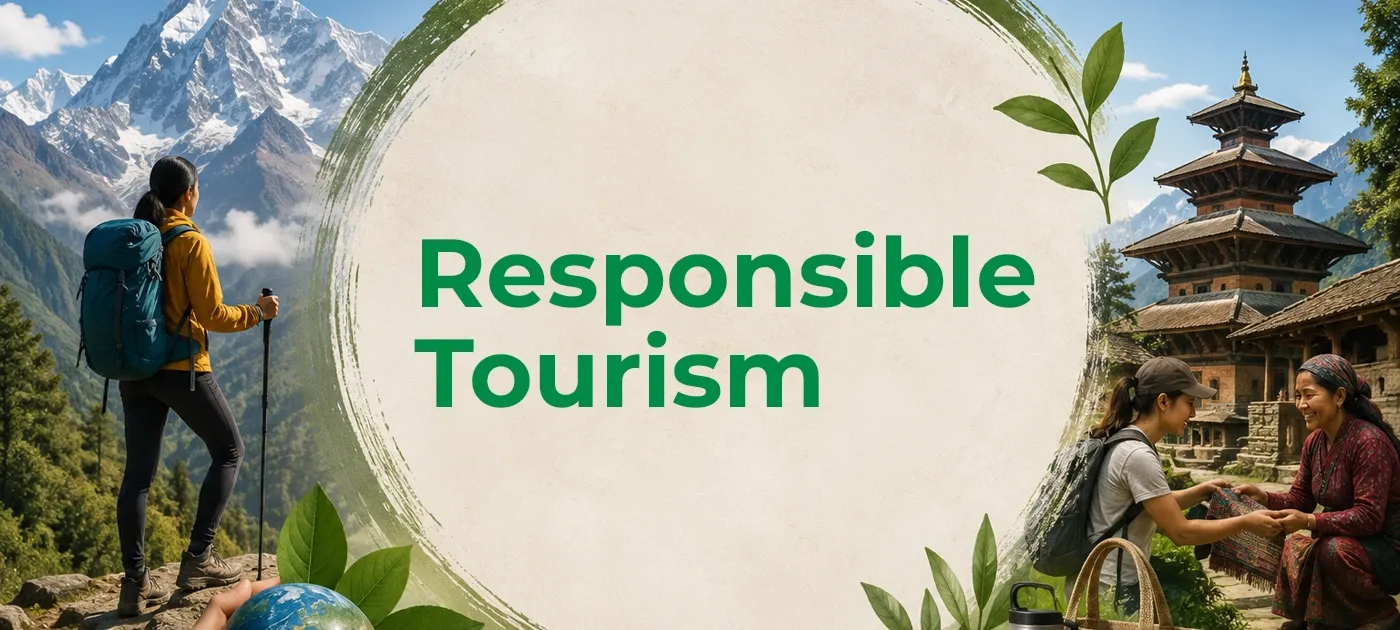
Responsible tourism is not just a concept, it is the guiding philosophy of Trekking Planner Nepal. As a pure Nepalese-owned trekking company with over 20 years of experience, we believe every traveler has the power to bring a positive change. We are committed towards ethical practices that benefit local communities, respect cultural heritage, and ensure fair treatment for everyone involved in your trekking adventure.
Being a fully Nepali owned company shapes this commitment in a way that a foreign run companies simply can't replicate. The decisions we make, who we hire, which villages we route our business through, how profits that are reinvested stay within the country and, in many cases, within the exact regions our treks pass through. That's not incidental. That’s the foundation of our business model.
Over more than two decades of guiding trekkers, we've seen firsthand how tourism can either lift a community up or quietly extract value from it while giving little back. Responsible tourism to us means deliberately choosing the former, every time, on every trek, not just when it's convenient or marketable. Also, we are proud to actively give back to the local communities through charitable work, which ultimately helps in supporting education, healthcare, environmental conservation and upliftment of local community people. That is our true belief in responsible tourism.
In practice, this commitment rests on three pillars:
- Fair treatment for the guides, porters, and local staff who make every trek possible such as proper wages, insurance, equipment, and working conditions.
- Cultural respect that treats the communities, customs, and sacred sites along our routes as something to honor, not simply a backdrop for travelers' photos.
- Community benefit that ensures tourism revenue reaches the villages and families along the trail directly, rather than flowing past them to outside interests.
So, when you trek with us, your journey becomes part of a bigger picture, one where your trekking fee, your choices on the trail, and the relationships you build with your guides and porters all contribute to communities that have stayed hospitable and hosted travelers for generations and deserve to continuously keep thriving because of it.
Why Responsible Tourism Matters in Nepal?
Responsible tourism goes hand-in-hand with sustainable development in a country like Nepal. Tourism is a major part of the Nepalese economy but can also create real challenges if left unmanaged. Without proper practices in place, the same industry that supports millions of livelihoods can just as easily bypass the communities it depends on.
At Trekking Planner Nepal, we have witnessed this reality over more than two decades. We have seen communities uplifting through responsible tourism. Imagine not only the communities, but the endangered wildlife and fragile mountain system have also been better due to sustainable and responsible tourism. However, it is not as easy as it sounds. A common proverb explains the situation much better- “Destruction takes a minute but creation takes a lifetime.”
Ofcourse, there are some challenges and we understand it is not going to be easy, however we are continuously working to reduce such challenges and work our way through them. Here are some of the challenges we understand are necessary to correct.
Key Challenges:
1. Economic Leakage
A significant share of tourism revenue in many destinations never reaches the local economy at all. It flows out to hotel chains, international booking platforms, and imported supplies, leaving the communities that host trekkers with only a fraction of the value their region generates. This means a trek can look successful on paper while the village it passes through sees little of the benefit.
2. Unfair Wages for Porters and Guides
Porters and guides carry the physical and logistical weight of the entire trekking industry, often in genuinely difficult and high-altitude conditions. Still, they've historically been among the least protected workers in the tourism/trekking industry. They are underpaid, under-insured, and under-equipped for the work they're doing. This imbalance has been one of the most persistent ethical issues in Himalayan trekking.
3. Cultural Commodification
When local customs, ceremonies, and ways of life are packaged primarily for tourist consumption that are performed on demand rather than respected as living traditions and culture are at risk of becoming a product rather than something travelers genuinely engage with and learn from. This shift can erode the very heritage that drew travelers to the region in the first place.
3. Unequal Distribution of Tourism Benefits
Tourism revenue tends to concentrate around the most popular, well-built routes, while villages along quieter or less marketed trails see comparatively little economic benefit despite often bearing similar environmental and infrastructure pressures from passing trekkers.
What are we doing? Our Approach: Accountability
We address these challenges by focusing on accountability at every level of our trekking operations not placing the burden on any single party, but ensuring travelers, operators, guides, and communities all play their part in making tourism better for everyone:
- Travelers are guided respectfully and with informed choices on the trail and in their interactions with local communities.
- We commit to transparent practices around wages, sourcing, and where trekking revenue actually goes back into the eco system.
- Guides and porters are treated as essential partners in the trekking experience, not just service providers, with the wages and conditions that reflect that they are an integral part of the eco system.
- Communities are engaged as direct stakeholders and beneficiaries of tourism, not just as bystanders to an industry operating around them but also integrating them into the system.
- When all four parties hold up their end, responsible tourism stops being an abstract idea and becomes something measurable.
Our Commitment to Responsible Tourism
We put responsible practices into action through clear, consistent steps, not just as aspirational goals, but as standards we hold ourselves to on every trek we run:
1. Fair Employment & Porter Welfare
Guides and porters are the backbone of every trek we operate, and their wellbeing is treated as non-negotiable, not an afterthought. Every member of our trekking crew receives fair, transparent wages that reflect the skill and physical demands of the work. Beyond pay, we provide proper cold-weather clothing and equipment suited to high-altitude conditions, comprehensive insurance coverage, and strictly enforced load limits for porters, in line with internationally recognized porter welfare standards. When a crew member is healthy, properly equipped, and compensated, it shows in the quality and safety of the trek for everyone involved.
2. Community-Centered Operations
We deliberately hire local staff from the regions where we operate, rather than centralizing employment in Kathmandu and busing crews to trailheads. A guide from the Khumbu who has grown up walking Everest-region trails brings knowledge and community connections no amount of training can replicate, and their employment keeps income within the region instead of extracting it. Wherever routes allow, we also source food, accommodation, and supplies from villages along the trail, so the economic benefit of a passing trekking group is felt by local families and businesses, not just the operator coordinating the trip.
3. Cultural Respect & Authenticity
Responsible tourism means engaging in culture as it exists, not as a performance arranged for visitors. We train our guides and staff to approach local customs, religious practices, and community traditions with genuine respect, and we extend that same preparation to our travelers through clear pre-departure guidance on local etiquette. This includes how to behave at monasteries, chortens, and religious festivals; how to interact respectfully with villagers along the trail; and how to be present in communities as a guest rather than a spectator. The goal is interactions that are authentic on both sides.
4. Giving Back to Society
Our responsibility to the communities we work in extends beyond the trekking season. Through the Deep Dikshya Foundation, we contribute to long-term development in trekking regions through education initiatives, health camps, women's empowerment programs, and broader community development projects. These aren't one-off donations, rather they're sustained investments in the wellbeing of communities that have given the trekking industry its foundation, and that deserve support for their long-term benefits.
5. Transparency & Ethics
We believe long-term trust is built on straightforward, honest communication. That means no hidden fees buried in the booking process, no vague itinerary language that leaves room for ambiguity once you're on the trail, and no gap between what we promise before departure and what's delivered. Our pricing is clear, our practices are published, and our team is available to answer direct questions about how we operate, because a traveler who understands exactly what they're booking and where their money goes is the foundation of responsible tourism done right.
How We Practice Responsible Tourism on Every Trek
- Empowering Locals: Majority of our team members come from remote mountain communities.
- Supporting Women in Tourism: We actively promote and train female guides and staff.
- Ethical Animal Welfare: We avoid using animals in ways that cause suffering and promote humane treatment.
- Educational Experiences: Guides share knowledge about local culture, history, and environmental issues during the trek.
- Traveler Education: We brief every client on how to behave responsibly in mountain villages and sacred sites.
Responsible Tourism Tips for Travelers
Responsible tourism isn't solely the operator's job. Every traveler brings their own choices to the trail, and those choices compound across thousands of visitors a season. Here's how you can make your choices count:
1. Support Local Businesses
When you eat at a locally owned teahouse rather than a lodge catering primarily to large tour groups or buy a handmade item directly from a village artisan rather than a souvenir shop in Kathmandu's tourist district, you're putting money into the hands of the people whose community you're actually passing through. These aren't just feel-good gestures, but they're the difference between tourism revenue circulating within a region and leaking out of it entirely. Ask your guide which teahouses and shops are locally owned along the route; they'll know, and they'll appreciate that you asked.
2. Tip Fairly
Your guide and porter work long, physically demanding days in conditions that would challenge most travelers, carrying loads, navigating altitude, managing logistics, and looking out for your safety, often with a level of warmth and professionalism that makes the difficulty look effortless. Tipping is standard in the trekking industry and represents a meaningful portion of crew income. Research fair tipping norms for Nepal before you depart so you arrive knowing what's appropriate, rather than guessing at the end of a trek. A fair tip, given directly and with genuine acknowledgment, is one of the most tangible ways a traveler can express respect for the people who made their journey possible.
3. Respect Local Customs
Nepal's trekking routes pass through living communities with deep religious and cultural traditions that predate tourism by centuries. Dressing modestly particularly around monasteries, stupas, and religious festivals signals that you understand you're a guest in a sacred space, not a visitor to a cultural exhibition. Always ask before
photographing people, particularly in smaller villages and during religious ceremonies. A moment of courtesy preserves dignity and often leads to a more genuine interaction than a candid shot ever would. Walk clockwise around mani walls and stupas, remove your shoes before entering monasteries, and let your guide navigate situations where you're unsure of the appropriate behavior.
4. Minimize Waste
Carry a reusable water bottle and use filtration or purification rather than buying plastic bottles along the trail. This single habit, if adopted by every trekker, would dramatically reduce the plastic waste burden on trails that have no formal recycling infrastructure. Pack out everything you carry in, including items that seem biodegradable but decompose far more slowly at high altitude than at lower elevations. Follow our “Leave No Trace” guidelines throughout the trek, and don't hesitate to remind fellow travelers in your group if you see practices slipping. Trail cleanliness is a shared responsibility, not someone else's problem.
5. Learn Before You Go
A little preparation goes a long way toward making your interactions on the trail more meaningful and more respectful. Read about the culture, history, and environment of the region you're visiting before you depart.
Understanding the significance of places like Tengboche Monastery on the Everest route, or the cultural heritage of Gurung and Magar communities along the Annapurna Circuit, transforms a beautiful landscape into something you can engage in rather than just observe. Learning a few basic Nepali or regional phrases, understanding the basic principles of the religious practices, and reading up on the ecological pressures facing the Himalayas will enrich your experience and show the communities you visit that you came with genuine curiosity, not just a checklist of summits.
Conclusion
Responsible tourism in Nepal is more than a trend, it is the only way forward if we want future generations to witness the same majestic Himalayas that inspire us today. The trails that have drawn trekkers from every corner of the world for decades are not self-sustaining. They endure because of the communities that maintain them, the ecosystems that support them, and the operators and travelers who choose, deliberately and consistently, to treat them with respect.
By choosing Trekking Planner Nepal, you're not just booking a trek. You're partnering with a locally owned company that has integrated responsible and sustainable practices for over two decades, not just because it became a selling point, but because it was always the right way to operate in a landscape this remarkable and this fragile.
Every step you take with us contributes to something larger than a single itinerary. This is what responsible trekking looks like when it's done with conviction rather than just intention. It's not perfect. No operator is, but it is honest, it is consistent, and it gets better with every trek we run and every piece of feedback we receive.
Together, we can ensure that adventure and responsibility don't just coexist, but they also reinforce each other, trek after trek, season after season, for as long as these mountains stand. So join hands with Nepal Trekking Planner for responsible tourism practice so that our future generation can get a fair share of what we are getting today.