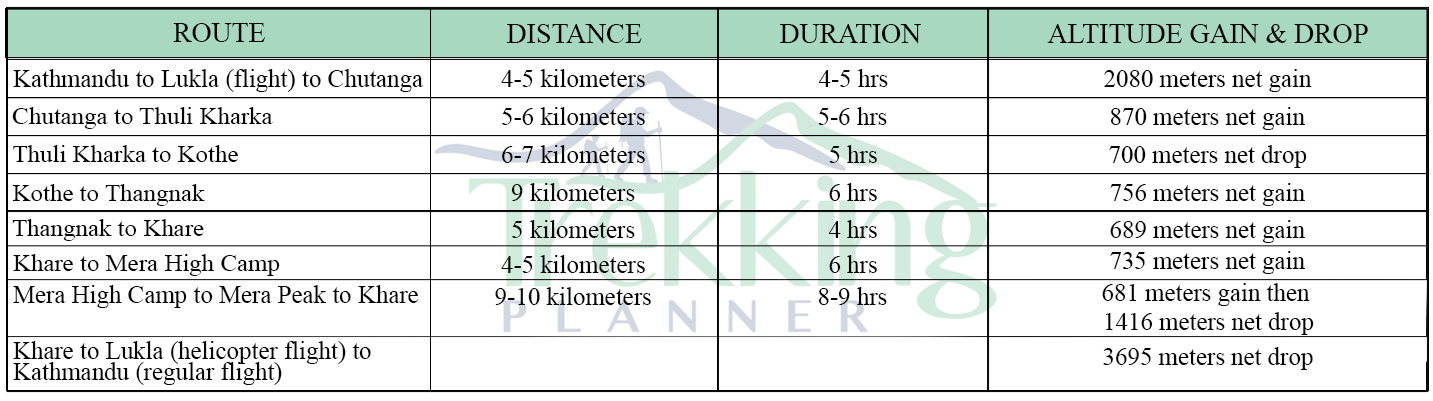
Mera Peak Climbing Distance, Altitude and Walking Hours
Is Mera Peak Suitable for Beginners?
Mera Peak Climbing with Helicopter return is a combination of high-altitude trekking and peak climbing. Trekkers have to realize that it also includes a climbing expedition, so it would not be the best approach to label it as "absolutely suitable" for beginner trekkers. However, it could be a great choice for fairly new climbers who have been involved in high-altitude trekking before and want to climb higher peaks in the future. Mera Peak is graded 'F' (Facile/Easy) in the French and Swiss Alpine climbing classification system. This means the climb is considered relatively easy by alpine standards, although it still requires basic mountaineering skills and proper preparation. In the U.S. climbing system, routes of similar technical difficulty generally fall around Grade 5.0 to 5.4.
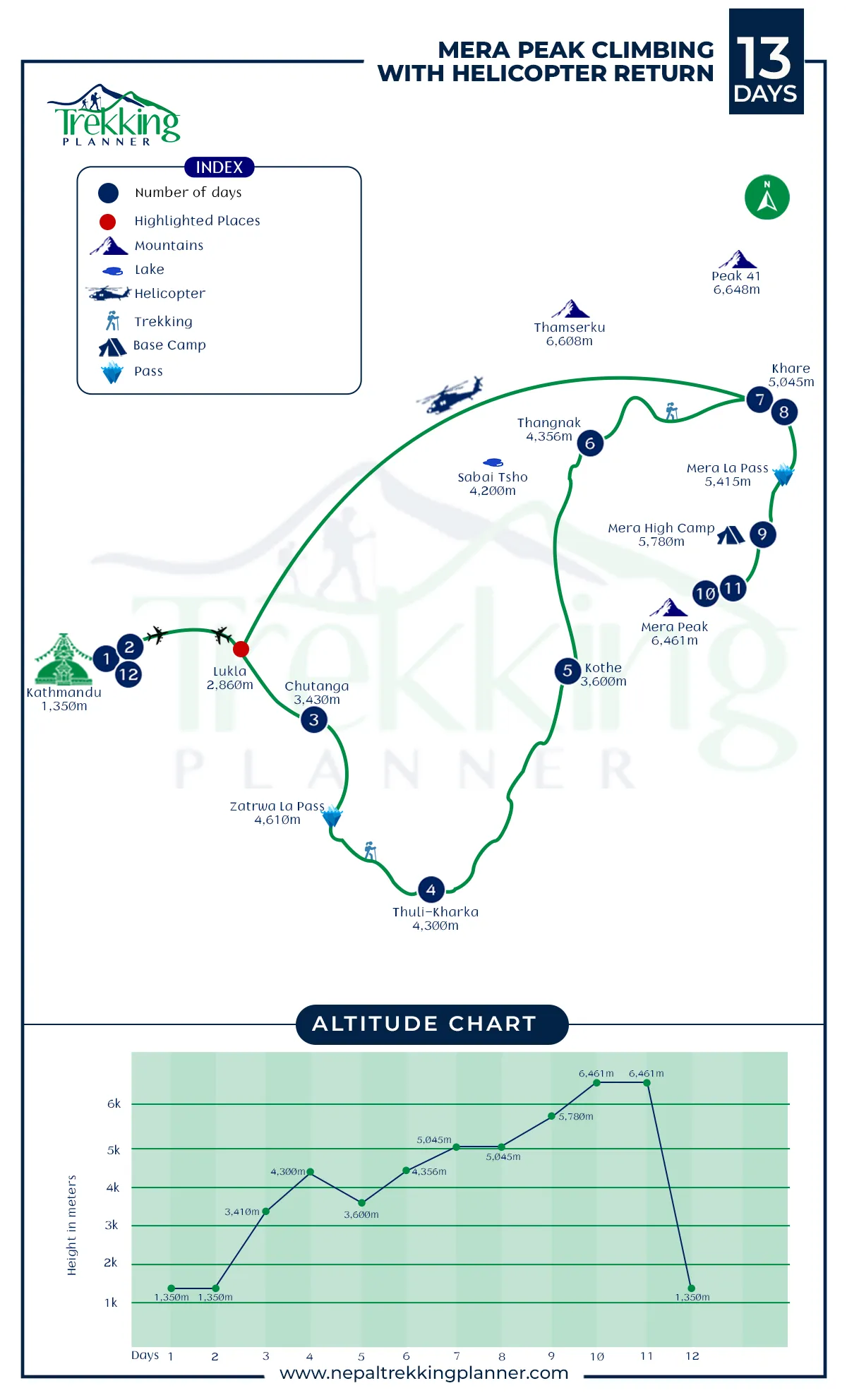
The journey involves several days of trekking through different landscapes before arriving at the high camp and then the climbing section. The itinerary includes gradual altitude gain from Lukla through settlements such as Chutanga, Thuli-Kharka, Kothe, Thangnak, and Khare, where trekkers will halt for an acclimatization and pre-climb training day. Climbers receive practical training on using different gear and equipment such as crampons, ice axes, harnesses, ropes, and ascenders before heading toward Mera High Camp and the summit.
The Helicopter return from Khare obviously makes the descent part easier and more comfortable. However, it does not reduce the difficulty of the overall trek up to Mera High Camp and the summit push to Mera Peak. Hence, beginner climbers who are considering this climb should focus on building their physical capabilities prior to the adventure and should be prepared for the challenges up there in the mountains.
Mera Peak Climbing Permits
The Mera Peak climbing with Helicopter Return takes trekkers through high-altitude landscapes of the Khumbu region and the remote Hinku Valley. The trek also passes through some designated protected regions and administrative regions. Hence, trekkers require several permits and registrations to successfully complete the Mera Peak adventure. Carrying the required permits and documents is also required, and the permits may be checked at designated points along the route. The following permits are required for the Mera Peak Climb with Helicopter Return:
The NMA climbing permit is the primary climbing permit required for the Mera Peak summit. Mera Peak is classified as a trekking peak under Nepal's mountaineering regulations; in fact, it is the highest trekking peak in Nepal. Therefore, trekkers require an appropriate NMA permit to climb the peak. The permit fee varies depending on the climbing season. The permit fees for Mera Peak according to different seasons are as follows:
|
Season
|
Permit fees per person
|
|
Spring (March-May)
|
USD 350
|
|
Autumn (September-November)
|
USD 175
|
|
Winter (December-February)
|
USD 175
|
|
Summer (June-August)
|
USD 175
|
The Mera Peak route passes through the Sagarmatha National Park area. It is a UNESCO World Heritage Site and a dedicated protected region. Hence, climbers require a Sagarmatha National Park Entry Permit to enter the designated park area. The permit contributes to the conservation and management of the park's unique Himalayan ecosystem, landscapes, and wildlife. The entry fees are as follows:
- For foreigners: NPR 3,000 (approx USD 20-23) per person
- For SAARC nationals: NPR 1,500 (approx USD 10-15) per person
- For Nepalese: NPR 100 per person
Trekkers can get the Sagarmatha National Park Entry permit from the Nepal Tourism Board office in Kathmandu. Our team at Trekking Planner Nepal Pvt. Ltd. assists with the required permit arrangements so that you can begin your Mera Peak climbing journey without unnecessary hassle.
Likewise, the Mera Peak climbing route also passes through the Makalu Barun National Park region. It is a dedicated protected area known for its diverse landscapes and varied species of plants, animals and birds. Therefore, trekkers require a Makalu Barun National Park Entry Permit to travel through the protected area. The entry fees are as follows:
- For foreigners: NPR 3,000 ( approx USD 20- 23) per person
- For SAARC nationals: NPR 1,500 (approx USD 10-15) per person
- For Nepalese: NPR 100 per person
The Khumbu Pasang Lhamu Rural Municipality Permit is a compulsory permit for trekkers entering the Everest region. This local permit is authorized by the Khumbu Pasang Lhamu Rural Municipality and contributes to the management, development, and maintenance of tourism infrastructure in the Khumbu region. The permit fee for trekkers is as follows:
- SAARC countries and China NRs: 2000 (approx USD 15-17) per person
- Other Countries: NRs: 3000 (approx USD 20-23) per person
The permit can be obtained from the designated permit counter in Monjo or Lukla. It is not issued in Kathmandu. However, when you book your Mera Peak climb with Trekking Planner Nepal Pvt. Ltd., our representatives will assist with the necessary permit arrangements and ensure that the process is completed smoothly.
Note: Trekking Planner Nepal Pvt. Ltd. handles all the permit logistics on your behalf once booking is confirmed or upon your arrival in Kathmandu.
Best Time for Mera Peak Climbing
The best time for Mera Peak climbing with Heli Return depends on various factors, including weather conditions, temperatures, and others. Spring (March to May) and Autumn (September to November) are generally considered the best and the most favourable time frames for Mera Peak. These seasons offer stable weather and climatic conditions, along with the best visibility for the ease of high-altitude trekking and rewarding views of the surrounding peaks and landscapes. Here's a breakdown of these seasons:
1. Spring (March to May)
Spring is one of the most popular and favourable seasons for Mera Peak climbing with Heli return. The weather starts becoming more stable and remains warmer at the lower altitude regions. The skies generally remain clear, offering excellent visibility and better views of mountains. Spring also adds the beauty of blooming rhododendrons and green landscapes along the lower sections of the trail, making the atmosphere photogenic.
The average daytime temperature at lower altitudes can range from 14 to 20℃ (57 to 68℉). Similarly, the average temperatures at higher altitudes, including the High Camp and summit regions, can range from -10 to -5℃ (14 to 23℉) during the spring season.
2. Autumn (September to November)
Autumn is arguably considered the best season to undertake the Mera Peak Climbing with Helicopter return. After the monsoon, the air becomes clean, the atmosphere is fresher, and the weather is stable. The skies remain clear with excellent visibility, offering magnificent views of the Giant Himalayan peaks. The trekking trails and the landscapes are also quite scenic during this period.
The average daytime temperatures in the lower and mid-altitude sections of the trek (from Lukla to Khare) can range anywhere between 0 to 15℃ (32 to 59℉). Similarly, the average temperatures at higher altitudes, including the High Camp and summit regions, can range from -6 to -15℃ (21 to 5℉), while nighttime temperatures can drop to -20℃ (-4℉) or lower.
3. Off Season (Winter & Monsoon)
Mera Peak Climbing with Helicopter return is possible outside the preferred windows of Spring and Autumn, but it brings with it unique challenges. Monsoon (June to August) and Winter (December to February) are considered off-seasons in Nepal. During monsoon, there are possibilities of frequent rainfall in the lower sections of the trek. This results in challenges such as overcast conditions, slippery trails and reduced mountain visibility.
Winter (December to February), on the other hand, brings with it extreme cold temperatures, snowfall, and strong winds at higher elevations. Temperatures can range between -18 and -25℃ (-0.5 to -13℉) in the high camp and drop as low as -35℃ (-31℉) on the summit on windy mornings. However, climbing Mera Peak during the off-season brings some perks with it. The trails are quieter and peaceful, and accommodation facilities are considerably empty, which can make the overall adventure less costly compared to the peak seasons.
Note: During the peak seasons of Spring and Autumn, the accommodation facilities can be crowded due to the high number of trekkers. So, book in advance with Trekking Planner Nepal to secure your spot.
What are the chances of Altitude Sickness During the Mera Peak Climb?
The Mera Peak Climb with Helicopter return takes trekkers to significantly high altitudes as compared to normal living altitudes for most people. The highest elevations reached on the Mera Peak climb are Mera Peak at 6,461 m/21,190 ft and Mera High Camp at 5,780 m/18,958 ft. At such high altitudes, the air contains very low oxygen levels as compared to lower-altitude regions. Hence, trekkers are very prone to symptoms related to reduced oxygen levels, commonly known as altitude sickness or Acute Mountain Sickness (AMS).
Any trekker can be affected by Altitude sickness regardless of their age, gender or fitness levels above 3000 meters. Still, the risk can be mitigated significantly with proper preparation, acclimatization, proper nutrition and hydration and following the instructions of experienced guides. Even the fittest-appearing trekkers can be prone to altitude sickness. Therefore, trekkers should always try to understand their body and their physical condition during the trek.
The Mera Peak Climbing with Helicopter Return itinerary includes a gradual ascent through settlements such as Chutanga, Thuli-Kharka, Kothe, Thangnak, and Khare. This allows trekkers adequate time to acclimatize to the high-altitude environment. An acclimatization day at Khare at 5,045 m/16,551 ft is also included, along with pre-climbing training before heading toward Mera High Camp and the summit. However, altitude sickness still remains a serious concern at these elevations, and climbers should be familiar with its causes, signs, and symptoms.
Causes of Altitude Sickness
Altitude Sickness is basically caused by ascending to higher elevations faster than the body can adapt to the decreasing oxygen levels. Some factors that are responsible for causing altitude sickness in trekkers include:
- Ascending too quickly without allowing the body sufficient time for acclimatization
- Sleeping at a significantly higher altitude too rapidly
- Dehydration or insufficient fluid intake
- Excessive exertion on the body without adequate rest
- Alcohol consumption or smoking at high elevations
- A personal history of altitude sickness
- Ignoring early symptoms and continuing to ascend
Note: Physical fitness does not make a person completely safe from altitude sickness. Even experienced and physically fit trekkers/climbers can develop AMS, which is why gradual acclimatization and careful monitoring are essential throughout the Mera Peak Climbing with Helicopter return journey.
Signs and Symptoms of Altitude Sickness
The symptoms of Altitude Sickness may include:
- Headache
- Nausea
- Vomiting
- Fatigue / unusual tiredness
- Dizziness or lightheadedness
- Loss of appetite
- Difficulty sleeping
- Shortness of breath during exertion
- General weakness or lethargy
Trekkers must immediately inform their guides if they experience any of the above symptoms, particularly when these symptoms don't improve with rest. Ignoring the worsening symptoms and continuing to ascend can lead to more serious complications.
Complications of Acute Mountain Sickness
Mild altitude sickness symptoms often improve with proper rest and acclimatization. However, if neglected, mild altitude sickness can often lead to serious complications if trekkers ignore the symptoms and continue ascending to higher elevations. The two main complications of Acute Mountain Sickness (AMS) are:
High-Altitude Pulmonary Edema (HAPE): HAPE is a serious condition of altitude sickness in which fluid starts accumulating in the affected person's lungs. Warning signs may include severe and persistent cough, chest tightness, extreme weakness, and difficulty breathing even while resting. Immediate descent and emergency medical attention are essential.
High-Altitude Cerebral Edema (HACE): HACE is a life-threatening condition of altitude sickness in which fluid causes the affected person's brain to swell. Symptoms may include severe confusion, brain fog, unusual behavior, loss of coordination, extreme drowsiness, and loss of consciousness. Immediate descent and emergency medical treatment are required.
If a trekker develops these complications of altitude sickness, continuing to ascend is dangerous. Our experienced guides will assess the situation and take the necessary safety measures, which may include rest, descent, medical assistance, or emergency evacuation when required.
Prevention of Altitude Sickness
- Important preventive measures to mitigate the risks of altitude sickness include:
- Follow the itinerary's gradual ascent and acclimatization schedule.
- Walk at a slow and steady pace, especially at higher elevations.
- Do not ignore primary symptoms of altitude sickness.
- Stay properly hydrated by drinking water regularly throughout the day.
- Eat regular, nutritious meals to maintain energy during the trek.
- Avoid alcohol and smoking at high altitudes.
- Get adequate rest and sleep whenever possible.
- Inform your guide immediately if you experience any symptoms of altitude sickness.
- Follow the advice of your experienced guide and medical professionals.
- With proper preparation, a steady pace, responsible acclimatization, and close communication with guides, most trekkers can safely enjoy the Mera Peak Climbing with Helicopter Return journey.
Mera Peak Climbing Accommodation
Accommodation is always one of the most crucial logistical aspects during any trekking or climbing adventure. A comfortable accommodation facility allows trekkers to rest and recover properly from a particular day's physical and mental exertion. They can properly rejuvenate for the upcoming day's journey.
During the initial days and the last days of the Mera Peak Climbing with Helicopter Return adventure, trekkers will stay in comfortable, standard hotels in Kathmandu. But once the trekking journey begins from Lukla, the accommodation facilities change to lodges and tea houses. The route to Mera Peak offers different accommodation options, ranging from basic tea houses to more comfortable mountain lodges. Some of the accommodation options available during the Mera Peak Climbing journey are as follows:
1. Tea Houses
Tea Houses are the most basic and common accommodation option available during the Mera Peak Climbing adventure. These are mostly locally operated or family-run facilities and provide basic rooms with beds and shared bathroom facilities. Most teahouses also have a common dining area where trekkers can enjoy meals, relax, and spend time with other trekkers. Tea houses are available in almost all the major settlements across the access route towards Mera Peak, including Lukla, Chutanga, Thuli-Kharka, Kothe, Thangnak, Khare, etc.
2. Lodges
Lodges along the Mera Peak trail provide another accommodation option for trekkers during the lower and mid sections of the journey. These facilities are relatively comfortable and luxurious as compared to basic tea houses. They generally offer basic but comfortable rooms, along with shared bathroom facilities and common dining areas. Some lodges also offer the best amenities, including Wi-Fi, hot showers, electricity, and attached bathrooms. They are obviously relatively expensive but are more convenient. Lodges are generally available in the more prominent settlements during the Mera Peak journey, including Lukla, Kothe Khare, etc.
3. Camping
Along the Mera Peak route, lodges or tea houses generally do not exist past Khare at 5,045 m/16,548 ft. Therefore, camping becomes mandatory as an accommodation option at those high altitudes, specifically at the Mera High Camp at 5,780 m/18,958 ft. Trekkers stay in tents arranged by our climbing team with essential arrangements for sleeping and dining. Camping offers the most basic experience for trekkers/climbers. Therefore, trekkers should not expect any sort of premium facilities in these high-altitude camps, but it is only the last day before the final summit push.
Food and Water During Mera Peak Climbing
Nutritious food and adequate hydration are essential for maintaining energy throughout the Mera Peak Climbing with Helicopter Return adventure. The itinerary involves several hours of walking each day through demanding landscapes, followed by a challenging summit attempt. Hence, climbers need sufficient calories, carbohydrates, protein, and fluids to support their bodies throughout the journey. Accommodation facilities along the route offer a variety of meals and beverages. However, the food options become more basic at higher elevations, remote settlements, and during the camping sections. Here is a summary of the food and beverages generally available during the Mera Peak climbing journey:
- Breakfast: Tibetan bread, toast with jam or honey, eggs, pancakes, porridge, oatmeal, muesli, chapati, potatoes, and cereals.
- Lunch and Dinner: Dal Bhat, vegetable curry, fried rice, egg fried rice, noodles, pasta, macaroni, spaghetti, momo, Sherpa stew, Thukpa, soup, potatoes, sandwiches,etc.
- Snacks and Energy Foods: Chocolate, biscuits, energy bars, nuts, dried fruits, and other lightweight snacks are useful for maintaining energy during long trekking and climbing days.
- Desserts: Rice pudding, apple pie, chocolate pudding and other bakery products.
- Beverages: Black tea, milk tea, masala tea, lemon tea, ginger tea, hot lemon with honey, hot chocolate, coffee, soup, etc.
Note: Avoid smoking, alcohol consumption and excessive coffee consumption during the trek as they cause dehydration and can increase the risk of altitude sickness.
Toilet and Washing Facilities
The toilet and washing facilities in the Mera Peak region can vary significantly depending on the altitude or the remoteness of a location. The route passes through some remote settlements in the Hinku Valley before reaching high-altitude sections including Khare and Mera High Camp. Therefore, the facilities are generally very basic compared to those available in urban cities or even compared to the facilities available in the more commercialized Everest Base Camp route. Here are some general aspects to consider:
1. Bathroom and Hot shower facilities
Bathroom facilities during the Mera Peak climbing with Helicopter return, bathroom facilities are generally basic but considered enough for a high-altitude trekking/climbing journey. Along the trekking route, tea houses and lodges in settlements such as Chutanga, Thuli-Kharka, Kothe, Thangnak, and Khare generally provide shared bathroom facilities.
In the lower and mid sections of the route, some tea houses and lodges may also offer hot showers for an additional charge. However, the availability still cannot be guaranteed, and the quality of these amenities can vary from one accommodation facility to another. As trekkers ascend towards higher altitudes such as Khare and Mera Peak, bathroom and shower facilities become increasingly basic due to the remote location and colder temperatures.
At Mera High Camp, the final station before the summit attempt, standard bathroom and shower facilities are generally not available. The climbing team sets up basic and temporary toilet arrangements at the campsite. Washing is also limited to basic personal cleaning using a small amount of warm water.
2. Washing facilities
Tea houses and lodges along the Mera Peak trekking route generally provide basic washing facilities. In settlements including Chutanga, Kothe, Thangnak, up until Khare, trekkers can usually find water for washing their face, hands, and other basic personal hygiene needs. Hot water may also be available for an additional cost.
As the route reaches higher elevations, running and hot water become very limited. Trekkers may need to use a bowl or bucket of warm water for basic washing. Particularly at Mera High Camp, washing facilities are extremely limited, and trekkers should be prepared to maintain basic hygiene without relying on a conventional bathroom or shower. Hence, carrying personal care and hygiene products such as wet wipes, hand sanitizer, soap, and a small towel as per the personal needs and comfort of trekkers is highly recommended.
3. Toilets
Toilet facilities along the Mera Peak route vary depending on the altitude and accommodation. In lower trekking settlements, some tea houses and lodges can provide western-style flush toilets. Some accommodations may also provide attached toilets, although this heavily depends on the accommodation facility.
As trekkers move towards the more remote sections of the trek, toilet facilities become simpler and are generally shared. At higher elevations, limited water availability, freezing temperatures, and the remoteness make modern flush toilets less common. Traditional squat toilets are more common in these regions. Therefore, trekkers are highly advised to prepare for the simplest of toilet facilities, but those facilities are generally adequate.
- Paying for the toilet and washing facilities
In some tea houses and lodges, trekkers may need to pay a small fee for certain amenities such as hot water, hot showers, charging, or others. These additional charges help cover the cost of heating/ transporting water and other facilities in the remote settlements on the Mera Peak approach route. The availability and cost of these amenities can vary depending on the remoteness of the location, accommodation type, and trekking season.
- Carrying Toilet papers and personal hygiene products
Trekkers are strongly advised to carry their own toilet paper/tissue paper for their personal use, as the availability of basic washing facilities cannot always be relied on during the Mera Peak climbing with Helicopter return journey. Personal care and hygiene items such as wet wipes, hand sanitizer, soap, toothbrush, toothpaste, and a small personal towel are also very useful.
Access to water can become very limited at higher elevations due to various unforeseen circumstances; hence, hand sanitizer and wipes are particularly useful for maintaining cleanliness. Trekkers should also dispose of all waste responsibly and avoid littering.
Trekking Planner Nepal Pvt. Ltd. advises trekkers to prepare for the very least and basic facilities and adjust their expectations accordingly. The approach route towards Mera Peak passes through remote settlements where infrastructure and facilities are not the same as those available in cities. But still, with proper preparation and a small personal hygiene kit, trekkers can comfortably manage the toilet, bathroom, and washing needs throughout their journey.
Communication, Internet and Charging
Internet and communication facilities during the Mera Peak climbing journey depend on the altitude, remoteness of a location and weather conditions. Internet and communication facilities are available at some locations along the route, but they can be inconsistent and very limited. The internet facilities can be reliable in lower-altitude settlements, including Lukla, Kothe and Thuli Kharka. Still, as trekkers reach altitudes above 5000 m in Khare and high camp, the internet facility is basically non-existent or very weak.
Trekking Planner Nepal Pvt. Ltd. provides all its trekkers with free SIM cards (NCELL). However, there can still be additional charges for data packages in order to access mobile internet. The SIM card can be used by trekkers to call or message their loved ones and also to access mobile internet wherever available. But still, mobile data and mobile networks cannot be considered reliable in such high-altitude settlements for communication.
Wi-Fi facilities are generally available and reliable in almost all accommodation facilities in Lukla. As trekkers trek towards settlements such as Kothe and Thuli Kharka, Wi-Fi becomes slow, unreliable and even unavailable in some cases. When the trekking route reaches Kothe or higher towards Mera High Camp, Wi-Fi or internet facility in general is almost non-existent.
Charging facilities are one of the most crucial amenities for trekkers during any trekking adventure. Electricity and charging facilities are essential for trekkers to charge their electronic gadgets, including mobile phones, cameras, power banks, etc. These devices are important for trekkers to connect with their loved ones back home, capture unforgettable moments and memories during their trek, check the weather conditions, and also navigate the route.
During the Mera Peak climbing, trekkers can find charging facilities in accommodation facilities in different settlements along the route, including Lukla. However, the reliability decreases as trekkers move towards higher altitudes, including Khare and Mera High Camp. Therefore, trekkers must keep in mind that the higher you climb, the less reliable charging and electricity facilities become along the Mera Peak approach route. Even if the electricity is available in the tea houses or lodges, charging electronic devices generally requires an additional cost typically around NPR 100-500 per device or per hour.
For a budget-friendly and convenient trekking experience, trekkers are highly advised to carry a reliable power bank with a capacity of around 10,000-20,000 mAh. Carrying a universal travel adapter is also highly recommended for better access. Solar chargers can also be useful for trekkers who carry several electronic devices, although their effectiveness depends on sunlight and weather conditions. Similarly, using power-saving mode, reducing screen brightness, turning off unnecessary applications, etc., can help preserve the battery life of electronic devices throughout the journey.
Culture and Tradition of Everest Region
Many trekkers think that the Everest region is only renowned as the home to the highest mountain peak in the world and other breathtaking Himalayan peaks and landscapes. But in fact, the Everest region is also famous for its unique and rich traditional and cultural heritage. The route through the Hinku Valley provides an opportunity for trekkers to observe the customs, traditions, and the way of life of local communities living in the region.
During the Mera Peak climbing with heli return journey, trekkers pass through various traditional villages/settlements including Chutanga, Thuli-Kharka, Kothe, Thangnak, and Khare. Trekkers can also witness cultural symbols including monasteries, prayer wheels, mani walls, chortens, and colorful prayer flags. This provides them a wonderful opportunity to experience the unique traditions and culture of the region.
1. Sherpa Culture
The Sherpas are the main ethnic community in the entire Everest region. Sherpas are well-renowned across the world for their mountaineering skills and warm hospitality. The community also has a unique cultural heritage and a way of life beyond mountaineering. The traditions, customs, daily rituals, arts and architecture, festivals, etc. reflect the rich heritage of the community, which is deeply influenced by Buddhist beliefs. Trekkers can witness cultural symbols including traditional stone houses, prayer flags, mani walls, prayer wheels, and monasteries, etc.
2. Tibetan Buddhism and Spiritual traditions
The ethnic communities residing in the Everest region are deeply rooted in Tibetan Buddhist traditions and cultures. The cultural symbols such as monasteries, prayer flags, mani stones, chortens, and prayer wheels can be witnessed throughout the Mera Peak approach route. As a sign of respect for local traditions, trekkers are highly encouraged to walk around religious monuments, including monasteries, chortens and mani stones, in a clockwise direction.
3. Festivals and Local traditions
The communities residing in the Everest region celebrate a variety of festivals and occasions throughout the year. Mani Rimdu, which is one such festival, is one of the most important festivals in the Everest region and is celebrated at Tengboche Monastery. Another important festival celebrated by the Sherpa community in the Everest region is Lhosar, the Tibetan New Year. These festivals are marked by religious ceremonies, prayers, family gatherings, traditional food, and cultural celebrations. Visiting during these festive times also gives trekkers a deeper insight into the traditional, cultural, and spiritual beliefs of the people who have lived in the Khumbu region across generations.
4. Traditional Lifestyle and Hospitality
The traditional lifestyle in the Everest region has been shaped by its remote mountain terrains and challenging high-altitude environment. Local communities have traditionally been involved in agriculture, livestock, trade, tourism and mountaineering. Potatoes, barley, and other crops that can grow in the high-altitude environment have become an integral part of agriculture. The hospitality of the local people is another important aspect to understand the culture of the region. Tea houses, lodges, and guesthouses are often operated by local families. This also allows trekkers to interact with the local community and experience the warmth and friendliness of the locals of the Khumbu region.
Helicopter Return from Mera Peak
The Mera Peak climbing with Helicopter return begins with a flight to Lukla. The flights depart from the Tribhuvan International Airport in Kathmandu. Trekkers are advised to arrive at the domestic terminal of the Tribhuvan International Airport at least 2 hours prior to the departure time. This allows you to complete the baggage check-in and security procedures before the flight and avoid any rush. The flight time is approximately 35-45 mins and lands at the world's highest Airport or gateway to Everest, the Tenzing-Hillary Airport in Lukla. It is situated at an altitude of 2,846 meters with length of the runway 527 meters (1,729 ft), and its width 30 meters (98 ft).
Lukla flights operate on small aircraft. So, the baggage/luggage capacity is very limited. Each passenger is generally allowed 10 kg (22 lbs) of checked baggage and 5 kg (11 lbs) of hand-carry baggage. If the luggage weight exceeds the allowed weight, extra charges can be applied. Weather situations around Lukla can often get complicated. Therefore, Lukla flights are highly dependent on the weather conditions and visibility, and highly prone to frequent disturbances. During the peak trekking seasons of March to May and September to November, the air traffic can be very heavy. Therefore, trekkers are highly advised to keep one or two extra days in their travel schedule, or else they have to travel to Manthali, Ramechhap.
Manthali to Lukla
During the peak seasons for Everest trekking, most of the flights to Lukla are operated from Manthali Airport in Ramechhap. This would be the best alternative flying option for trekkers instead of relying on the flight from Kathmandu. This journey begins with an early morning drive from Kathmandu to Ramechhap, which takes approx. 4 hours. From Manthali Airport, the flight to Lukla takes around 20 minutes.
The cost of the domestic flight from Kathmandu to Lukla (or Manthali Airport to Lukla during peak season), along with the return flight after completing the trek, is included in the Mera Peak climbing with Helicopter return package with Trekking Planner Nepal Pvt. Ltd.
Alternative option: Helicopter flight to Lukla
For Trekkers who are seeking a quicker and more luxurious travel approach, a helicopter flight to Lukla is available as an option. Trekkers have to understand that this Helicopter flight is different from the Helicopter return included in the package, which is after completing the Mera Peak climb. The helicopter flights from Kathmandu to Lukla typically accommodate up to 5 passengers. Helicopter flights can provide great flexibility and an unforgettable experience for trekkers.
However, helicopter flights are more expensive than the regular domestic flights to Lukla. Hence, helicopter flights are generally recommended to those who are seeking additional luxury or a more comfortable travel experience. With helicopter flights, trekkers do not need to worry about the Airport and domestic flight hassle. Trekkers who are interested in this option can plan for a helicopter upgrade in their package with Trekking Planner Nepal Pvt. Ltd.
It is strongly recommended that every international traveler visiting Nepal purchases a comprehensive travel insurance that covers them in any unexpected situations during their Mera Peak Climbing with Helicopter Return journey. The journey involves trekking through remote, high-altitude landscapes and settlements before reaching Mera Peak at 6,461 meters (21,190 ft). Therefore, even though the itinerary is carefully planned with acclimatization and a reserve day, unforeseen circumstances may arise during the trek. These circumstances can include altitude sickness, medical emergencies, injuries, bad weather, flight cancellations, or other travel-related disruptions.
Trekking Planner Nepal Pvt. Ltd. does not provide travel insurance by itself, so trekkers should purchase a suitable policy from an authentic and reliable insurance company. Before purchasing the insurance, it is important that trekkers understand what is included and excluded in the policy. For Mera Peak Climbing with Helicopter Return, climbers should ensure that their travel insurance includes coverage for the following:
- Trip Cancellation and Interruption: Weather conditions, flight disruptions, or other unforeseen circumstances can sometimes cause trip cancellations or interruptions. So, climbers must choose travel insurance that covers trip cancellation and interruptions where applicable.
- Medical Coverage: The insurance policy must provide coverage for medical treatment and emergency evacuation during illness or injury during the journey. As Mera Peak Climbing reaches an altitude of 6,461 meters, trekkers must ensure that their policy specifically covers altitude-related illnesses.
- Emergency Helicopter Evacuation: Emergency helicopter evacuation is particularly important for Mera Peak Climbing as the trekking route passes through remote, high-altitude environments and access to medical facilities is limited. Trekkers must ensure that they are covered in case an emergency helicopter rescue and evacuation is required.
- Loss of Baggage: Although theft and robbery are rare in Nepal, personal baggage or luggage can sometimes be misplaced or damaged during international and domestic travel. So, trekkers are highly advised to choose a policy that provides coverage for loss, theft, or damage to personal belongings and essential items.
- Emergency Assistance: The insurance policy should include 24/7 emergency assistance for climbers. Hence, it must cover assistance in general, including medical emergencies, emergency evacuation, travel interruption, or other unexpected circumstances during the journey.
- Pre-existing Medical Conditions: Climbers should also carefully check whether their insurance policy provides coverage for any pre-existing medical conditions. Any relevant medical conditions should be conveyed to the insurance provider when purchasing the policy, according to the requirements.
Trekkers should read and analyze the insurance policy carefully and understand its coverage, exclusions, claim procedures, and costs before the Mera Peak Climbing with Heli return adventure. It is highly advised to compare insurance policies from different insurance providers and choose one that specifically covers all the above-mentioned conditions or circumstances.
Note: It is important for trekkers to understand that the helicopter return included in this package is part of the itinerary and is different from an emergency helicopter evacuation. The helicopter return takes climbers back from Khare to Lukla after completing their entire adventure, whereas emergency evacuation is different and is conducted when required because of a medical emergency or other situations.
Important Tips for Helicopter Return
- The total flight duration from Khare to Lukla is approximately 20-25 minutes, which also depends upon the weather conditions.
- Since the air density at such high altitudes is significantly reduced, the performance capacity of a helicopter is limited. Therefore, a helicopter can only carry a maximum of 3-5 passengers along with baggage at a time from Khare.
- Due to less air density, the baggage allowance is also limited at this altitude. A maximum baggage allowance of 15 kg per person, including carry-on, is strongly recommended during the helicopter return.
Mera Peak Climbing for Females: Tips
- Prepare for irregular or unexpected periods due to altitude.
- Bring extra menstrual cups, tampons, or pads along with disposal bags and intimate wipes.
- Carry period supplies in your daypack instead of using the porter bag.
- For better management and less waste, consider using a menstrual cup.
- Although not mandatory, for usage on the route and at night, bring a female urination device (such as Shewee).
- Always keep your own hand sanitizer, wet wipes, and toilet paper on hand.
- For quicker and cleaner trail restroom stops, use a pee towel.
- For brief showers, bring deodorant wipes, dry shampoo, body wipes, and facial wipes.
- Bring non-cotton underpants and sports bras that dry quickly.
- As soon as you arrive, change into dry lodge attire.
- Apply moisturizer, SPF lip balm, and high-SPF sunscreen every day.
- Hire a trustworthy guide, especially if you're traveling alone (a female guide option is available).
- Train with cardio and pack-weighted walks weeks in advance.
- Discuss altitude medication with your doctor.
- Stay well hydrated and follow the standard acclimatization itinerary.
Responsible Trekking on the Mera Peak Route
Responsible trekking is basically an ethical, environment-friendly and socially responsible approach to trekking. It helps in preserving the natural beauty, traditional & cultural heritage and the
fragile environmental ecosystem across the approach route towards Mera Peak. The Mera Peak approach route passes through some remote cultural settlements of Hinku Valley, protected regions, forest areas and fragile landscapes. This trekking approach helps to minimize negative impacts on these major attributes of the Mera Peak region. By following responsible trekking guidelines, trekkers can contribute to sustainable tourism and help protect the environment in and around these Himalayan trails for future generations.
1. What to Do During the Mera Peak Climbing with Helicopter Return?
- Respect the local traditions and customs (especially while visiting and observing religious sites such as monasteries, chortens, prayer walls, etc.) by dressing modestly and asking for permission before photographing.
- Walk clockwise around stupas, mani walls, and prayer wheels as a sign of respect and understanding towards Buddhist culture.
- Carry a reusable water bottle to reduce plastic waste.
- Dispose of waste responsibly or carry it with you until you find a designated waste disposal center.
- Stay on the marked trekking trails to protect the fragile vegetation and prevent soil or vegetation erosion.
- Support local communities by staying in local tea houses/lodges and purchasing locally produced food products and handicrafts whenever possible.
2. What Not to Do During the Mera Peak Climbing with Helicopter Return?
- Do not litter or leave any waste along the trail during the trek, including plastic food wrappers, plastic bottles, or cigarette butts, etc.
- Do not disturb the wildlife, damage plants or natural vegetation, or get involved in any activities that hamper the natural ecosystem in the protected regions.
- Avoid disturbing or making excessive noise, especially in and around monasteries, local settlements, and wildlife habitats.
- Avoid wearing excessively revealing clothes, especially in and around religious and cultural sites. It may not respect the religious and cultural sentiments of the local people.
- Never leave the marked trail or attempt to walk through difficult sections in unsafe conditions without your guide's advice.
- Avoid using single-use plastics whenever possible and help keep the Himalayas clean for future generations.
Why Choose Trekking Planner Nepal Pvt. Ltd for Mera Peak?
- With years of experience and enhancements to our operations, we have a proven track record in trekking operations.
- Our trekking packages are operated in small groups; hence, trekkers get personalized care and service at all times.
- Our team of professional, licensed guides possesses remarkable trekking knowledge, providing trekkers with excellent guidance, safety support, and personalized care.
- We arrange delicious, nutritious meals throughout our treks to meet trekkers' nutritional needs and provide the best-quality gear and equipment.
- Our on-field team, along with local guidance, assists with every minute activity and planning during the trek.
- At every stage of our trek, from itinerary planning to on-field protocols and emergency support, we prioritize your safety and comfort above all else.
- Our representatives and consultants are there at your service 24/7. You get quick response and practical assistance from our team regardless of the complexity of the situation.
- We run our tours across a wide range of destinations, offering customized or personalized itineraries for our clients.
- We genuinely and ethically follow responsible, sustainable trekking practices and protocols to preserve natural trails and cultural heritage for future generations in the destinations where we run our tours.
- Returning travelers receive a special 10% discount along with their family members (spouse and children).
- We give it our all to accommodate any last-minute bookings and manage travel arrangements and logistics for our clients' desired dates.
- Our team always remains on standby on the ground to assist you in any unforeseen circumstances.
- Our trek & tour packages can accommodate a range of budgets. From affordable group departures to private & customized tours, we can handle it all.
Book / Request a Quote
Ready to climb Mera Peak with Helicopter Return? Contact Trekking Planner Nepal to book your adventure or request a personalized quote.
Our team can help arrange your Mera Peak climbing permit, experienced climbing guide, accommodation, Lukla flights, trekking logistics, climbing equipment support, and helicopter return from Khare to Lukla, according to your itinerary and requirements.
Request a Personalized Quote
Please send us the following details:
- Preferred travel dates
- Number of participants
- Previous trekking or climbing experience
- Any specific requirements or preferences
- Whether you require a private or group climbing arrangement
Contact us today to check availability and receive your personalized Mera Peak Climbing with Helicopter Return quotation.
Conclusion
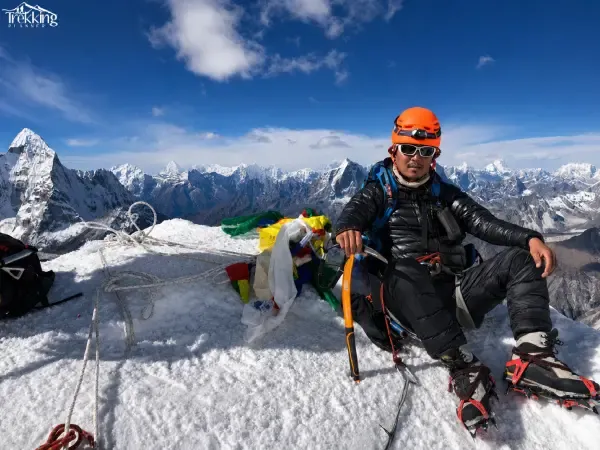
The Mera Peak Climbing with helicopter return is a challenging and one of the most rewarding high-altitude adventures in Nepal. It combines high-altitude trekking and mountaineering along with traditional and cultural exploration through the spectacular Hinku Valley. Starting with a scenic flight to Lukla and passes through the remote settlements of Hinku Valley, including Chutanga, Thuli-Kharka, Kothe, Thangnak, and Khare, before reaching Mera High Camp. Then, ultimately summiting Mera Peak at 6,461 meters. From the summit, climbers can witness breathtaking views of some of the world's highest mountains. The helicopter return to Lukla offers an energy & time efficient way to return after the climb.
At Trekking Planner Nepal Pvt. Ltd., we are dedicated to making your trekking journey safe, comfortable, and truly memorable. Our professional team of experienced guides, porters, and office coordinators, combined with carefully designed itineraries and quality services, really tries its best to ensure that you receive the best possible experience throughout your journey.




 General