Book Now

Tibet Overland Tour - 12 Days

1087 reviews in TripAdvisor
238 reviews in Google
19 reviews in TrustPilot
Trip Facts
Duration
12 Days
Difficulty Level
Moderate
Maximum Altitude
5010m
Starts
Kathmandu
Ends
Kathmandu
Group Size
2+
Activities
Tibet Tours
Season
March to November

Introduction: Tibet Overland Tour

Tibet is the highest region on the earth, with an average elevation of 4,900 meters. Its capital Lhasa is the site of Potala Palace. Although Tibet is part of China, it has its distinct culture.

The Tibet Overland Tour starts from Kathmandu. Here in Kathmandu, you will visit several UNESCO World Heritage Sites in Nepal: Kathmandu Durbar Square, Bhaktapur Durbar Square, Patan Durbar Square, and Boudhanath. After a full day of sightseeing in Kathmandu, our representative will transfer you to Nepal – the China border – and introduce you to our Tibetan guide. The drive to the border is through scenic countryside with nice views of the Himalayan Mountains.

After the completion of all immigration formalities, the actual tour to Tibet starts. In our Tibet Overland Tour, you will enjoy sightseeing in Lhasa. The Potala Palace is the highest ancient palace in the world. Norbulingka Palace is the largest man-made garden in Tibet.

Drepung Monastery is the largest of all Tibetan monasteries. Sera Monastery is located at the foot of Tatipu Hill. Jokhang Temple is the most celebrated temple in Tibet because the temple is not controlled by any particular sect of Tibetan Buddhism. You can also browse Tibetan Barkhor Street in Lhasa. It is a magical place full of exotic and religious items. This tour can be any time of the year. However, March to November is the best time to go.

Along with tours in Nepal, Trekking Planner also organizes Tibet overland tours. We will provide all the necessary information for visiting Tibet and suggest the main places to visit in Tibet as per your interest. Feel free to contact us for your hassle-free and memorable holiday in Tibet and Nepal.


Tibet Overland Tour - 12 Days Itinerary

Day 1

Arrival in Kathmandu.

Max Altitude: 1,349m (4,425ft)

Upon arrival, you will be picked up at the International Airport in Kathmandu and transferred to the hotel by our driver. After refreshments, you have a free afternoon to explore the town. Later on this evening, you will be picked up from your hotel for a cultural dinner. Stay overnight at the hotel.

Day 2

Full day in Kathmandu

Max Altitude: 1,350m (4,429ft)

Today you have a full day of guided sightseeing tours to the Buddhist and Hindu sights in Kathmandu: first Durbar Square, then a visit to “Swyambhunath” a Holy site for Hinduism and Buddhism. It is also known as “the monkey temple” due to a large number of holy monkeys living in the north-west part of the temple.

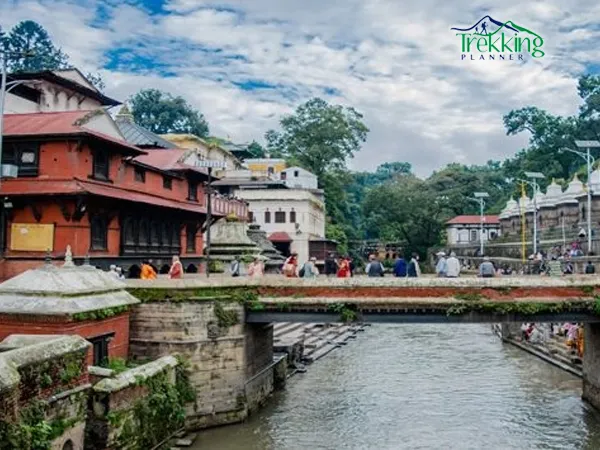
Next, you will be taken to “Pashupatinath, a sacred Hindu temple situated on the bank of the Bagmati River. You will then be driven to “Boddhanath Stupa” one of the biggest and oldest stupas in the world.

Later in the afternoon, there will be a pre-trip meeting with our representative in your hotel, and we will brief you regarding the Tibet Tour as well as providing you the opportunity to ask any questions of the upcoming trip. Second overnight in Kathmandu.

Day 3

Drive Kathmandu (1300 m)-Nyalam (3750 M.): (5-6 Hrs.): 156 Km

Max Altitude: 3,750m (12,303ft)

In the early morning, you will be picked up from your hotel and driven to Kodari at the border. We will stop for Breakfast somewhere on the way.

After completing Nepali emigration and customs formalities, we drive uphill to the Zhangmu immigration post. After completing customs formalities, we drive to Nyalam. Stay overnight at hotel.

Day 4

Drive Nyalam-Lhatse (4305m.): (7 Hrs.): 244 Km.

Max Altitude: 4,305m (14,124ft)

From Nyalam, the road follows the Bhote Koshi River in the deep valley with plenty of Waterfalls. After 1.5 hrs, our drive brings us to the Nylam Pass (3800m) with the Jugal Himala in view. Driving further past Lalungla (5050m), we will see Mt. Dorje Lakpa (6980m), Mt. Makalu (8464m), Mt. Everest (8848m), Mt. Lhotse (8516m) & Mt. Shigatse.

Day 5

Drive Lhatse-Shigatse (3900 M.): (7-8 Hrs.): 244 Km.

Max Altitude: 3,900m (12,795ft)

Today after breakfast you will start your drive with nice views of the mountains, until we stop at Shigatse, and visit famous Tashilunpo, a small but very nice and historical town which is located on the northern bank of the Nyang Chu River. Stay overnight at the hotel.

Day 6

Drive Shigatse-Gyantse (3900 M.): (2 Hrs.): 90 Km.

Max Altitude: 3,900m (12,795ft)

After a wonderful visit at the Tashilunpo Monastery in Shigatse, we drive to Gyantse, passing through several towns. Gyantse is a small but very nice historical town which is located on the northern bank of Nyang Chu River. Stay overnight at the hotel.

Day 7

Drive Gyantse-Lhasa (3650 M.): (7-8 Hrs.): 259 Km.

Max Altitude: 3,650m (11,975ft)

Today after an 8-hour drive, we reach the Lhasa crossing, the Karolap Pass (5010m) and Kambala Pass (4794m). Today you will have a nice view of the Turquoise Lake and Brahmaputra River. After reaching Lhasa we will check into the hotel. Your guide will ask you about your onward flight ticket for reconfirmation. Stay overnight at the hotel.

Day 8

Tour to Sera Monastery, Jorkhang Temple & Barkhor Market.

Day 9

Sightseeing Tour to Potala Palace & Drepung Monastery.

Day 10

Lhasa-Kathmandu

Max Altitude: 1,350m (4,429ft)

After your wonderful visit to Tibet, today after breakfast at the hotel you will transfer to the Gonggar Airport and fly back to Kathmandu. Upon arrival at Kathmandu airport you will be picked up by our driver and driven to the hotel.

Day 11

Full day in Kathmandu

Max Altitude: 1,350m (4,429ft)

Today you will have free time to further explore the city and surrounding area.

Day 12

Final departure

Max Altitude: 1,350m (4,429ft)

Today you will transfer to the Kathmandu International Airport for your flight, or perhaps join us for your next trip.

Private Trip

Trip Duration
12 Days
Trip Starts & Ends Point
Kathmandu / Kathmandu
Plan your trek schedule

Tibet Overland Tour - 12 DaysCost Details

Trip Includes

  • All airport pickups and drops are by private vehicle.
  • 04-night twin/double sharing accommodation on BB in Kathmandu.
  • Guided sightseeing tours in Kathmandu with a private vehicle and necessary entrance fee.
  • Kathmandu to the border by tourist bus and the border to Lhasa by 4WD drive.
  • Tibet special permit and visa and an English-speaking Tibetan guide in Tibet with all the entrance fees in Lhasa and en route.
  • Welcome dinner in an authentic restaurant.
  • First aid kit box.
  • Nepal Trekking Planner’s sleeping bag, down jackets, T-shirt, cap, duffel bags, city and trekking route maps—if necessary.
  • Arrangement of emergency evacuation service (should have insurance for emergency evacuation and will be paid by your travel insurance company).
  • 04 nights standard accommodation en route to Lhasa and 03 nights twin-share accommodation on BB in Lhasa.

Trip Excludes

  • The international flight ticket with airport departure tax.
  • Lunch and dinner in Kathmandu and Tibet tours.
  • Nepal re-entry visa fee.
  • Travel and health insurance and insurance for helicopter evacuation.
  • The tips to the trekking crews and drive.
  • Extra expenses due to flight delays, strikes, weather conditions, or any event out of our control.

Interactive Map

StartMid DaysEnd

Altitude Chart

Essential Information

Suggested Equipment List

  • Duffel/Rucksack bag/Suitcase (We provide one complimentary Trekking Planner duffel bag that is to be returned after the trip).
  • Day pack.
  • Trekking shoes.
  • Sports shoes or sandals.
  • Sun hat/cap.
  • Warm woolen cap.
  • Warm fleece jacket or puffy jacket.
  • Waterproof Gore-Tex layer.
  • Pullover or warm sweater.
  • Raincoat.
  • 4/5 pairs of good-quality socks.
  • Hand gloves.
  • 2/3 pairs of trekking trousers.
  • 3/4 pairs of trekking shirts.
  • 3/4 pairs of underwear (noncotton preferred).
  • Sunglasses.
  • Water bottle.
  • 4-season sleeping bag (optional/we can provide one if you need it. It is to be returned after the trip.
  •  Flash or torch light.
  • Camera and batteries.

Additional Information

Permits that are required in Tibet

  • Tibet travel permit

Visiting Lhasa, Shigatse, Lake Namtso, and places around this region requires a Tibet travel permit.

  • Aliens travel permit

To visit the base camp of Everest and the place called Nyingchi, travelers need an alien travel permit, and a Tibetan guide is compulsory, which will be arranged by the travel agency.

  • Military area permit

For visiting restricted areas, a military permit is required for places like Nang country, Naidong, Gajah, Shannan, Bome, and Rawu (Rakwa Tso). A military permit is required.

Note that some locations are restricted and cannot be visited in Tibet, like Nanyi Valley; Yatung (Yadong); the Brahmaputra Grand Canyon; Tsonag Chamdo; tombs of the Tibetan kings; and Shanan Lhamo Lhatso.

Note - Tibet cannot be visited at the Tibetan New Year, known as Lhosar in Nepal. During this period, Tibet was closed to the outside world as this was the time when the country was celebrating. Still, it opened back up again after the new year.

Things Not To Do In Tibet

  • Don't take photos of the locals without their permission.
  • Don't take any photos inside the monasteries.
  • Don't take pictures with yaks and Tibetan mastiffs as an attraction.
  • Don't wear hats and sunglasses while entering the monasteries.
  • Don't touch the sculptures and statues of Buddha or any other gurus.
  • Don't wear short clothes while visiting holy areas.
  • Don't touch and don't place your foot on the mani stone.
  • Don't touch any Tibetan civilian heads.
  • Don't carry any books.
  • Don't carry any statutes.

Things To Avoid At The Tibet Border

  • Transporting or organizing trips and people without valid border passes or approval from the relevant areas.
  • Surveying and mapping equipment.
  • Mining, logging, and blasting equipment.
  • Scientific investigations and mountaineering.
  • Carrying traditional books, even books related to Tibet or any religion.
  • Audiovisual books related to religion.
  • Don't carry any statues.
  • Don't carry any pictures.
  • Photos and videos on your phone that are offensive or related to religion.

People With These Things Cannot Travel To Tibet

  • Travelers with poor health conditions cannot travel to Tibet.
  • Pregnant women are advised not to visit Tibet.
  • People without travel permits cannot travel to Tibet.
  • Tibet cannot be traveled solo. A guide or small group from an agency is required.
  • Journalists who intend to do journalism in Tibet must ask for permission.
  • Diplomats cannot travel to Tibet.
  • Indian passport holders cannot travel to Tibet.
  • People without a detailed travel itinerary are required to visit Tibet.
  • Tibet travel cannot be done independently.

Tibet Overland Tour - 12 Days Equipments

If you are preparing for the Tibet Kailash Mansarovar Yatra, there can be some confusion regarding what to pack. For an enjoyable and hassle-free trek experience in Tibet, trekkers should always carry the right gear and equipment in the correct amount. Overpacking can cause difficulty in walking and insufficient gears can endanger your safety in Tibet.

So, here is a carefully crafted Kailash Mansarovar Tour packing list that sums up everything you will need for the experience. From general items, cloth layers, headgear, footwear, to accessories and first aid, the list consists of light and smart packing items for every challenging hiking trail.

Key Packing Advice from Trekking Planner Nepal

  • Aim for 5-12 kg maximum in your duffle bag and 3-5 kg in day bag for a comfortable walking experience especially on steep and long trails of Bhutan.
  • Prioritize light weight, multipurpose and quick drying clothing items.
  • No short clothes inside religious places. Shoulders and knees must be covered.
  • Always check the weather forecast for adjusting your layered clothes accordingly.
  • Use your equipment to check their status and durability before the hike.
  • The company provides T-shirts, cap, buff, duffle bag, and hiking map so prepare accordingly.
  • Your guide is going to carry a first aid kit during the hike, but feel free to bring your personal medicines if necessary.

Note: You do not need to bring all the items mentioned below to Tibet if you are leaving via Nepal. There are several shops in Kathmandu where you can buy or rent high-quality gear at a reasonable price. So, feel free to pack light and purchase or rent any missing items after your arrival in Nepal. Also, members from Trekking Planner Nepal Pvt. Ltd. can also guide and assist you to find the best deals in gear and equipment in Thamel, Kathmandu.

General

  • Daypack (5-12 kg recommended) with rain cover
  • Reusable water bottle
  • Water bladder for the day bag
  • Water purification tablets or UV water purifier
  • Small quick-dry towel
  • Hand sanitizer, toilet paper, small soap, and shampoo
  • High-protein snacks (mountain bars or nuts)
  • Waterproof/dry bags for documents and valuables
  • Power bank or extra batteries
  • Headlamp or mobile flashlight
  • Trekking poles
  • Thermos for hot water during the nighttime
Upper Body Layers
  • Base layers
  • Technical fabric t-shirts and sleeve sweaters or high-necks (3 pairs)
  • Fleece jacket or down jacket
  • Puffy down jacket (rental available for USD 35)
  • Waterproof rain jacket
  • Windproof jacket
  • Lightweight scarf/neck buff


  •  
  •  
  •  
  •  
Lower Body Layers
  • Thermals inner
  • Hiking pants (1 pair)
  • Comfortable pants for bus and hotels (2 pairs)
  • Hiking shorts
  • Waterproof, windproof shell pants
  • Extra underwear and innerwear (technical/quick-drying)
  • Sports bras (for women)
  • Sleeping clothes (as per comfort)


  •  
  •  
  •  
  •  
Footwear & Accessories
  • Trekking/hiking boots (waterproof recommended)
  • Crampons (for passes)
  • Marino wool or warm socks (2 pairs)
  • Light cotton socks (3 pairs)
  • Comfortable shoes or flip-flops (for bus ride and hotels)
  • Neoprene socks (optional)


  •  
  •  
  •  
  •  
Head & Sun Protection
  • Sun hat or cap (provided by agency)
  • Warm woolen hat / beanie
  • Polarized sunglasses
  • Sunscreen (SPF 50+) and lip balm


  •  
  •  
  •  
  •  
Personal & Medical Kits
  • Basic first-aid kit (band-aids, antiseptic, pain relievers, ointment cream)
  • Cough syrup and Strepsils (for Khumbu cough)
  • Medicines for allergies or any pre-existing conditions
  • Rehydration salts


  •  
  •  
  •  
  •  


  •  
  •  
  •  
Travel Documents
  • Passport
  • Extra copies of passport-sized photos
  • Tour/trekking permits and booking confirmation
  • Nepalese rupees in small denominations
  • Phone, charger, and power bank (with offline maps and meditation apps)
Miscellaneous
  • Four-season (-20 degree) sleeping bag (rental available for USD 35)
  • Laundry bag
  • Journal or notebook
  • Pillowcase (in case of allergies)
  • Pee bottle/pee funnel (for women/optional)
  • Small dry bag for valuables


  •  
  •  
  •  
  •  

Tibet Overland Tour - 12 Days FAQs

Is it possible to visit monasteries and cultural sites in Tibet during the journey?

Yes, several monasteries and cultural sites in cities like Lhasa and Shigatse are often included in tours to Everest Base Camp.

Remember, conditions and regulations can change, so it's advisable to check with Trekking Planner Nepal and inquire about the local authorities for the most updated information before planning your trip.

How physically demanding is the trek to Everest Base Camp?

The Tibet Everest Base Camp journey can be physically challenging due to the high altitude, but having a calm mentality will help a lot with varying terrain and differences in the language. Before the trekking experience, a well-trained local guide and good physical fitness are recommended.

Can I see Mount Everest from the Tibetan side?

Yes, there are viewpoints along the way to Tibet Everest Base Camp, where you can get stunning views of Mount Everest.

Are there any restrictions or rules in Tibet I should be aware of?

Respect local customs and traditions, follow the guidance of your guide, and avoid discussing sensitive political and religious topics. Wearing short dresses is prohibited inside the monasteries as well.

What should I pack for the Tibet Everest Base Camp trip?

Essential items include warm clothing, trekking gear, sunscreen, medications for altitude sickness, and a good pair of shoes. Duffel/Rucksack Bag/Suitcase (We provide one complimentary Trekking Planner duffel bag to be returned after the trip). Sports shoes or sandals; a sunhat or cap; a warm woolen cap.

Warm fleece jacket or puffy jacket, waterproof Gore-Tex layer. Water bottle, 4-season sleeping bag (optional; we can provide one if you need it), Flash or torch light, camera, and batteries.

Is it safe to trek to the Tibetan Everest Base Camp?

Trekking to Everest Base Camp in Tibet is relatively safe with proper preparation and guidance. However, altitude sickness and challenging weather conditions can pose risks.

What's the accommodation like during the journey?

Accommodations range from basic guesthouses to more comfortable hotels in cities like Lhasa and Shigatse. Closer to Everest Base Camp, accommodations are more basic.

What's the transportation like in Tibet?

Transportation options include driving to Lhasa or Shigatse and using buses, hired cars, and private jeeps to travel to Tibet and the north Everest Base Camp.

How do I acclimatize to the high altitude during the Tibet Everest base camp?

Take it easy from the start; don't rush. Stay hydrated. The important thing is to allow time for your body to adjust. Ascend slowly and consider spending a day or two at a lower elevation before reaching the north Everest Base Camp in Tibet. There is an acclimatization day in Lhasa.

What's the altitude of the north base camp of Everest, located in Tibet?

Everest Base Camp (North) in Tibet sits at an altitude of around 5,150 m/16,900 feet.

When's the best time to visit Tibet and Everest Base Camp?

The best time to visit is usually from April to October, when the weather is relatively stable and trekking conditions are favorable. Make sure to inquire about the trip with trekking planner Nepal before visiting Tibet and the Tibet base camp, as sometimes the border rules change.

Do I need a permit to visit Tibet?

Yes, foreign travelers need a Tibet Travel Permit (TTP) to visit Tibet. An alien's travel permit (ATP) and a border permit might also be required for specific areas. Trekking planner Nepal will arrange all the permits.

Need Help? Call Us!
Dipak Lamichhane
Dipak Lamichhane
Managing Director
+977 9851071767

You May Also Like

Travelers exploring the vibrant streets and cultural landmarks during a city holiday in Kathmandu, Nepal
Duration: 7 Days

City Holiday in Nepal - 7 Days

KathmanduKathmandu
Group trekking along Himalayan trail with scenic Everest panorama during yoga trek adventure
Duration: 12 Days

Everest Panorama Yoga Trek - 12 Days

kathmandukathmandu
Per Person
US$1299US$1399
Trip Details
Scenic helicopter flight above Everest region during Everest View Trek in Nepal
Duration: 4 Days

Everest View Trek With Helicopter Tour - 4 Days

KathmanduKathmandu
Per Person
US$2899US$2999
Trip Details
Tengboche Monastery surrounded by Himalayan peaks on the Everest Sherpa Cultural Scenic Trekking journey.
Duration: 11 Days

Everest Sherpa Cultural Scenic Trekking - 11 Days

KathmanduKathmandu
Per Person
US$1799US$1899
Trip Details
Need Help? Call Us+977 9851071767
Tibet Overland Tour - 12 days - Trip Across Plateau