Trip Introduction: Fossil Collection In Nepal.
Fossil Collection in the Himalayas is very different from other places in the World. For Fossil Collection in Nepal, Mustang is one of the most well known in the world for the place to find and collect fossils. The landscape of Mustang is dry, with naturally carved sandstone pillars and discontinuous moraine terraces, these all present naturally a colorful variety made up of red, yellow, and brown together which is suitable for the Ammonites Collection in Nepal. It is comparably considered to be one of the best trekking, along with the recently permitted route to Lo Manthang that lies at the heart of Mustang. The Trekking to Mustang is through an almost treeless landscape and infertile landscape. You experience the strong wind blowing across the area as it is a rain shadow area of Nepal with a collection of fossils.
Mustang is considered the best place to find lots of Shaligram fossils. With the adventure, you will have a chance to Collect Ammonites in Mustang and Collect fossils in Mustang. Kali Gandaki gorge the deepest gorge in the world is the best place for the Fossil Collection in Nepal. With the nice trekking and stunning views of mountains and the chance to explore to Kali Gandaki gorge to Collect Fossil in Nepal. You want to collect fossils in the Himalayan region with a nice tour. You can fulfill your lifetime Fossils collection dream with us. Collect Fossil in Mustang and enjoy the beautiful Trekking.
Highlights of Fossil Collection Trek
- Mustang is a remote region in north-central Nepal, known for its unique geology and rich fossil deposits.
- The Upper Mustang region, which includes the town of Lo Manthang, has yielded some of the most significant fossil discoveries in Nepal.
- The Upper Mustang region is rich in sedimentary rocks, which preserve fossils from the Late Cretaceous and early Paleocene periods, around 70 to 65 million years ago.
- One of the most significant fossil discoveries in Mustang is the Himalayasaurus tibetensis, a stegosaurid dinosaur that was first discovered in 2004. This fossil is important because it provides evidence that stegosaurid lived in the region during the Late Cretaceous period.
- Other significant fossils that have been discovered in Mustang include the remains of crocodiles, turtles, and a variety of marine and freshwater fish.
- The fossils from Mustang are important because they provide insights into the ancient environment and ecosystems of the region, which were very different from the arid, high-altitude landscape that exists today.
- Mustang is a challenging region to work in because of its remote location and difficult terrain, but the fossil discoveries from the region have made it a destination for paleontologists and fossil enthusiasts from around the world.
An Advantage of Booking a Trip with a Trekking Planner Nepal.
- Private vehicles pick up and drop off passengers at all airports.
- First-aid kit box.
- Trekking Planner’s down jackets, t-shirt, and cap, if necessary.
- Arrangement of emergency evacuation service (you should have insurance for emergency evacuation, which will be paid for by your travel insurance company).
- We use an oximeter to check your pulse, oxygen saturation, and heart rate, and we provide oxygen.
- Sim cards are provided by our company for travelers, so there won’t be any networking issues.
Why select Nepal for fossil collection ?
Nepal is a country known for its breathtaking landscapes, rich cultural heritage, and diverse flora and fauna. However, what many people do not know is that Nepal is also a treasure trove of fossils.
Here are some reasons why you should consider going on a fossil collection trip in Nepal:
- Discover Ancient Life Forms: Nepal has a rich geological history spanning millions of years. Fossil hunting in Nepal can help you discover ancient life forms, including plants, animals, and even dinosaurs, that once roamed the earth.
- Learn About Evolution: The fossil collection in Nepal can help you learn about evolution and how species have changed over time. You can see how certain species have evolved and adapted to their environment, which can provide insights into the history of life on earth.
- Enjoy The Great Outdoors: The fossil collection in Nepal takes you to some of the most beautiful and remote areas of the country, where you can enjoy the stunning natural scenery and wildlife. It's a great way to get away from the hustle and bustle of everyday life and immerse yourself in nature.
- Contribute To Science: Your fossil finds can be of great value to the scientific community. Your discoveries can help scientists better understand the history of life on earth and contribute to our understanding of evolution and the natural world.
- Cultural Experience: Nepal is a country with a rich cultural heritage, and fossil collection trips can provide a unique opportunity to experience local customs and traditions. You can learn about the culture of the Nepalese people and their connection to the natural world.
In summary, fossil collection in Nepal is an exciting and unique adventure that combines science, nature, and culture. It provides an opportunity to discover ancient life forms, learn about evolution, enjoy the great outdoors, contribute to science, and experience Nepalese culture.
Is a fossil collection trip right for you?
If you have an interest in paleontology, geology, or natural history and enjoy outdoor activities such as hiking and camping, then a fossil collection trip to Nepal may be a great fit for you. However, if you are not interested in these topics, then it may not be the right trip for you.
Additionally, fossil collection trips can be physically demanding, as they often involve hiking long distances in remote areas and carrying heavy equipment. If you have any physical limitations, it may be best to consult with a doctor or travel professional to determine if this type of trip is safe for you.
Finally, it's important to note that fossil collection trips require a certain level of experience and expertise. It's important to be knowledgeable about the tools and techniques used in fossil collection, as well as the legal and ethical considerations involved. If you're a beginner, it may be best to join a guided trip with an experienced leader or to take a course in fossil collection before embarking on your trip.
In summary, a fossil collection trip to Nepal can be a great experience for those with an interest in paleontology and geology who are physically able and have the necessary experience and expertise. It's important to carefully consider your interests and abilities before embarking on such a trip.
How should you prepare yourself for fossil collection in Nepal?
Preparing for a fossil collection trip to Nepal requires a few key steps to ensure that you are safe, comfortable, and able to make the most of your experience. Here are some tips on how to prepare:
- Research The Area: It's important to research the specific area in Nepal where you plan to collect fossils. This includes understanding the geology of the area, the types of fossils that can be found, and any local regulations or restrictions on fossil collection.
- Get in Shape: Fossil collection trips can be physically demanding, so it's important to be in good physical shape. This may involve regular exercise, hiking, or other outdoor activities to build up your endurance and strength.
- Pack Appropriate Gear: You'll need to pack appropriate gear for the trip, including sturdy hiking boots, comfortable and breathable clothing suitable for the weather conditions, a hat, sunscreen, insect repellent, and a first-aid kit. You may also need to bring camping gear if you plan to stay overnight in the field.
- Bring The Right Equipment: Fossil collection requires specialized equipment, such as a hammer, chisel, and brush, to carefully extract fossils without damaging them. It's important to bring these tools and any other equipment you may need.
- Safety Plan: Safety is paramount on any outdoor trip, so it's important to plan for emergencies. This may include carrying a satellite phone or GPS device, letting someone know your itinerary and expected return time, and being aware of any potential hazards in the area.
- Consider Hiring a Guide: If you're new to fossil collection or unfamiliar with the area, it may be a good idea to hire a local guide or travel company with experience in fossil collection. They can guide you to the best places to collect fossils, help you navigate the area, and ensure your safety.
In summary, preparing for a fossil collection trip to Nepal involves doing your research, getting in shape, packing appropriate gear and equipment, planning for safety, and considering hiring a guide or travel company. With proper preparation, you can have a safe and enjoyable experience collecting fossils in Nepal.
What should you be carrying and taking along for fossil collection in Nepal?
If you're planning a fossil collection trip to Nepal, there are several important items that you should bring along to ensure your comfort, safety, and success in collecting fossils. Here are some suggestions for what to bring:
- Fossil Collecting Gear: The most important items to bring on a fossil collection trip are the tools you'll need to extract and prepare fossils. This may include a hammer, chisel, rock pick, brush, and other specialized tools. You may also want to bring a field notebook, a magnifying glass, and a camera to document your findings.
- Camping Gear: If you plan to camp overnight in the field, you'll need appropriate camping gear, such as a tent, sleeping bag, sleeping pad, and camp stove. You may also need to bring food and water, depending on the length of your trip and the availability of resources in the field.
- Clothing: It's important to bring appropriate clothing for the weather conditions and terrain. This may include sturdy hiking boots, long pants, a hat, sunglasses, and layers of clothing for warmth and protection from the sun. You may also want to bring rain gear in case of inclement weather.
- Navigation and Safety Gear: You should bring a map and compass, or a GPS device, to help you navigate the field. You may also want to bring a satellite phone or emergency beacon in case of an emergency.
- First aid kit: It's always a good idea to carry a basic first aid kit, including bandages, antiseptics, pain relievers, and any necessary prescription medications.
- Personal items: Don't forget to bring personal items such as toiletries, sunscreen, insect repellent, and a water bottle.
- Legal and ethical considerations: It's important to be aware of the legal and ethical considerations of fossil collection and to obtain any necessary permits or permissions before beginning your trip.
You should also be prepared to follow best practices for fossil collection, such as leaving the site undisturbed and properly documenting your findings.
In summary, packing for a fossil collection trip to Nepal involves bringing appropriate fossil collecting gear, camping gear, clothing, navigation, and safety gear, a first aid kit, personal items, and being aware of legal and ethical considerations. Proper preparation and packing will help ensure a successful and enjoyable trip collecting fossils in Nepal.
What should I expect during this fossil collection trek in Nepal?
If you're planning a fossil collection trek in Nepal, there are several things you can expect to encounter during your trip. Here are some key things to keep in mind:
- Challenging terrain: Nepal is known for its rugged and challenging terrain, with steep mountains, rocky valleys, and dense forests. Be prepared for long hikes over difficult terrain, and be sure to bring appropriate gear, such as sturdy hiking boots and trekking poles.
- Altitude: Nepal is also known for its high altitude, with many popular fossil collection sites located at elevations of over 3,000 meters (10,000 feet) above sea level. Be prepared for altitude sickness, which can include symptoms such as headache, nausea, and fatigue. It's important to acclimatize slowly to higher elevations and to drink plenty of water to stay hydrated.
- Weather: Nepal's climate varies depending on the season and location, but in general, you can expect cool temperatures, especially at higher elevations. Be prepared for rain, snow, and wind, and bring appropriate clothing, such as a waterproof jacket and layers for warmth.
- Wildlife: Nepal is home to a diverse range of wildlife, including endangered species such as the snow leopard and red panda. While it's unlikely that you'll encounter these animals during your fossil collection trek, it's important to be aware of potential wildlife encounters and to take appropriate precautions, such as storing food securely and avoiding approaching or feeding wild animals.
- Cultural immersion: Nepal is known for its rich and diverse culture, and a fossil collection trek can be a great opportunity to learn about and experience local customs and traditions. Be open to meeting and interacting with local people, and be respectful of their customs and beliefs.
The main purpose of your trip will, of course, be fossil collecting!You can expect to spend long hours in the field, carefully extracting and documenting fossils. Be prepared to work closely with your team and to be patient and persistent in your search for fossils.
In summary, a fossil collection trek in Nepal can be a challenging and rewarding experience, with opportunities to encounter difficult terrain, high altitude, diverse wildlife, rich culture, and exciting fossil finds. By being prepared and open-minded, you can make the most of your trip and enjoy all that Nepal has to offer.
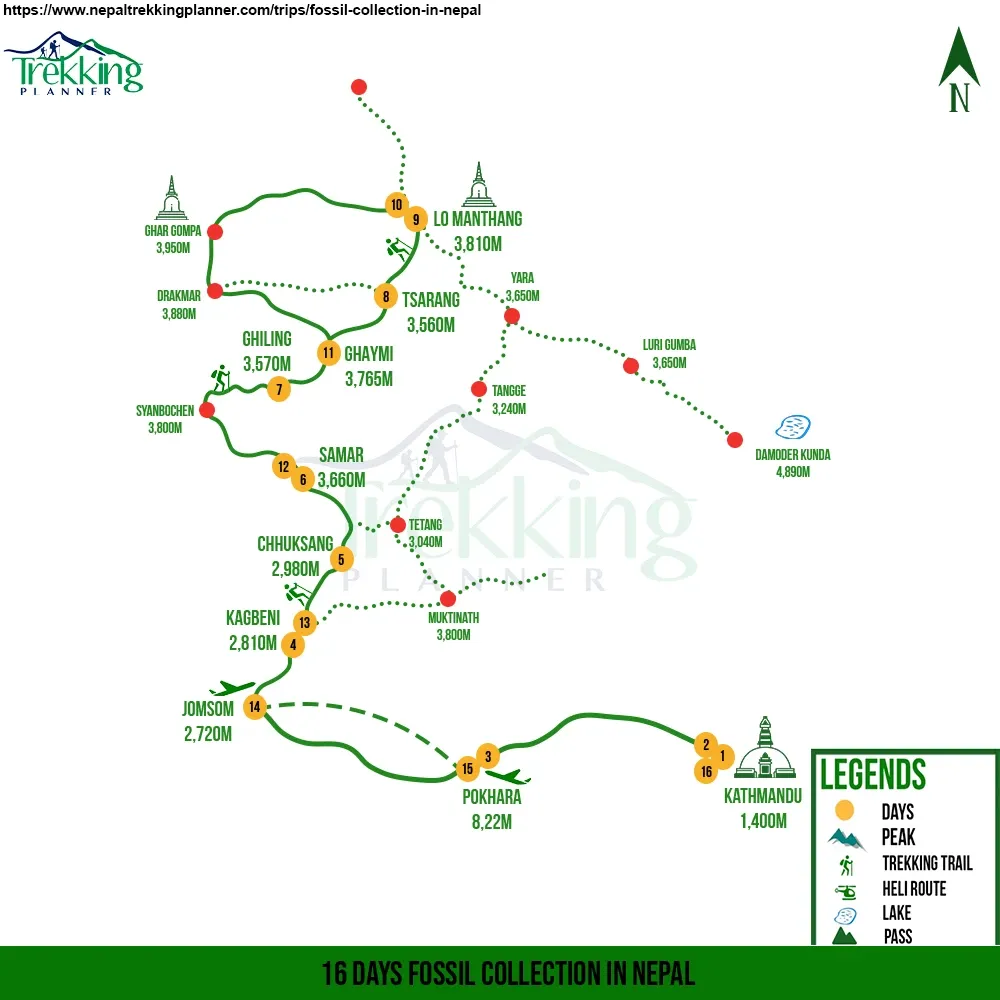
Outline Itinerary.
Day 1:Arrival in Kathmandu (1350m)
Day 2:Full day in Kathmandu
Day 3:Fly to Pokhara (820m) for about 30 min
Day 4:Fly to Jomsom (2710m) for about 25min and trek to Kagbeni (2807m) 3-4 hrs. walk
Day 5:Trek to Chussang (2920m) 5-6 hrs walk
Day 6:Trek to Samar (3290m) 5-6 hrs walk
Day 7:Trek to Ghiling (3600m) 5-6 hrs walk (finds a fossil in the way)
Day 8:Trek to Tsarang (3520m) 6-7 hrs walk (finds a fossil on the way)
Day 9:Trek to Lo Manthang (3780m) 4-5 hrs walk (finds a fossil on the way)
Day 10:Full days on Local Excursion in Lo Manthang (Collect fossils)
Day 11:Trek to Ghami (3440m) 5-6 hrs walk (finds a fossil on the way)
Day 12:Trek to Samar (3150m) 4-5 hrs walk
Day 13:Trek to Kagbeni (2807m) 4-5 hrs walk
Day 14:Trek to Jomsom(2710m/8891ft)
Day 15:Fly back to Pokhara(820m/2690ft) about 20 min and afternoon fly back to Kathamndu
Day 16:Final departure