Introduction: Ghorepani Jomsom Muktinath Trek
Ghorepani-Jomsom-Muktinath Trail takes the trekkers right through the deepest river gorge in the world, formed by the mighty Kali Gandaki River between the famous Annapurna Massifs and the Dhaulagiri Mountain Range. Trekkers traverse along the last section of the Annapurna Circuit Trek route and through villages with diverse communities, cultures, and traditions, changing landscapes, rare wildlife, flora, and fauna, a different climate, and magnificent and glittering Himalayan ranges. Join the trekking route and experience its natural, biotic, and religious uniqueness and its richness in various aspects.
This naturally rich and diverse trail from Pokhara-Muktinath begins from the northwest of Nepal’s Tourist capital, the Lake City of Pokhara. Starting along the bank of the Modi River, the track explores the dense rhododendron forest, stone stairs, beautiful waterfalls, pristine rivers, and famous settlements such as Tikhedhunga and Ghorepani as we proceed further in the course. Witnessing one of the most surreal sunrise scenes in the famed Poonhill, the trail enters the Kali Gandaki River valley as the Kali Gandaki River accompanies us in our upstream trek along the river.
Through the settlements of Ghasa, Tukuche, Tatopani, Kagbeni, Muktinath, and others, trekkers in this trek get to the arid landscape of Jomsom and Muktinath valley and finally to the religious shrine of Muktinath, sacred for both the Buddhist and Hindu communities. Intermittently, trekkers get to experience the diversity in terms of inhabitation (such as Brahmin, Chhetri's, Thakali, Magar, and other communities), flora and fauna (including rhododendron flowers in several colors such as red, pink, white, and purple), conifers (Chestnut, Oak, Hemlock, Blue Pine, and others), Langur money, and various species of birds), landscape (from lush valleys in the lower altitude to the semi-desert terrain in and around Jomsom and Muktinath), and the panoramic view of mountain massifs including the Annapurna Range, Dhaulagiri Range, Gangapurna, Mount Nilgiri, Tukuche Peak, and Thorong Peaks, among the other mountains).
Pokhara-Ghorepani-Jomsom-Muktinath Trekking offers the trekkers extensive diversity and richness, thus scores of contrasts and myths in various dimensions. It begins with some manageable trekking sections and exposes you to moderately challenging areas during the trek, requiring the trekkers to be prepared. Explore the Kali Gandaki River Basin, the junction of the Indian and Tibetan plateaus, with its comprehensive diversity, making it an attractive trekking destination. Join us to experience the religious harmony, diversity, and enthralling landscape and scenery. On a trekking trail that reaches up to 3800m at the most, trekkers find it relatively easier to complete the trek. Join this trek as soon as possible!
Highlights of Ghorepani Jomsom Muktinath Trek
- The trek begins with a flight towards Pokhara, which offers spectacular views of Annapurna and Dhaulagiri.
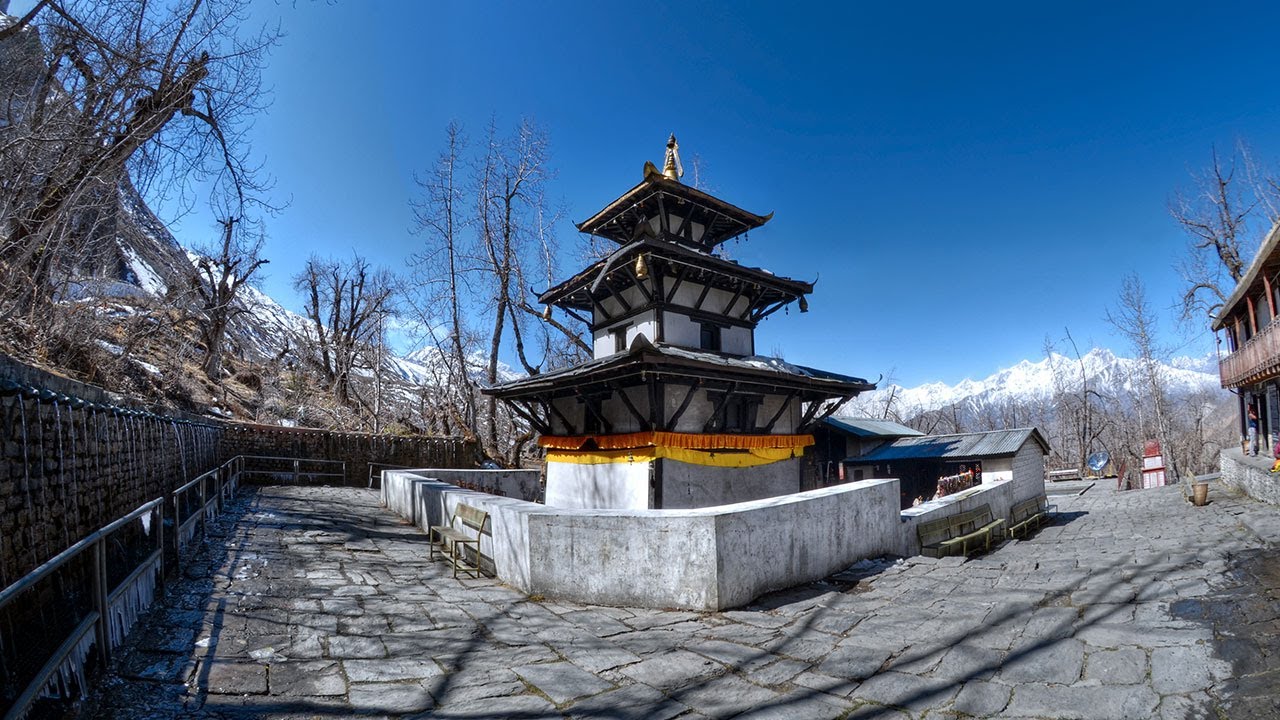
- Muktinath Temple is a sacred site for Hindus and Buddhists at 3,710 meters.
- Muktinath is famous for its 108 water spouts, believed to have healing powers.
- Kagbeni Village is a charming medieval village that offers a glimpse of the traditional Mustang lifestyle.
- Poon hill offers one of the best sunrise view in nepal of the mountains located in the Annapurna range.
- Jomsom Bazaar is the administrative center of the Mustang region, located at an altitude of 2,700 meters.
- Jomsom is famous for its apple orchards and is a hub for trekking and mountaineering activities.
- The trek also offers the opportunity to relax in natural hot springs in Tatopani, a charming village at 1,200 meters.
Advantage of booking a trek with Trekking Planner Nepal
- Private vehicles pick up and drop off passengers at all airports.
- First-aid kit box
- Trekking Planner’s down jackets, t-shirt, and cap—if necessary.
- Arrangement of emergency evacuation service (you should have insurance for emergency evacuation, which will be paid for by your travel insurance company).
- We use an oximeter to check your pulse, oxygen saturation, and heart rate, and we provide oxygen.
- Sim cards are provided by our company for travelers, so there won’t be any networking issues.
how Does the Ghorepani Jomsom Muktinath Trek Begin and End?
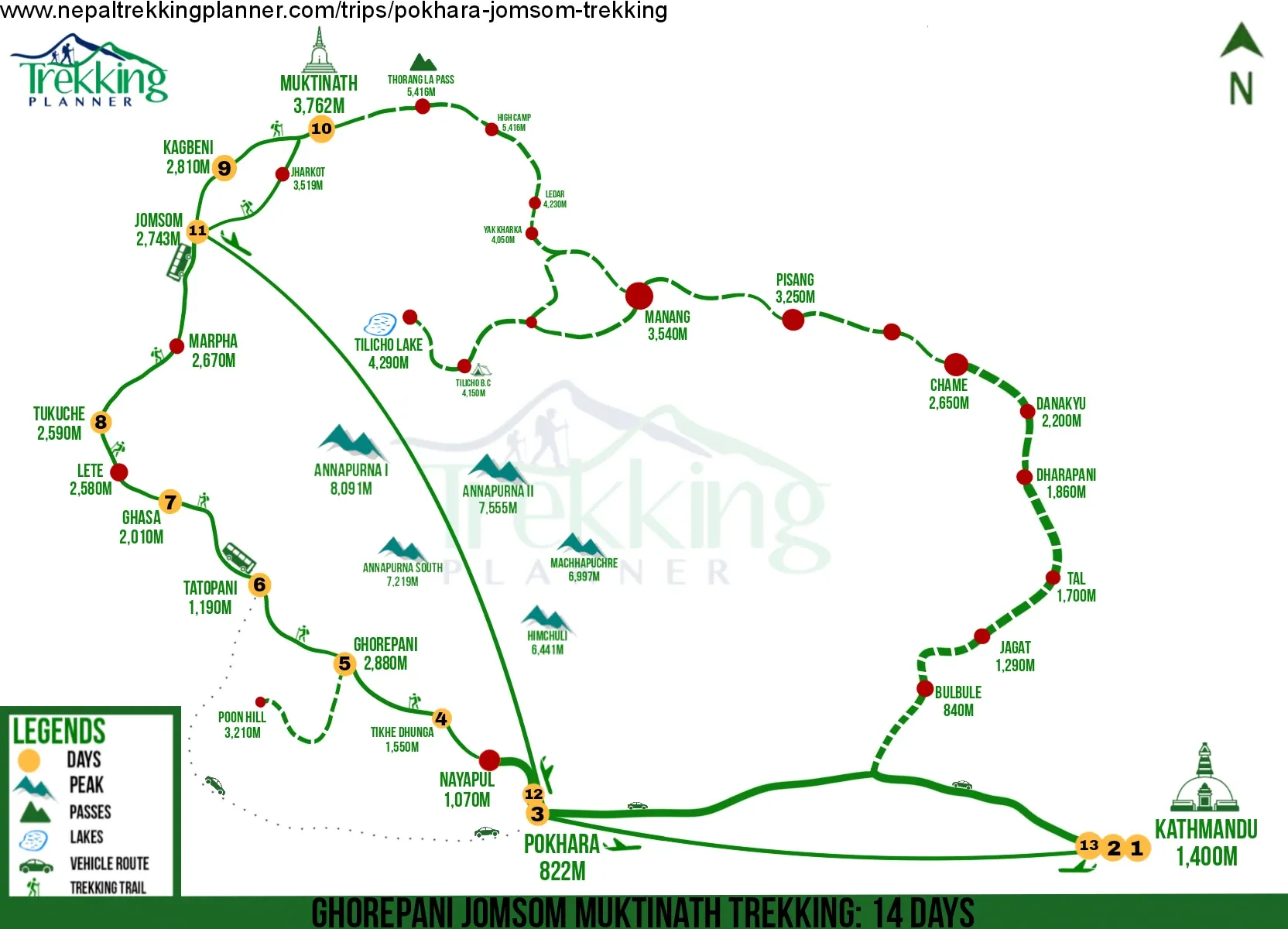
The Ghorepani-Jomsom-Muktinath trek is a popular trekking route in the Annapurna Region of Nepal. It typically begins in Nayapul and ends in Jomsom or Muktinath, depending on whether you're doing the entire trek or a shorter version.
We will follow this route but it can be customized as well:
- Nayapul: The trek starts from Nayapul, which is easily accessible from Pokhara. It's a common starting point for various excursions in the Annapurna Region.
- Tikhedhunga: After Nayapul, the trek takes you through picturesque villages and forests to reach Tikhedhunga.
- Ghorepani: The next major destination is Ghorepani, a charming village known for its panoramic views of the surrounding mountains, including the famous Poon Hill viewpoint.
- Tatopani: From Ghorepani, the trek descends to Tatopani, known for its natural hot springs. Tatopani is a great place to relax and rejuvenate.
- Ghasa, Marpha, and Jomsom: The trail then passes through various villages like Ghasa and Marpha, known for their apple orchards and local culture. The trek gradually leads to Jomsom, a larger town in the region.
- Muktinath: The trek typically ends at Muktinath Temple, a sacred pilgrimage site for Hindus and Buddhists. Muktinath is known for its temple complex and the natural elements around it.
Depending on your pace, itinerary, and acclimatization needs, the trek can be modified to a shorter or longer version. It's a diverse and rewarding trek that offers stunning mountain views, cultural experiences, and encounters with local communities.
For whom is the Ghorepani Jomsom Muktinath Trek?
Ghorepani-Jomsom-Muktinath trekking is a popular trekking route in the Annapurna Region of Nepal. It is primarily undertaken by adventure seekers, trekkers, and tourists interested in exploring the Himalayas' breathtaking landscapes, diverse culture, and natural beauty.
The trek is open to anyone who wishes to experience the majestic mountains, charming villages, and religious sites along the route. The main attractions of this trek include the beautiful rhododendron forests, stunning mountain views, the culturally rich towns of Ghorepani and Ghandruk, and the sacred temple of Muktinath, which is an important pilgrimage site for both Hindus and Buddhists.
How Hard is Trekking at Ghorepani Jomsom and Muktinath?
The Ghorepani-Jomsom-Muktinath trekking trail is a moderate trek with varying difficulty levels at different stages. The overall difficulty of the tour depends on several factors, including your fitness level, previous trekking experience, and the weather conditions during your journey. Here's a general overview of the difficulty along different sections of the trek:
- Ghorepani to Poon Hill: The initial part of the trek from Nayapul to Ghorepani is relatively moderate. However, the early morning hike from Ghorepani to Poon Hill to witness the sunrise over the Himalayas can be challenging due to the steep ascent and the early morning cold.
- Ghorepani to Tatopani: The trek from Ghorepani to Tatopani involves descending a considerable distance, which can be tough on the knees and muscles. The trail passes through beautiful rhododendron forests and offers stunning views.
- Tatopani to Ghasa: This section involves walking along the Kali Gandaki River, which is relatively flat and makes for a more leisurely walk.
- Ghasa to Marpha: The trail from Ghasa to Marpha is mostly easy, with gentle ascents and descents.
- Marpha to Kagbeni to Jomsom: This part of the trek goes through the arid landscape of the Mustang Region. The terrain is relatively flat, which makes for comfortable walking.
- Jomsom to Muktinath: The trail from Jomsom to Muktinath is primarily uphill, and the high altitude can make it more challenging. However, the views are stunning, and you'll pass through picturesque villages.
- Muktinath to Jomsom (return): The return journey from Muktinath to Jomsom follows the same route, but you'll be descending, making it relatively more accessible compared to the ascent.
How to Prepare and What to Pack for the trek?
Preparing for the Poon Hill, Ghorepani, Jomsom, and Muktinath trek requires careful planning and packing of essential items to ensure a safe and enjoyable journey. Here are some tips on how to prepare and what to pack:
- Physical Fitness: The trek involves walking for several days at varying elevations. Before the tour, exercise regularly through cardiovascular exercises, hiking, and walking to improve your stamina and endurance.
- Obtain Permits: Before starting the trek, ensure you have obtained the necessary permits. The Annapurna Conservation Area Permit (ACAP) and TIMS (Trekkers' Information Management System) cards are required for this trek. You can obtain these permits in Kathmandu or Pokhara.
Clothing:
- Lightweight and moisture-wicking trekking shirts and pants.
- Warm layers are needed for cooler temperatures at higher elevations, including a down jacket or fleece jacket.
- Windproof and waterproof jacket and pants for protection against rain and wind.
- Thermal innerwear for colder nights.
- A hat or cap to shield from the sun and cold.
- Gloves and warm socks.
Footwear:
- Sturdy and comfortable hiking boots with good ankle support.
- A pair of lightweight trekking sandals for use around the teahouses in the evenings.
Backpack and Daypack:
- A durable and comfortable backpack for carrying your belongings (40–50 liters of capacity is recommended).
- A smaller daypack to carry essentials like water, snacks, a camera, and sunscreen during day hikes.
Sleeping Bag:
- A good-quality, season-appropriate sleeping bag suitable for the trek's temperatures.
Toiletries:
- Biodegradable soap and shampoo.
- Toothbrush and toothpaste.
- Hand sanitizer and wet wipes.
- Toilet paper (available in teahouses, but it's good to carry your own).
First Aid Kit:
- Basic first aid supplies include bandages, antiseptic ointment, pain relievers, and medication for altitude sickness.
Water and Snacks:
- Carry a reusable water bottle and water purification tablets or a water filter to treat water from local sources.
- Energy bars, nuts, and dried fruits make quick snacks on the trail.
Miscellaneous:
- Sunglasses with UV protection.
- Trekking poles for additional support during steep descents and ascents.
- Headlamp or flashlight with extra batteries.
- Camera and spare memory cards or batteries to capture stunning landscapes.
Personal Documents:
- Passport and copies of necessary permits
- Travel insurance documents.
Cash:
- Carry enough Nepali currency (Nepalese Rupees) for the trek, as ATM facilities might be limited in the mountains.
Remember to pack light and only bring the essentials. Excess weight can make the trek more challenging. Additionally, taking a porter is advisable to help carry your luggage and consult with our trekking agencies officials to get valuable insights into the local culture and environment.
Lastly, check the weather forecast and be prepared for changing weather conditions. Layering your clothing will allow you to adjust to the temperature fluctuations during the trek.
Why Trekking Planner Nepal?
Consider choosing Trekking Planner Nepal for your trek to Muktinath, Jomsom, and Ghorepani.
- Local Expertise: Trekking Planner Nepal is a local trekking agency based in Nepal, which means they have an in-depth understanding of the region, its culture, and the trekking routes. They will likely have experienced guides knowledgeable about the local customs and traditions and can provide valuable insights during the trek.
- Experience and Reputation: Look for agencies with a proven track record of organizing successful treks in the region. Established trekking agencies like Trekking Planner Nepal will likely have years of experience conducting expeditions and have garnered positive reviews from previous trekkers.
- Safety and Support: Trekking in remote mountainous regions comes with inherent risks, so it's essential to prioritize safety. Reputable agencies like Trekking Planner Nepal prioritize safety and have proper emergency protocols, including access to rescue services if needed.
- Customized Itineraries: Trekking Planner Nepal may offer various itineraries for the Muktinath, Jomsom, and Ghorepani treks, allowing you to choose one that suits your time, fitness level, and preferences.
- Logistics and Permits: Trekking Planner Nepal can handle the logistics, including arranging permits and paperwork required for the trek. We save you time and effort, as obtaining permits can be complex.
- Accommodation and Meals: Trekking Planner Nepal can arrange accommodation in teahouses or lodges along the trekking route. They can also cater to dietary preferences and ensure you have access to hygienic meals during the trek.
- Social and Environmental Responsibility: Look for Nepal Trekking Planner who supports proper waste management and respect for local communities and their culture. Responsible trekking agencies contribute positively to the local economy and environment.
- Support Local Communities: Choosing a local trekking agency like Trekking Planner Nepal can also help support the local communities and economy by generating income and employment opportunities.
When selecting Trekking Planner Nepal, it's essential to research, read reviews from our previous trekkers, and inquire about services.