Book Now
Price from
US$2499

Mera Peak Climbing-18 Days

1087 reviews in TripAdvisor
238 reviews in Google
19 reviews in TrustPilot
Trip Facts
Duration
18 Days
Difficulty Level
Moderate
Maximum Altitude
6475m
Starts
Kathmandu
Ends
Kathmandu
Group Size
2+
Activities
Trekking, Climbing And Cultural Excursion
Season
March-June and September- November

Introduction: Mera Peak Climbing 

"Mera Peak Climbing is an interesting adventure where all trekkers and climbers can enjoy the adventurous feat."

Where can one explore, enjoy the walks, and climb on top of the Mera Peak summit? That rises at 6,461 m and 21,190 feet, one of the highest trekking peaks in Nepal.

It is located in sheer wilderness within hidden Inku and Hongu valleys, and close to Baruntse and Makalu mountain ranges. Situated in the east direction of Khumbu and south of Mt. Everest, it is within Sagarmatha National Park. As well very close to Makalu and Baruntse National Park and Conservation area, enclosed within an array of giant peaks.

Mera Peak Climbing takes you off the beaten tracks, seldom visited by trekkers and primarily by climbers and adventurers. It is a perfect and ideal peak for all interested trekkers and beginners in mountaineering, as the peak has an F grade.

The system of grading we have used is the world-renowned and widely accepted French and Swiss Alpine Climbing Classification System. Grade F describes it as easy climbing with less technical effort, walking on ice, snow, and rocks. However, our guide provides safety measures throughout the climb and trekking period, where all climbers require good climbing equipment.

To make your adventure and climb a great success and enjoyable, reach the top of Mera Peak with a safe descent. Mera Peak Climbing Adventure offers beautiful walks to its base camp and back to Lukla. Mera Peak is one of the few peaks in Nepal where trekkers can easily reach the summit after practice and with proper acclimatization.

Begins with a panoramic and short scenic flight to Lukla airport at the height of 2,820 m high. The walk begins from Lukla heading away from the main busy trail and villages towards the mountain wilderness. Continues with the climb over Naulekh and Zatwar-la pass to reach Inku Valley, covered by rhododendrons, firs, pines, and birch trees.

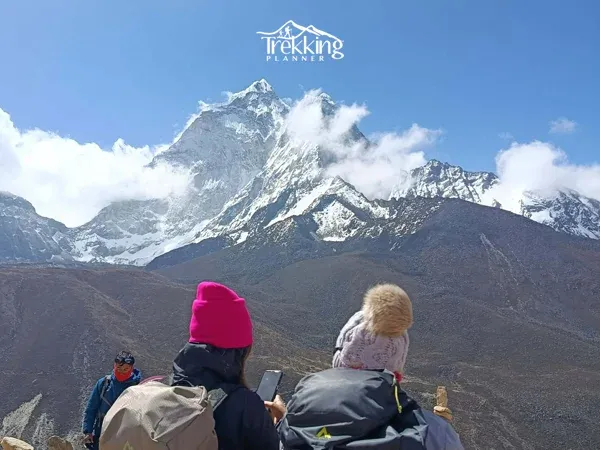
The adventure leads towards Mera Peak Base Camp within fields of ice and glaciers, after having a few days rest for acclimatization. As well as days for practice lessons from our expert guide climbing on ice and rocks. Enjoy the marvelous scenery of mountains with Amadablam, Kusum-Khanguru, and Khangtiaga, making a safe descent for the return journey to Lukla.

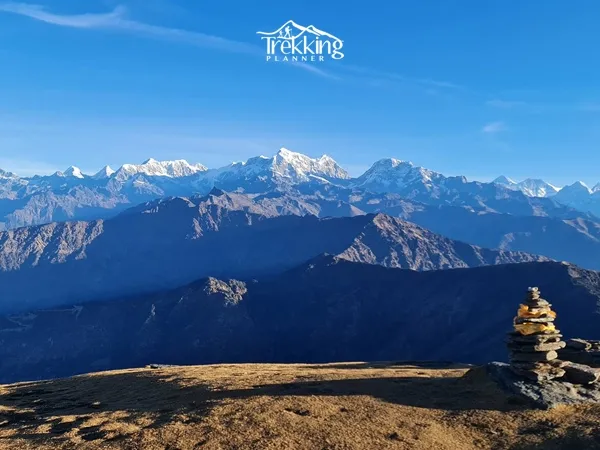
After a pleasant day's rest with climbing exercise get ready for the ‘Big Day’ to Mera Peak summit. An early morning hike and climb take you past a few icy crevasses and then a long haul on Snow Ridge. As the climb progresses reach on top of Mera Peak summit facing a breathtaking panorama of high giant peaks. Views include Mt. Everest, Lhotse, and Nuptse towards the north with Makalu and Baruntse, extending towards Mt. Kanchenjunga in the east direction.

At Lukla enjoy last night’s dinner with fellow trekkers, guides, and staff, where early morning flights reach you back in Kathmandu. After a great mesmerizing experience on Mera Peak Climbing Adventure.

Highlights of Mera Peak Climbing

  • The trek takes you through rural communities and scenic vistas, experiencing the local culture and hospitality.
  • Experience the excitement of trekking Mera Peak, the highest trekking peak of Nepal at 6,476 meters.
  • Spectacular views of the snow-capped Himalayas above 8000 m such as Mt. Everest (8848.86 m), Kanchenjunga (8586 m), Lhotse (8516 m), Makalu (8485 m), and Cho Oyu (8201 m).
  • Experience a challenging and thrilling journey consisting of technical portions such as steep ascents, glacier crossings, and ice climbing.
  • Explore Kathmandu, a cultural destination with ancient people, temples, bazaars, and restaurants serving delectable Nepalese food.
  • Spending quality time in the lap of the Himalayas.
  • Explore local flora and fauna of the region, including Musk Deer, Himalayan Thar, and so on.
  • Enjoying the marvelous scenery of mountains with Amadablam, Kusum-Khanguru, and Khangtiaga, making a safe descent for the return journey to Lukla.

Advantage of booking Mera Peak with Trekking Planner Nepal

  • Private vehicles pick up and drop off passengers at all airports.
  • First-aid kit box
  • Trekking Planner’s down jackets, t-shirt, and cap—if necessary.
  • Arrangement of emergency evacuation service (you should have insurance for emergency evacuation, which will be paid for by your travel insurance company).
  • We use an oximeter to check your pulse, oxygen saturation, and heart rate, and we provide oxygen cans as per request.
  • Sim cards are provided by our company for travelers, so there won’t be any networking issues.

What is the specialty of Mera Peak Climbing?

Mera Peak is one of Nepal's highest trekking peaks. It is a challenging still demanding trek and also one of the most rewarding because of the beautiful views and one-of-a-kind experience it provides. Nepal Trekking Planner Nepal always provides the best service and makes your trek memorable. Mera Peak has always been the best choice to date.

  • Stunning Views: Mera Peak lies in the Khumbu region, in the Mahalangur range, and provides spectacular views of snowcapped Himalayan ranges, such as Mount Everest (8848.86 m), Lhotse (8516 m), Cho Oyu (8201 m), and Makalu (8485 m) and Kanchenjunga (8586 m).  The hike itself takes you through a range of scenery, such as deep forests, alpine meadows, and snow-covered passes.
  • Adventurous Climb: Trekking to Mera Peak is a challenging adventure that requires physical fitness, patience, and a willingness to push your limits. The trek includes long days of hiking, and crossing glaciers and high passes.
  • Cultural Experience: The trek to Mera Peak brings you through traditional Sherpa communities, where you can learn more about the local culture and customs. You will have the opportunity to engage with the Sherpa people and learn about their way of life.
  • Personal Achievement: Climbing to the top of Mera Peak is a great personal achievement that requires effort, determination, and patience. It is a wonderful and hard event that you will remember for the rest of your life. The trek is also a great opportunity for beginners.

Overall, trekking to Mera Peak is an unforgettable adventure that provides breathtaking vistas, cultural encounters, and opportunities for personal growth.

How to prepare for Mera Peak Climbing?

Mera Peak in Nepal is a significant adventure and the most loved adventure now in Nepal. This trip requires careful planning and preparation to ensure a safe and pleasurable journey. Nepal Trekking Planner is here to make your trip safe and memorable. Here is some preparation advice for the trek:

  • Physical fitness: Mera Peak Climbing requires a high level of physical fitness. Trekking Planner Nepal always suggests regular aerobic exercise, such as hiking, running, cycling, or swimming. This kind of activity maintains your body level.
  • Proper gear: As the topic of climbing arises, Trekking Planner Nepal always advises investing in high-quality, trek-appropriate gear. Warm and waterproof gear, a sleeping bag, a comfortable backpack, and strong trekking shoes are all required. If you don't want to carry heavy baggage during your flight to Nepal, Trekking Planner Nepal is here to provide you with top-class service and stuff.
  • Acclimatize: Altitude sickness can be a serious problem on every trek, even in the Mera Peak trek. To minimize the risk of altitude sickness, acclimatization is a very important part of trekking. Trekking Planner Nepal is here to provide you with well-trained guides and porters, a proper itinerary and the guides provide you with the proper information regarding acclimatization and also help you to submit the peak.
  • Planning your itinerary: Planning your itinerary is a very important task to be done before embarking on any trek. Trekking Planner Nepal basically provides you with the best ideas and itinerary as well as top-class service regarding the trip. We also allow you plenty of time for acclimatization and rest days. Nepal Trekking Planner also provides important information regarding the factor of extra time for unexpected weather or other delays.
  • Hiring an experienced guide: An experienced and well-trained guide is the most important part of trekking in any part of the country. Trekking Planner Nepal helps you with a well-educated and well-experienced guide. A guide can help with logistics, provide local knowledge and experience, and assist with any issues or emergencies that may arise.
  • Get travel and health insurance: Travel and health insurance is essential for any trek to Mera Peak. Make sure your insurance covers emergency medical evacuation and other potential emergencies.
  • Be prepared for the weather: The weather in the Himalayas can be unpredictable and harsh. Be prepared for cold temperatures, high winds, and snowfall by bringing appropriate gear and clothing.

Overall, preparing for an 18-day trek to Mera Peak requires physical fitness, the right gear, and careful planning. With proper preparation, you can have an amazing and unforgettable experience trekking in the beautiful Himalayas.

Things to consider before beginning the Mera Peak expedition 

The altitude of Mera Peak differs with various adventure companies and as well with NMA (Nepal Mountaineering Association). That controls all trekking peaks of Nepal. But most climbers and adventurers agree with the present height as mentioned above.

Mera Peak climbing grade ‘F’ means “Facial Easy” used from popular French and Swiss Alpine Climbing Classification, used worldwide on alpine style climbs for
USA standard is grade 5.01 to 5.04.

Mera Peak, all types of interested trekkers and climbers can take part in this adventure where our expert guides will support and instruct you on safety measures with the skill of climbing on ice, snow, and rocks to help you with the climb.
Mera Peak Climbing-18 Days Itinerary

Day 1

Arrival in Kathmandu 1,350 m/4,429ft and transfer to Hotel.

Max Altitude: 1,350m (4,429ft)
Meals: welcome Dinner
Accommodation: Hotel moonlight/Hotel Lo Mustang/hotel Thamel Park

On arrival at Kathmandu international airport via respective airlines, you will be received by our office staff and guided with warm welcome then transfer to your hotels in the city's hub.

After checking into your rooms and getting refreshed join the other groups for a briefing on Mera Peak Climbing, our guide offers you useful information regarding the trek and your stay in Nepal with us.

The evening includes a welcome dinner in a friendly and authentic Nepalese restaurant with the Folk Culture program of Nepal while having your dinner.

Day 2

Full day in Kathmandu with half day sightseeing tour at places of interest.

Max Altitude: 1,350m (4,429ft)
Meals: Breakfast
Accommodation: Hotel moonlight/Hotel Lo Mustang/hotel Thamel Park

Morning, depart from the hotel for an exciting tour around Kathmandu at places of great interest, Kathmandu city and its valley are steeped with historical and religious monuments temples, and monasteries listed as World Heritage Sites.

After an exciting tour afternoon free to relax and prepare for Gokyo Lake & Everest Panorama trekking next early morning flight to Lukla.

Day 3

Fly to Lukla 2,860 m/9,383 ft with overnight at Lukla.

Max Altitude: 2,860m (9,383ft)
Meals: Breakfast + Lunch + Dinner
Accommodation: Lodge/Guest House

Starting early morning transfer to domestic airport for a short and scenic flight to Lukla, taking a smaller aircraft (Twin Otter or Dornier) during 30 minutes on air with a fantastic panorama of the Himalayan series of peaks with Mt. Everest, as the plane lands on its unique uphill runways reaching Tenzing and Hillary airport in Lukla.

Overnight in Lukla with the afternoon free to explore its exciting market and streets and witness local Sherpa culture of great interest with views of Kongde peaks towards the west direction.

Day 4

Trek to Chutanga 3,430 m / 11,250 ft - 04 hrs walks, walking distance 4.3 km/2.8 miles, ascent 715m/2346ft and descent 36m/119ft

Max Altitude: 3,430m (11,253ft)
Meals: Breakfast + Lunch + Dinner
Accommodation: Lodge/Guest House

Mornings with a first day walk to reach our first overnight camp at Chutanga, as our route leads past many farm lands with moderate trekking encountering few short ups overlooking beautiful scenery along the route and then stay overnight in complete isolation in the green alpine woods.

Included standard accommodation and  meals (Breakfast + Lunch + Dinner), Tea/Coffee

Day 5

Trek to Thuli-Kharka (4300 meter/14,107 feet) - 5/6 hours, walking distance 5.2 km/3.3 miles and ascent 1130m/3707ft and descent 407m/1336ft

Max Altitude: 4,300m (14,107ft)
Meals: Breakfast + Lunch + Dinner
Accommodation: Lodge/Guest House

Walk beings with steep climb to cross over high rocky ridges of Kalo and Naulekh Himal the crossing Zatwar-la and Zatwar-Og passes of over 4,300 m high to reach into Inkhu valley with overnight at Thuli-Kharka around grazing area.

Included standard accommodation and  meals (Breakfast + Lunch + Dinner), Tea/Coffee

Day 6

Trek to Kothe 4,360 m / 11,808 ft- 05 hrs, walking distance 6.7 km/4.1 miles and ascent 396m/1299ft and descent 1000m/3281ft

Max Altitude: 4,360m (14,304ft)
Meals: Breakfast + Lunch + Dinner
Accommodation: Lodge/Guest House

Today walk leads within patch of forest to enter into mountainous country to reach inner Inkhu valley where routr leads on route Mera Peak base camp, as trek continues within tree lines past many pasture area to reach a clear and wide grassy field and Kothe for overnight camp.

Included standard accommodation and  meals (Breakfast + Lunch + Dinner), Tea/Coffee

Day 7

Trek to Thangnak 4,356 m / 14,291 ft - 06 hrs, walking distance 9 km/5.6 miles and ascent 703m/2307ft and descent 26m/85ft

Max Altitude: 4,356m (14,291ft)
Meals: Breakfast + Lunch + Dinner
Accommodation: Lodge/Guest House

Morning walk start on downhill with grand views of Peak 43 and Kusum Kanguru peaks within scenic Inkhu valley where you can view stunning South Face of Mera Peak, as walk continues into dense rhododendron and pine tree forest to reach a nice meadow and an area at Mosum Kharka. Our journey continues towards north leaving the tree lines behind, after a good trek reaching a wide open valley with at Gondaishung close to Thangnak area.

Gondaishung a place with interesting old small Gompa (a small monastery or shrine) of more than 200 years, from here walk for another hour to reach at Thangnak for overnight stop, a nice place with temporary huts and shades with a small lodge and tea house.

Included standard accommodation and  meals (Breakfast + Lunch + Dinner), Tea/Coffee

Day 8

Trek to Khare 5,045 m /16,551 ft - 04 hrs, walking distance 5 km/3 miles and ascent 647m/2123ft and descent 12m/39ft

Max Altitude: 5,045m (16,551ft)
Meals: Breakfast + Lunch + Dinner
Accommodation: Lodge/Guest House

After overnight stop at scenic area at Thangnak adventure continues on gradual path with some few ups and downs overlooking fabulous views to reach near at Charpatti Tal (4 sided glacial lake).

This small lake dammed by stone and moraines, and then with short climb with downhill towards a large meadow at Khare for overnight.

Included standard accommodation and  meals (Breakfast + Lunch + Dinner), Tea/Coffee

Day 9

Acclimatization day at Khare and Pre-Climbing Training.

Max Altitude: 5,045m (16,551ft)
Meals: Breakfast + Lunch + Dinner
Accommodation: Lodge/Guest House

Today at ease after a good scenic walks from Lukla, this free and rest day allows you to acclimatize and as well time for some practice with your ice-axe and crampons around the camp, finding perfect place for some exercise on ice and rocks.

Included standard accommodation and  meals (Breakfast + Lunch + Dinner), Tea/Coffee

Day 10

Climb Mera High Camp 5,780 m / 18,958 ft, 6 hrs walk, walking distance 4.5 km/2.8 miles

Max Altitude: 5,780m (18,963ft)
Meals: Breakfast + Lunch + Dinner
Accommodation: Tented Camp

From the base camp we have allowed one more camp to make this climb more approachable, morning walk follows across Mera la and then reaching at Mera High Camp in complete wilderness, on reaching at high camp enjoy afternoon at leisure with lunch and preparation for the next early morning climb on top Mera Peak.

Where our expert guides will scout the route and fixing ropes where necessary to safe guard from incidental accidents.

Included Tented camp and  meals (Breakfast + Lunch + Dinner), Tea/Coffee

Day 11

Mera Peak (6,461 meters/21,190 feet) summit and back to Khare 5,045 m /16, 551 ft., about 8-9 hrs walk, walking distance 9 km/5.6 miles

Max Altitude: 5,045m (16,551ft)
Meals: Breakfast + Lunch + Dinner
Accommodation: Lodge/Guest House

Fain destination of the adventure, starting very early before break of dawn, route leads with steep climb but without any technical difficulty a straight-forward climb one can do it with the help of ski poles, however for safety measures where all climbers needs well equipped with crampons, ice axe, helmets.

After a tough high altitude climb then finally reaching on top of the rewards you with outstanding panorama of Mt. Everest, Mt. Lhotse, Mt. Makalu, Mt. Cho- Oyu all the way to Mt. Kanchenjunga in the eastern horizon. Enjoying marvelous moments feeling in high spirit, then descend on the same route to base camp at Khare.

Included standard accommodation and  meals (Breakfast + Lunch + Dinner), Tea/Coffee

Day 12

Reserve Day for Contingency.

Meals: Breakfast + Lunch + Dinner
Accommodation: Lodge/Guest House

An extra day reserved as contingency in case of unfavorable weather conditions, if all goes well this spare can be used on-route Lukla or before to make the walk more enjoyable.

Included standard accommodation and  meals (Breakfast + Lunch + Dinner), Tea/Coffee

Day 13

Trek to Thangnak - 06 hrs., 4,356 m / 14,291 ft

Max Altitude: 4,326m (14,192ft)
Meals: Breakfast + Lunch + Dinner
Accommodation: Lodge/Guest House

Return journey back Thangnak after a wonderful experience and climb on to Mera Peak, where walk will be easier from here on after losing much altitude to reach at Thangnak for overnight.

Included standard accommodation and  meals (Breakfast + Lunch + Dinner), Tea/Coffee

Day 14

Trek to Thuli-Kharka 4,300 m/14,07 ft - 05 hrs.

Max Altitude: 4,300m (14,107ft)
Meals: Breakfast + Lunch + Dinner
Accommodation: Lodge/Guest House

Morning walk continues leading into woodlands with steep climb and continue trek on nice grassy meadow within gradual path to reach our last camp of the trip at Thuli- Kharka.

Included standard accommodation and  meals (Breakfast + Lunch + Dinner), Tea/Coffee

Day 15

Trek too Lukla via Zatrwa La pass 4,610 m / 15,124 ft - 07 hrs.

Max Altitude: 4,610m (15,124ft)
Meals: Breakfast + Lunch + Dinner
Accommodation: Lodge/Guest House

Last day walk of the adventure morning leads with climb over high ridge of Naulekh or Kalo Himal including Zatrwa Og and Zatrwa-La passes, after a tough long climb then descend to Chutanga into green areas and forest, where few hours of great walk takes you back at Lukla for final overnight around Khumbu and Everest area.

Included standard accommodation and  meals (Breakfast + Lunch + Dinner), Tea/Coffee

Day 16

Fly to Kathmandu and transfer to hotel.

Max Altitude: 1,350m (4,429ft)
Meals: Breakfast
Accommodation: Hotel moonlight/Apsara Boutique hotel/hotel Thamel Park

From Lukla an early morning flight to Kathmandu with panorama of mountains views all the way to Kathmandu, at Kathmandu domestic airport our staff transfers you back into your hotel with free afternoon to relax after a great and wonderful adventure on Mera Peak Climb and trek.

Included accommodation on BB in Kathmandu (Hotel moonlight/Kathmandu Guest House/Apsara Boutique hotel)and standard meals (Breakfast )

Day 17

In Kathmandu free day for individual activities.

Max Altitude: 1,350m (4,429ft)
Meals: Breakfast and Farewell dinner
Accommodation: Hotel moonlight/Apsara Boutique hotel/hotel Thamel Park

Today a free day in Kathmandu reserved as extra day in case of flight delay and cancellation in Lukla, due to unfavorable bad weather conditions which can occur sometimes as Himalaya weather can be unpredictable.

If all goes well as per our guideline and set itinerary, enjoy the day with individual activities or join in for exciting tour around Kathmandu at places of great interest.

Included accommodation on BB in Kathmandu (Hotel moonlight/Kathmandu Guest House/Apsara Boutique hotel)and standard meals (Breakfast )

Day 18

Final International departure from Nepal.

Max Altitude: 1,350m (4,429ft)
Meals: Breakfast

Last day in Nepal, country of Himalayan wonders and as per your international flight time depart for homeward bound or to next respective connecting destinations.

Our staff and guide transfer you to Kathmandu airport after a mesmerizing memory and great adventure on Mera Peak Climb.

Included standard meals (Breakfast ) and Tea/Coffee

The Mera Peak Climbing-18 days has a standard daily itinerary to ensure a safe and enjoyable trekking experience. However, the length of the trek can vary depending on trekkers' physical fitness, acclimatization needs, and pace.

 Similarly, some designated overnight stops can change depending on the availability of rooms, lodge facilities, and local conditions. The itinerary may need to be adjusted in case of unforeseen circumstances such as weather changes, landslides, flight delays, or difficult trail conditions. In such events, the trek leader and head guide, acting on behalf of Trekking Planner Nepal, will have full authority to make decisions in the group's best interests.

Likewise, due to the possibility of flight delays or changes in the Lukla flight, especially during the peak season or in case of poor weather conditions, we strongly recommend trekkers to arrive in Kathmandu at least one or two days before the beginning of the trek. The buffer time will allow for better adjustment and flexibility, ensuring a timely Lukla flight and helping trekkers settle before the adventure begins.

Dates & Availability

Trip Duration
18 Days
Trip Starts & Ends Point
Kathmandu / Kathmandu
Plan your trek schedule
  • This trip can be booked privately if you’re traveling solo or with your family.
  • Have a big group? We can accommodate all of your needs.
  • We can help you make it fit your budget.
  • We accept instant bookings and online payments.
  • This trip departs every day of the year.
  • This trip is fully customizable. We can customize the trip as per your needs.
  • This trip is available on both a fixed departure and a private group basis.
  • If the given date is not appropriate for you, please contact us.
  • Trekking Planner also organizes various trips in small groups that can suit you.
  • We recommend you reserve a seat for yourself by booking with us right away for a wonderful experience with us; Call or email now for a private trip: [email protected]; mobile: +977-9851071767 (24 hours); WhatsApp, WeChat, and Viber.

Cost Details

Trip Includes

  • All airport pick-up and drop-off by private vehicle (for international and domestic flights).
  • Welcome to dinner in an authentic restaurant.
  • 04-night twin/double-sharing accommodation with breakfast at a 3-star hotel in Kathmandu.
  • Guided sightseeing tours in Kathmandu with a private vehicle (entrance fees extra).
  • Kathmandu/Ramechhap to Lukla to Ramechhap/Kathmandu flight with airport departure tax.
  • National Park entrance fee and Trekkers’ Information Management System(TIMS) card.
  • Highly experienced, helpful, knowledgeable, friendly, English-speaking, well-trained, government license-holding guide and climbing sherpa. The price includes his salary, food, drinks, accommodation, transport, and insurance.
  • 02 guests to 01 porter with their insurance, salary, food, accommodation, and equipment.
  • Your cost includes insurance, wages, food, and lodging for your guide and porter. We take excellent care of our guides and porters; they are like family.
  • Twin/double shearing is the best available accommodation in the mountain during trekking and a tented camp during climbing.
  • There are three meals a day: breakfast, lunch, and dinner (you can choose food from the tea house menu as you like.), and tea or coffee during trekking and climbing.
  • All the necessary climbing equipment.
  • First-aid kit and first-aid services.
  • Trekking Planner’s sleeping bag, down jackets, T-shirts, caps, duffle bags, and city and trekking route maps, if necessary.
  • Arrangement for emergency evacuation service (you should have insurance for emergency evacuation, which will be paid for by your travel insurance company).
  • Use an oxygen meter to check your pulse, oxygen saturation, and heart rate twice daily during the trek (very useful for checking altitude mountain sickness (AMS) and symptoms). This helps ensure your trek is in the safest hands possible.
  • One-hour complimentary spa or massage in Kathmandu after the trek.
  • All applicable government and local taxes per the itinerary.

Trip Excludes

  • Nepal Visa fee.
  • International airfare to and from Kathmandu 
  • Dinner and lunch in Kathmandu.
  • Personal travel and health Insurance, Insurance for helicopter evacuation.
  • Extra night accommodation and lunch and dinner in the city because of early arrival, late departure, and early return from the mountain (for any reason) then the scheduled itinerary.
  • Personal expenses (phone calls, baggage charge, laundry, bar bills, battery recharge, extra porters, bottle or boiled water, shower, etc).
  • Tips to the trekking crews and drive.
  • Extra expenses due to flight delays, strikes, weather conditions, or any event out of our control.

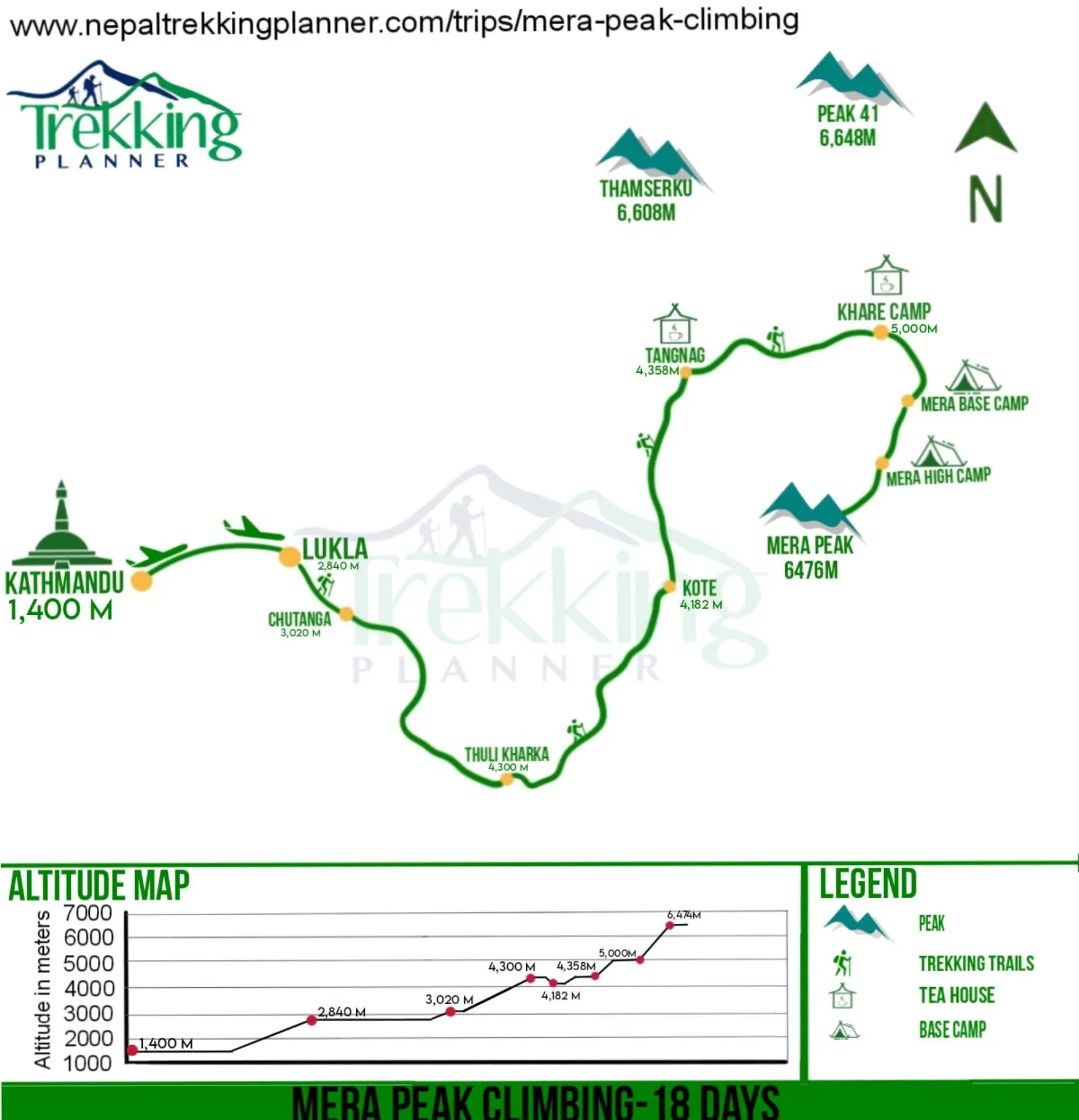
Interactive Map

StartMid DaysEnd

Infographic Map

Download

Altitude Chart

Essential Information

What is the best season and time for Mera Peak Climbing?

The appropriate season for climbing Mera Peak depends on various factors, such as weather, temperature, and humidity because the weather up in the mountains is unpredictable. But in general, the ideal seasons to climb Mera Peak are autumn (September to November) and spring (March to May) (March to May).

During the autumn season, the weather is usually clear and consistent, with warmer days and cool nights. The temperature fluctuates from 10°C to 15°C (50°F to 59°F) during the day and drops to -10°C to -15°C (14°F to 5°F) at night. During this season, the vistas of the adjacent mountains are extremely spectacular. This is the reason, the season is considered as peak season too.

Similarly, during the spring season, the weather gets warm with occasional rain or snow. The temperature ranges from 10°C to 15°C (50°F to 59°F) during the day and falls to -5°C to -10°C (23°F to 14°F) at night. Spring also provides stunning views of rhododendron forests and wildflowers in full bloom.

Trekking Planner Nepal always makes advice to remember that weather patterns can be unpredictable anywhere. That’s why Trekking Planner Nepal is here for your betterment and safe trekking. We also provide you with top-class Sherpas for the rest of your trek.

Climate and weather during Mera Peak climbing?

Mera Peak is a mountain in the Solu-Khumbu area, the eastern part of Nepal, located in the Mahalangur part of the Himalayas. Mera Peak's weather and climate vary drastically depending on the time of year and height. The Himalayan climate can be unpredictable sometimes, even in the best seasons.

Mera Peak climbing season typically goes from March to May and September to November. The weather is often bright and dry during these months, with warm temperatures and little humidity. Temperatures and higher elevations can still drop dramatically at night, so climbers must dress warmly.

Temperatures at the base of the mountain typically range from 5°C to 15°C (41°F to 59°F) in March and April, while temperatures at higher altitudes can range from -10°C to -15°C (14°F to 5°F). Temperatures in May range from 10°C to 20°C (50°F to 68°F) at sea level and -5 °C to -10 °C (23°F to 14°F) at higher elevations.

Temperatures are comparatively cooler in the autumn than in the spring. Temperatures at the base of the mountain range from 0°C to 10°C (32°F to 50°F), but at higher altitudes, temperatures can range from -10°C to 15°C (14°F to 59°F).

It's important to remember that the weather in the Himalayas may be highly diverse and unpredictable, so climbers should always be prepared for rapid weather changes. Snowstorms and heavy snowfall can occur at any time of year, making climbing conditions extremely risky. Climbers should always be aware of weather forecasts and be prepared for any scenario.

Local culture and religion around Mera Peak

Mera Peak is a mountain located in the Mahalangur section of the Himalayas in Nepal. The Sherpa people, who have a rich culture and tradition, live in the area around Mera Peak. Here are some features of native culture and tradition around Mera Peak:

  • The Sherpa people have a unique culture and way of life. The Sherpas have their own language, religion, and cultural practices. The brave Sherpas are also well-known for their mountaineering abilities, having participated in numerous Himalayan excursions.
  • The Sherpa people celebrate different festivals, such as Losar (Tibetan New Year), Dumje (Sherpa celebration), and Mani Rimdu (Buddhist festival). They perform traditional dances, offer prayers, and make offerings to their deities during these holidays.
  • Sherpa People offers a different and unique combination of Tibetan and Nepalese cuisine. Thukpa (noodle soup), momos (dumplings), and gundruk are some of the most popular foods (fermented leafy vegetables).
  • The Sherpa people dress traditionally, with long-sleeved shirts, jackets, and long skirts for ladies and knee-length skirts for males. They are also known as Bakkhu.  They also have a unique hat known as the Khukuri.
  • Music and dance are significant elements of Sherpa culture. Traditional instruments include the damphu (a type of drum), the piwang (a type of violin), and the shen (a type of flute). The dances, which are commonly performed during festivals, are distinguished by elaborate hand and foot movements.

Overall, the culture and traditions of the Sherpa people around Mera Peak are rich and diverse, and offer a unique glimpse into the Himalayan way of life.

Is Travel Insurance required for Mera peak climbing?

Travel insurance is mandatory before beginning any peak climbing in Nepal. So, Trekking Planner Nepal strongly advises you to get your travel insurance for any trekking or climbing activity, including the hike to Mera Peak. Also, you must consider that your insurance covers all emergency medical bills, evacuation and return, trip cancellation or interruption, loss of bags or valuables, and other unplanned circumstances should all be covered by a comprehensive travel insurance policy.

Trekking Planner Nepal also asks you to read and study the policy carefully and ensure it covers the activities you intend to do, such as climbing and mountaineering at high elevations. Similarly, you must be aware of any restrictions or limitations, such as altitude restrictions or pre-existing medical issues. Trekkers must bring a copy of their travel insurance policy in an emergency.

Can we get altitude sickness during Mera peak climbing?

The Mera Peak climb is a high-altitude trek that reaches an elevation of 6,476 meters (21,247 feet). Altitude sickness, commonly known as acute mountain sickness (AMS) normally seen from an altitude of 2400m for beginners. AMS is dangerous for both climbers and also guides sometimes. AMs normally seen to those who travel to high heights too quickly without adequate acclimatization.
Some of the symptoms of AMS are:

  • Headache.
  • Nausea and dizziness.
  • Shortness of breath.
  • Exhaustion.
  • Difficulty in sleeping.

Altitude sickness, if left untreated, can lead to more serious illnesses such as high altitude pulmonary edema (HAPE) and high altitude cerebral edema (HACE), all of which can be fatal.

AMS is common to everyone, but enough time for acclimatization is needed to prevent this. Trekking Lanner Nepal suggests you acclimatize yourself to the thinner air at higher elevations. Proper acclimatization is essential to minimize the danger of altitude sickness on a Mera Peak Climb. This can be done by gently climbing higher elevations and allowing your body time to adjust to the altitude.

Besides proper acclimatization, other ways to avoid altitude sickness is staying hydrated, avoiding alcohol and sleeping tablets, and eating a well-balanced diet rich in carbs.

Washing and Toilet Facilities at Mera Peak  

Mera Peak is a known and popular climbing destination in the Everest region of Nepal, and bathroom and washing facilities depend on the route and lodge options chosen. The tea shops and lodges along the Mera Peak trail provide basic washing and toilet facilities. These facilities, ranging from a basic squat toilet to a flush toilet with running water, may be shared with other trekkers. The quality and cleanliness of these facilities may also differ based on their location and traffic volume.

Regarding shower facilities, certain tea houses and lodges may provide hot showers. However, they usually charge an additional expense. Some lodgings may have basic restrooms with a bucket and a cold water tap. It is important to remember that water conservation is firmly due to the state's remote location and limited resources. Taking bucket showers and using as little water as possible is recommended.

Overall, while the facilities for washing and toilets on the Mera Peak trek may not be luxurious, they are functional and adequate for most trekkers.

Accommodation facilities during Mera Peak climbing

Mera Peak is a well-known trekking and mountaineering destination in Nepal's Khumbu region. Along the Mera Peak trekking trail, numerous lodging alternatives exist, including teahouses, lodges, and campsites.

Teahouses are small guesthouses and provide basic accommodations, including a bed, a shared bathroom, and food. These are the most common and least costly accommodation options along the Mera Peak trekking route. Locals own and maintain most teahouses, providing an excellent opportunity to interact with them and learn about their culture.

Lodges are larger guesthouses with more amenities like private toilets and hot showers than teahouses. They cost more than teahouses, but they provide more comfort and convenience.

Trekking Planner Nepal arranges the best available lodge accommodations during the trek and camping facilities at higher altitudes. In the peak season, the lodges are usually packed. The benefit of trekking with Trekking Planner Nepal is that we book your accommodation in advance as per your requirements and ensure quality service with well-trained guides and porters.

Equipments

If you are preparing for an exciting Peak Climbing adventure in Nepal, there is always some confusion about what to pack. It is essential to carry the right gear and equipment for a comfortable, safe, and enjoyable experience. All trekkers should properly pack and carry all the essential items.

However, overpacking is another common mistake that can make the journey tiring. So here is a carefully crafted packing list that includes everything you need for peak climbing in Nepal. From general items, cloth layers, headgear, footwear, to accessories and first aid, the list consists of light and smart packing items for every challenging mountain condition.

Note: You do not need to bring all the items mentioned below to Nepal. There are several trekking shops in Kathmandu or Pokhara where you can buy or rent high-quality gear at a reasonable price. So, feel free to pack light and purchase or rent any missing items after your arrival in Nepal. Also, members from Trekking Planner Nepal Pvt. Ltd. can also guide and assist you to find the best deals in gear and equipment in Thamel, Kathmandu.

What Does the Company Provide?

  • We give you a free duffel bag (must return), buffs, trekking cap, crampons, trekking map, and t-shirt during your pre-trip meeting in Kathmandu. The duffel bag will be used to pack your trekking supplies.
  • For every two participants, we assign one porter. The porter will carry the duffel bag, which should weigh around 10 kg/22 lbs., throughout the walk.
  • We can provide a down jacket for USD 35. In case of loss or damage, you need to pay back the cost of USD 100 per item.
  • We can provide a sleeping bag for USD 35. In case of loss or damage, USD 100 per item must be paid.
  • You can safely store your extra luggage (items not required on the trek) at the hotel in Kathmandu. Our team can happily assist and help.
  • Total luggage for the Kathmandu-Lukla flight is (15 kg/33 lbs.), including duffel (10 Kg/22 lbs.) and backpack (5 kg/11 lbs.).
  • We provide a free Nepal SIM card (Ncell) to all our trekkers during the pre-trip briefing in Kathmandu. Data packages can be purchased at an additional cost.

Peak Climbing Equipment's

  • High altitude Climbing Boots: Insulated, rigid-soled boots for better warmth, waterproofing, grip and crampon compatibility.
  • Climbing Helmet: For protection of climber head from falling rocks and ice.
  • Expedition Suit: Full body protection against sub zero temperature and high wind.
  • Expedition Mittens: Thick, insulated, waterproof mittens to keep the hands warm.
  • Crampons: Metal spikes with sharp points to attach at the bottom of the boots to provide traction on snow and ice.
  • Ice screw: To twist into ice to create secure anchor point for protection.
  • Ice axe: Use to chop ice and provide anchor on icy slopes.
  • Ice hammer: Used to hammer ice screws and clear ice.
  • Tape Slings: Nylon webbing loops used as extenders.
  • Harness: Waist and leg loop system to securely attach the climber to the rope.
  • Screw gate Karabiners: Locking carabiners with threaded sleeve that prevents accidental opening.
  • Descenders: Mechanical device used to control the speed of descent on a rope.
  • Ascenders: Mechanical device used to ascend fixed rope efficiently.
  • Ropes: Static kernmantle ropes designed to absorb fall energy.
  • Belay Device: Mechanical friction device used to manage the rope while belaying a partner.
  • Snow Bar/Snow Anchor: A long metal tube driven into snow to create a reliable anchor point for belays and protection on snowy slopes.
Upper Body Layers
  • Lightweight Thermal tops
  • Fleece Pullover or Jacket
  • Down Jacket or Puffer Jacket
  • Insulated Jacket
  • Waterproof Jacket
  • Long/Short, Polypropylene Sleeve Shirt
  • Soft Jacket
  • Lightweight Gloves
  • Heavyweight Gloves
Lower Body Layers
  • Fleece Pants
  • Hiking Pants
  • Light thermal trouser
  • Optional Hiking Shorts
  • Technical fabric/quick drying undergarments (can be washed during the trek)
  • Sports bras (women)
  • Sleeping clothes as per the comfortability
Footwear & Accessories
  • Trekking Boots
  • Marino wool or comfortable warm socks
  • Liner Socks
  • Crampons
  • Casual shoes or sandals for teahouses
  • Gaiters (lightweight for rain and snow)
Head & Sun Protection
  • Brimmed Hat or Sun Cap
  • Buff/Neck Warmer/Neck Gaiter
  • Sunglasses
  • Bandana or headscarf
  • Balaclava
  • Sunscreen SPF- 50+
Personal & Medical Kits
  • Duffle Bags, 65 L
  • Trekking Bag, 30-40 L
  • Trekking poles
  • Head torch with extra batteries
  • Sleeping Bag
  • Sleeping bag liner
  • Raincoat
  • Glacier Glasses
  • Sunglasses
  • Thermosets
  • Navigation Equipment
  • Refillable Water bottle
  • Garbage Bag
  • Day bag Cover
  • Buff/Face mask
  • Books, Diaries, Playing Cards or Board Games
  • Toothbrush
  • Toothpaste
  • Soap
  • Shampoo
  • Deodrants
  • Nail Clippers
  • Hair Brush
  • Quick Drying Towel
  • Face Flannel
  • Toilet Paper
  • Hand and Face Moisturizing Cream
  • Lip balm or Vaseline
  • Ointment cream
  • Cough Syrup and strepsils (recommended for Khumbu Cough)
  • Creams and medicines (for any allergies or diseases)
  • Sanitizer
  • Band-Aid, Plasters and Zinc Oxide Tape
  • Painkillers
  • Antibiotics
  • Anti-diarrheal
  • Water purification tablets or water filters
  • Earplugs
  • Insect Repellent
  • Wet Wipes/Baby Wipes
  • High calorie snacks
  • Oral Rehydration Sachets
  • Electrolytes, power or tablets
  • Eye Drops
Travel Documents
  • Passport
  • Extra copies of passport-sized photos
  • Permits
Miscellaneous
  • Water bladder for the day bag
  • Small towel for personal use
  • Pillowcase in case of allergies to new pillows
  • Glues or Duct-Tape
  • Waterproof/dry bags for carrying essential documents, stuff, frequently used items, and money
  • Power bank or extra batteries
  • Cameras and mobile phone
  • Pee bottle/ pee funnel for women (only required during climbing)
  • Whistle in case your voice is not loud enough to stop or start
  • Thermos for hot water during the nighttime

FAQs

How difficult is Mera Peak Climbing? How many hours a day do you walk?

Mera Peak Climb of less technical mountain to climb all the way to the summit top, however safety measures needed especially on descend.

The difficulty is the walk along long snow ridge and facing high altitude and dry air, the climb alone is not that challenging. The weather factor makes the difference on unfavorable weather leads to some difficulty.

How much does it cost to climb Mera Peak?

It entirely depends upon the size of a group, for minimum 2-3 pax average of US$ 2199 per person, maximum from above 4 to 8 pax at an average of US$ 2099 per person, which includes all permits and logistic support with hotels in Kathmandu and camping with guide, porters and camping staff services.

Which is the best season for Mera Peak climbing?

Almost all months of the year except the monsoon wet time from mid-June till August, and middle of winter from mid-December to February. The best season is spring from March till May, and autumn / fall to pre-winter, September to mid-December months.

With whom do I Climb with?

Depends upon joining with group or single / solo, in group of different nationalities which makes the adventure more interesting and lively, along with climbing-trekking guide with whole camping crews and porters.

If you are doing alone as solo climber, you will accompanied by expert guide and porters with camping staff.

What is the food like on Mera Peak Climbing?

Foods and all meals are served of international standard quality, cooked by our expert camping cook and kitchen helpers. From local Nepalese Dal Bhat (rice, light curries and lentil soup) to continental, Chinese, Indian and Tibetan or Sherpa cuisine.

All meals cooked with different kitchen unit of cook and kitchen hands, serves you continental breakfast, light lunch and sumptuous dinner with afternoon tea / coffee, drinking chocolate and light snacks.

As time permits our cook can bake cakes and pie to celebrate your success on Mera Peak Climb.

Where am I sleeping at night?

In spacious tents with space for two person, throughout the trek and climb except on last day in the comfort of nice lodge at Lukla.

How much mountaineering experience do I need to climb Mera Peak?

Any person in good health and physically fit can join in for the climb to Mera Peak and trek, however beginners with basic climbing knowledge and experience will be very best for this type of alpine climbing.

Do I need a climbing permit?

Yes, any major peaks and mountains requires climbing permits, on booking with Trekking Planner all required permits and official documents will be obtained well in advance before the trek and climb departure to Mera Peak.

I am a solo traveler. Do people usually know each other or are there other solo travelers like me?

Solo Climber on their own either with guide and porter, or with only guide cum porter. But on this trip accompanied with camping staff.

When joining with a group of trekkers can be interesting making friends of different nationalities, and keeps you busy knowing each other or sharing your knowledge with each other.

Each individual in a group differs sometimes, some are close friends and couple or just a solo traveler joining in the group.

Do I need travel insurance and insurance for emergency evacuation for Mera Peak climbing?

Certainly, all trekkers and climber requires to obtain travel and medical insurance for safety purposes. One can never know what befalls ahead, some might can be very ill from diarrhea or altitude sickness known as AMS (Acute Mountain Sickness).

Where the victims need to be evacuated immediately by any means of quick transport like on Helicopter, where all your medical bills will be reimbursed by your insurance depending upon the nature of insurance policy.

Another reason for travel insurance, just in case the trip can be obstructed by bad weather, where trek needs re-route the destination or might get canceled.

Where flight to Lukla operates on good fine weather, if the flight gets delayed or canceled it will affect the whole itinerary days. Where you’re insurance can cover most of your expenses.

How to prevent/handle altitude sickness while climbing Mera peak?

Taking it slow and steady walks and climb with enough little rest stop to catch your breath, as well having rest days for acclimatization before heading higher altitude and climb.

How much money should I bring on trek and climb on Mera Peak? Where can I exchange my money?

It depends upon how you spend it, on booking with full payment all main hotel and lodge accommodation are included, with all meals on trek and climb includes service of guides and porters with all camping crew.

The only extra money required for your personal expenses such as having extra drinks and snacks, as well for souvenir buying. But on this trek and climb there are no villages and shops to buy, except in the beginning and at the end of the trip at Lukla.

If you are a beer drinker and other hard drinks available only in Lukla, one needs to carry extra more like NRS 10 to 20, 000 more on top of average money to carry on trek minimum of NRS 10,000.00. As well as reserve money in case of flight delay at Lukla and other main expenses like gratitude or tips for the trekking staff, guide, and porters.

You can exchange money in Lukla before or at the end of the trip, there are banks and money changing facilities in Lukla town.

Should I buy my gear at home or in Kathmandu?

If it’s too much to carry from home, one can purchase some trekking and climbing gear in Kathmandu or one can hire, such as Down Jackets and Sleeping bags, Ice Axe, and other items required for the climb and trek.

Where you can purchase almost all items from torch/flashlights and good quality aluminum water bottle, etc.

What do i do with my extra luggage while I am climbing Mera peak?

Extra baggage that is not necessary for Mera Peak Climb and trek can be stored in the hotel, as well as valuable and documents in the hotel locker or with Trekking Planner.

What is the food like on the Mera peak climbing? Should i bring my own food to the Mera peak climbing?

All food served in camping of excellent quality taking care of hygiene, Foods and meals are served of international standard quality, cooked by our expert camping cook and kitchen helpers. From local Nepalese Dal Bhat (rice, light curries and lentil soup) to continental, Chinese, Indian and Tibetan or Sherpa cuisine.

All meals cooked with different kitchen unit of cook and kitchen hands, serves you continental breakfast, light lunch and sumptuous dinner with afternoon tea / coffee, drinking chocolate and light snacks.

As time permits our cook can bake cakes and pie to celebrate your success on Mera Peak Climb.

How do I charge my electronics on trek/climbing?

One can carry portable solar charger, as there are no villages on route to charge your gadgets, except for Lukla in the beginning and at the end of the trek and climb.

Is there Wi-Fi on Mera Peak climbing?

Except in Luka, as you will be trekking and climbing in sheer mountain wilderness with no villages or permanent human settlement on this trip, you can get Wi-Fi only at Lukla at the end of the trip.

Will I get call service on the trail?

Sometimes but not every day, as the area is well hidden by high hills and mountains, where any calls can be obstructed due to weather and as well by high mountains and hills.

Featured Trip
7%
Off
Price Per Person
US$2499
US$2699
  • 1 paxUS$2699
  • 2 - 6 paxUS$2499
  • 7 - 14 paxUS$2430
  • 15 - 30 paxUS$2399
Need Help? Call Us!
Dipak Lamichhane
Dipak Lamichhane
Managing Director
+977 9851071767

You May Also Like

Pikey Peak Trek - 10 Days
Duration: 10 Days
5.0 (1 Reviews)

Pikey Peak Trek - 10 Days

KathmanduKathmandu
Per Person
US$699US$899
Trip Details
Everest 15 days Trek
Duration: 15 Days
5.0 (12 Reviews)

Everest Base Camp Trekking - 15 Days

KathmanduKathmandu
Per Person
US$1399US$1499
Trip Details
Mountaineers crossing a glacier during a Yala Peak climbing expedition in the Langtang Himalayas
Duration: 14 Days

Yala Peak Climbing - 14 Days

KathmanduKathmandu
Per Person
US$1699US$1799
Trip Details
Need Help? Call Us+977 9851071767
Mera Peak Climbing-18 days | Route, Map, Cost and Itinerary