Book Now
Price from
US$1599

Gokyo Cho La Pass Trek – 19 Days via EBC

1112 reviews in TripAdvisor
238 reviews in Google
19 reviews in TrustPilot

The Gokyo Cho La Pass trek via EBC is one of the most remarkable and fulfilling treks in Nepal.  Offering a chance to visit the base camp of the world's highest mountain peak, i.e., the Everest Base Camp (5,364 m/17,598 ft), cross the iconic Cho La Pass (5,420 m/17,782 ft), and witness the spectacular beauty of the Gokyo Lakes, makes this trek an unforgettable journey for trekkers. Commencing with a thrilling flight to Lukla, this 19-day journey takes trekkers through traditional Sherpa settlements, ancient monasteries, and other cultural symbols, beautiful glacial valleys, and spectacular landscapes of the Khumbu region, with acclimatization stops at Namche and Dingboche.

Similarly, trekkers get to stand at Kalapatthar (5,545 m/18,192 ft) to witness magnificent, close-up views of legendary mountain peaks, including Mount Everest, Lhotse, Nuptse, Pumori, and others. After Kalaptthar, crossing the Cho La Pass provides one of the most thrilling high-altitude experiences for trekkers. Additionally, the best seasons to do the 19-day Gokyo Cho La pass trek are spring and autumn, during which Trekking Planner Nepal Pvt. Ltd. provides a Sherpa guide and porter support. 

Trip Facts
Duration
19 Days
Difficulty Level
Hard
Maximum Altitude
5545m
Starts
Kathmandu
Ends
Kathmandu
Region
Everest
Group Size
2+
Accommodation
3 star hotel in Kathmandu and Lodge accommodation during the trek
Meals
Breakfast basis in city and full board during the trek
Trek Distance
145–155 km/90–96 miles
Activities
Trekking, Historical and Cultural Excursion
Season
March-June and Sept-November

Gokyo Cho La Pass Trek Highlights

  • Trek to the beautiful and pristine Gokyo lakes via the iconic Everest Base Camp (EBC) route and pass through the thrilling Cho La Pass.
  • Enjoy breathtaking views of some of the world's highest peaks, including Mount Everest, Lhotse, Makalu, Cho Oyu, Nuptse, Pumori, etc.
  • Visit Kalapatthar (5,545 m/18,192 ft), the highest point reached during the trek, which offers the best, close-up views of the iconic Mount Everest, Nuptse, Lhotse, Pumori, and others.
  • Pass through several Sherpa villages and settlements along the route and witness Sherpa traditions, ancient Tibetan monasteries, including Tengboche Monastery, and other cultural symbols such as mani walls, chortens, and prayer flags, as well as festivals such as Mani Rimdu and Lhosar.
  • Walk through green valleys, terraced hills, and suspension bridges. Gradually enter the rugged terrain and landscapes of the inner Khumbu region, and finally witness spectacular mountain valleys surrounded by snow-capped peaks, glaciers, and ridges.
  • Visit the renowned Sagarmatha National Park, a UNESCO World Heritage Site, and witness incredible wildlife, including Himalayan tahr, musk deer, Himalayan monal (Nepal's national bird), blood pheasants, snow pigeons, and Himalayan griffon vultures.
  • Cross the iconic Cho La Pass at 5,420 m/17,782 ft, a high-altitude pass and a thrilling experience in itself.
  • Enjoy acclimatization hikes, including the Everest View Hotel (3,880 m/12,730 ft), one of the world's highest luxury hotels, and Nangkartshang Peak (5083 m/16,676 ft).

Introduction to Gokyo Cho La Pass Trek via EBC

Nepal is a land of spectacular landscapes, ancient culture/traditions, and thrilling adventures. Since it is home to eight of the world's fourteen highest mountains, Nepal has earned a global reputation as one of the most prominent trekking destinations. Hence, a significant number of international travelers visit this iconic country residing in the heart of the Himalayas every year for thrill, natural & cultural immersion, and high-altitude adventure.

Among its many iconic trekking routes, the Gokyo Cho La Pass trek via EBC stands out as one of the most rewarding and fulfilling. Everest Base Camp (5,364 m/17,598 ft) is the primary base camp for trekkers attempting to summit Mount Everest, the world's highest peak (8848 m). Standing at the base of the world's highest peak is a surreal feeling for many trekkers. The Cho La Pass (5,420 m/17,782 ft) is a thrilling and iconic high-altitude mountain pass that connects the Everest Base Camp trekking trail to the Gokyo Valley. Similarly, the Gokyo Lakes are the six sacred and symbolic high-altitude glacial lakes located in the Khumbu region.

The 19-day Gokyo Cho La Pass trek is a comprehensive trekking package that offers a perfect blend of high-altitude adventure, cultural immersion, acclimatization, and the spectacular scenery of the Khumbu region's peaks and landscapes. Starting with a scenic flight to Lukla, the trek takes trekkers through some of the commercial and traditional Sherpa settlements through the Khumbu region, including Phakding, Namche Bazaar, Dole, Machhermo, Lobuche, Gorakshep, Gokyo, etc. It also includes acclimatization stops at Namche Bazaar and Dingboche. Apart from the spectacular mountain scenery, the entire trekking journey also offers an opportunity to immerse yourself in the unique Sherpa culture and traditions of the Khumbu region.

The trek then reaches Everest Base Camp and Kalapatthar before crossing the thrilling Cho La Pass and ultimately reaching the beautiful turquoise waters of the pristine Gokyo Lakes. Another highlight of the Gokyo Cho La Pass trek is its offer of one of the world's most breathtaking mountain views. Throughout the trek, trekkers enjoy stunning views of Mount Everest (8,848 m/29,031 ft), Lhotse (8,516 m/27,940 ft), Nuptse (7,861 m/25,791 ft), Ama Dablam (6,812 m/22,349 ft), Thamserku (6,608 m/21,729 ft), Kangtega (6,782 m/22,251 ft), Pumori (7,161 m/23,494 ft), Lobuche Peak (6,119 m/20,161 ft), Island Peak (6,189 m/20,305 ft), Cholatse (6,440 m/21,129 ft), Taboche (6,495 m/21,309 ft), and several other snow-capped peaks.

Also, the Gokyo Cho La Pass trek lies within the Sagarmatha National Park, a UNESCO World Heritage Site established in 1976 to protect the unique ecosystem around Mount Everest. Similarly, Wildlife enthusiasts visiting the region can encounter many wildlife species, such as Himalayan tahr, musk deer, Himalayan monal (Nepal's national bird), blood pheasants, snow pigeons, Himalayan griffon vultures, and, on rare occasions, elusive species such as the snow leopard and red panda, providing additional excitement for trekkers.

The 19-day Gokyo Cho La Pass trek is an extraordinary adventure through some of the most iconic Himalayan landscapes, cultural settlements, and high-altitude destinations in Nepal's Khumbu region.  Hence, this trek offers a comprehensive experience of the Everest region for trekkers seeking more than the Classic Everest Base Camp Trek can offer.

gokyo trekking

Why Choose the Gokyo Cho La Pass Trek via EBC package?

  • The trek provides an opportunity to experience most of the Everest region. You can visit the famous turquoise Gokyo Lake, cross the dramatic Cho La Pass, and stand at the base of the world's highest mountain in a single package. If you are going for the standard EBC trail, then these experiences are completely missed.
  • Compared to the classic Everest Base Camp trail, the Gokyo Cho La Pass trek is noticeably quieter. You can get a combined sense of peace and adventure. Besides, crossing Cho La adds an excitement of achievement that other standard packages lack.
  • The three combined destinations are harder and longer. They are best suited to trekkers with reasonable fitness and some trekking experience. So, for those who want a more memorable high-altitude challenge without needing to go for the Everest Three High Pass Trek, the Gokyo Cho La Pass Trek via EBC package is the best option.

Major Attractions of the Gokyo and Everest Region

1. Lukla flight

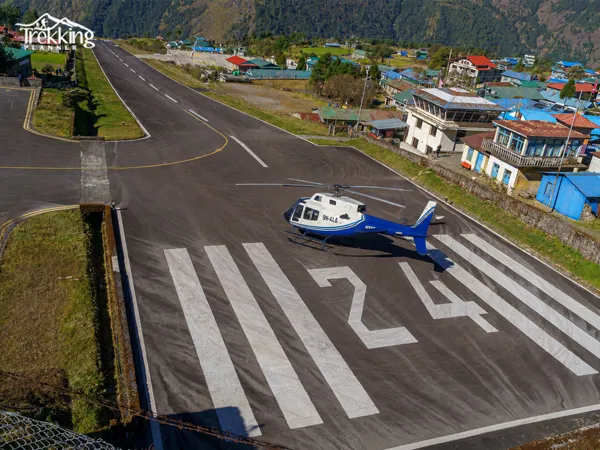
The Gokyo Cho La Pass Trek begins with a thrilling, scenic flight to Lukla. The flight takes approximately 35-45 minutes and lands at the Tenzing-Hillary Airport, also known as Lukla Airport (2,846 m/9,337 ft). It offers a breathtaking aerial view of panoramic mountain ranges, traditional settlements, lush green hills and valleys, and other natural features. The Lukla flight is also renowned as one of the most thrilling flights in the world due to the aircraft configurations used and the short, uphill runway at Lukla Airport.

2. Sagarmatha National Park

The Sagarmatha National Park is one of the key highlights of the Gokyo Cho La Pass trek via the EBC Trek. Established in 1976, it was recognized as a UNESCO World Heritage Site in 1979. It covers approximately 1,148 square km, incorporating unique landscapes such as rugged mountains, glaciers, and forests.  It has a unique variety of wildlife, including Himalayan Tahr, Musk Deer, Himalayan Monal (Nepal's national bird), snow leopards, and red pandas.

3. Sherpa Culture and Hospitality

Sherpas are the major ethnic community of the Everest Region. Sherpa people are renowned worldwide for their fierce mountaineering skills, unique Tibetan-Buddhist culture, and their warm hospitality. The Gokyo Cho La Pass trek is a wonderful opportunity for trekkers to experience the culture, rituals, way of life, and warm hospitality of the Sherpas. Along the trekking route, trekkers can constantly see the cultural and spiritual symbols of Sherpa ethnicity, such as colorful prayer flags, chortens, mani walls, monasteries, and prayer wheels.

4. Namche Bazaar

Namche Bazaar (3,440 m/11,286 ft) is the most renowned cultural and commercial settlement along the Gokyo Cho La Pass trekking route. It also serves as the first acclimatization stop in the trek. This vibrant Sherpa settlement has many attractions, including tea houses, cafes, bakeries, restaurants, shops, museums, and local markets. Surrounded by magnificent snow-capped peaks, including Thamserku, Kongde Ri, Ama Dablam, and others, Namche Bazaar is a perfect blend of culture, comfort, and scenic beauty.

5. Everest View Hotel

The Everest View Hotel (3,880 m/12,729 ft) is the primary hiking option on the acclimatization day in Namche Bazaar. It is an iconic viewpoint, and the hotel is regarded as one of the world's highest luxury hotels. The hike to the hotel helps trekkers adapt to the significant altitude gain from the sea level. It also rewards trekkers with beautiful views of snow-capped peaks, including Everest, Lhotse, Nuptse, Ama Dablam, and others. Trekkers can simply step into the hotel for a cup of tea or breakfast alongside one of the most iconic views of nature available in the Everest region.

6. Tengboche Monastery

Tengboche Monastery (3,867 m/12,687 ft) is one of the most iconic cultural symbols for the residents (particularly Sherpa people) in the Khumbu region. It is the largest and most important Buddhist monastery in the Everest region, making it a major cultural attraction during the Gokyo Cho La Pass trek. Trekkers can experience the traditional and cultural customs and rituals of the Sherpa people alongside the spectacular mountain scenery surrounding them. Also, trekkers can witness the famous Mani Rimdu festival if they visit in the Autumn season, which features traditional dances, prayers, and rituals.

7. Nangkartshang Peak

Nangkartshang Peak (5,083 m/16,677 ft) is one of the best and most important acclimatization hikes during the Gokyo Cho La Pass trek. This peak is hiked during the acclimatization day at Dingboche. The hike helps trekkers to adapt to the significantly higher altitude than at sea level. The summit of this peak offers spectacular mountain views of several Himalayan peaks, including Makalu, Lhotse, Ama Dablam, Cho Oyu, and several others, along with the beautiful Imja valley.

8. Everest Base Camp

Everest Base Camp (5,364 m/17,598 ft) is one of the most significant destinations along the Gokyo Cho La Pass trekking route and one of the most iconic treks in the world. It is a dream trekking destination for many trekkers worldwide. The base camp serves as the starting point for mountaineers attempting to summit the world's highest peak, i.e., Mt Everest (8,848 m/29,031 ft). Although the peak of Mt Everest is not clearly visible from the base camp (Nuptse sits directly in front of Everest), standing at the foot of the world's highest peak, surrounded by the iconic Khumbu icefall and Khumbu glacier, is itself a great achievement for many people.

9. Kala Patthar

Kala Patthar (5,545 m/18,192 ft) is the highest point reached during the Gokyo Cho La Pass trek via EBC. As the peak of Mt Everest is not clearly visible from the Everest Base Camp, Kalapatthar provides the closest and open view of the highest peak in the world. Apart from Everest, this iconic viewpoint provides breathtaking views of other renowned Himalayan peaks, including Lhotse, Nuptse, Pumori, and others.

10. Cho La Pass

The Cho La Pass (5,420 m/17,782 ft) is one of the most significant attractions during the Gokyo Cho La Pass trek. This iconic pass connects the classic Everest Base Camp trail with the beautiful Gokyo Valley. Surrounded by spectacular views of Ama Dablam, Cholatse, Nuptse, etc. It presents a challenging task for trekkers to cross a high-altitude pass with rocky terrains and glacial landscapes.

11. Gokyo Lake

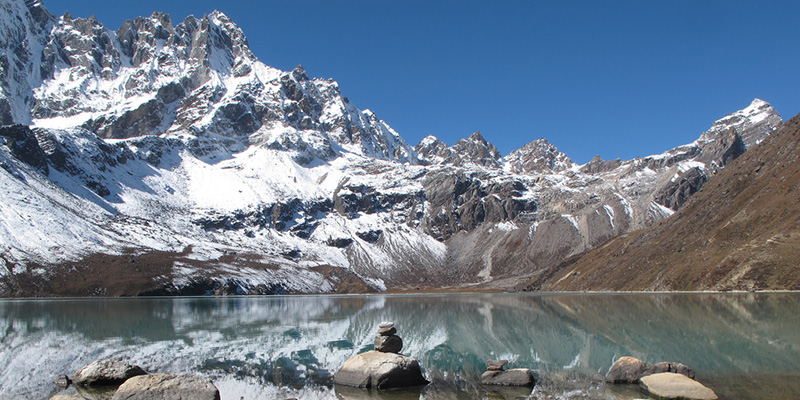
The Gokyo Lakes are the signature attraction and the ultimate destination during the Gokyo Cho La Pass trek via EBC. The lakes are situated at an altitude ranging from 4,700 to 5,000 m (15,400 to 16,400 ft). These lakes form the highest freshwater lake system in the entire world. The lake is considered sacred for both Hindu and Buddhist communities. The crystal-clear water, along with the backdrop of some of the world's highest peaks, creates one of the most memorable scenes.

Mountains Seen During the Trek

Mountain Name

Altitude

Popular Facts

Places you can see from

Mount Everest

8848.86 m/29,032 ft

The world's highest mountain, located on the Nepal–Tibet border.

Namche Bazaar, Tengboche, Dingboche, Lobuche, Gorakshep, Everest Base Camp, Kala Patthar, Gokyo Ri

Lhotse

8,516 m / 27,940 ft

The world's fourth-highest mountain and connected to Everest by the South Col.

Tengboche, Dingboche, Lobuche, Gorakshep, Everest Base Camp, Kala Patthar, Gokyo Ri

Makalu

8,485 m / 27,838 ft

The world's fifth-highest mountain, known for its distinctive four-sided pyramid shape.

Gokyo Ri, Namche Bazaar and viewpoints around the upper Khumbu

Cho Oyu

8,188 m / 26,864 ft

The world's sixth-highest mountain, situated on the Nepal–Tibet border.

Gokyo, Gokyo Ri, Cho La Pass

Nuptse

7,855 m / 25,771 ft

A prominent peak near Everest, forming an impressive mountain wall above the Khumbu Glacier.

Dingboche, Lobuche, Gorakshep, Everest Base Camp, Kala Patthar

Pumori

7,161 m / 23,494 ft

A striking pyramid-shaped peak close to Everest Base Camp and one of the most recognizable mountains in the region.

Lobuche, Gorakshep, Everest Base Camp, Kala Patthar

Ama Dablam

6,812 m / 22,349 ft

Famous for its elegant pyramid shape and hanging glacier, often regarded as one of Nepal's most beautiful peaks.

Namche Bazaar, Tengboche, Dingboche, Lobuche and viewpoints along the trail

Thamserku

6,623 m / 21,729 ft

A prominent peak of the Khumbu region with a distinctive double summit.

Namche Bazaar, Tengboche, Dole and the trail toward Gokyo

Kangtega

6,782 m / 22,251 ft

Also known as The Snow Saddle, this impressive mountain dominates parts of the Dudh Koshi Valley.

Namche Bazaar, Tengboche, Dole and the Gokyo trail

Cholatse

6,440 m / 21,129 ft

A dramatic, steep-sided peak rising above the Cho La region and often seen alongside Taboche.

Dingboche, Lobuche, Dzonglha, Cho La Pass and Gokyo region

Taboche

6,367 m / 20,889 ft

A striking mountain above the Imja Valley, recognizable for its steep western face.

Dingboche, Lobuche, Dzonglha and the trail toward Cho La

How does the Ebc Gokyo Chola Pass Trek start and end?

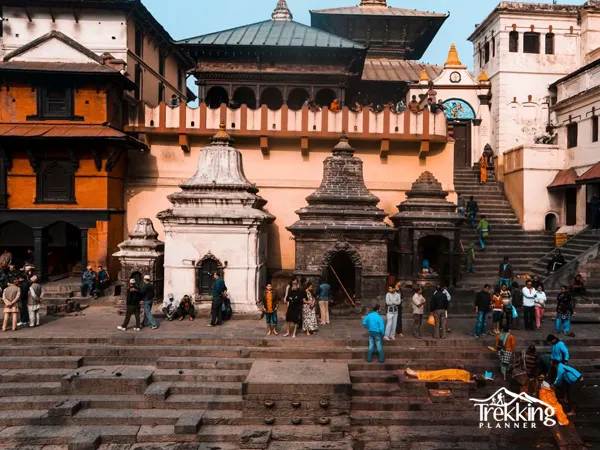
With your arrival at the Tribhuvan International Airport of Kathmandu, the Gokyo Cho La Pass Trek via EBC trek officially begins. The arrival day is divided into time for trek preparation, queries, and logistics. Then, on the following day, you will drive around the capital city visiting the UNESCO World Heritage Sites. Popular options include Swayambhunath Temple, Kathmandu Durbar Square, Pashupatinath Temple, and Boudhanath Stupa. The day is dedicated to exploring the beauty of Kathmandu city and visiting its popular landmarks.

Then, your trekking days officially begin with the flight from Kathmandu to Lukla, "gateway of Everest," followed by the trek to Phakding. So, after landing at Tenzing Hillary Airstrip in Lukla and walking the EBC trail, your first mountain overnight stay will be in Phakding. From Phakding, you will move on to Namche Bazaar, which is undoubtedly the largest settlement in the Khumbu region. Irish pubs, monasteries, Saturday markets, luxury lodges, ATMs, and bakeries fill Namche.

Also, you will spend an additional day in Namche for acclimatization. During the acclimatization day, you will hike up to the Everest View Hotel for a panoramic mountain view and adjust to the low oxygen levels. After quality time in the Everest View Hotel, you will return to Namche for an overnight stay. Then, early in the morning, you will move on the route to Tengboche, where you will visit the famous Tengboche Monastery. The monastery is also recognized as the oldest in the region, and it is where Mani Rimdu, the biggest festival of the Sherpas, is celebrated.

From Tengboche, the Gokyo Cho La Pass Trek via EBC heads on to Dingboche. You will spend another day acclimatizing in Dingboche, then hike to the Nangkarkhatsang viewpoint. Moving forward, you will spend the night in Lobuche. An early morning walk leads you to Gorakshep, which is the last settlement before reaching Everest Base Camp. Reaching Everest Base Camp is a remarkable achievement, marking the first of the three destinations. After exploring EBC, you will return to Gorakhshep, and the following day you will trek to Kala Patthar for a sunrise view and begin the descent to Dzonglha.

After Dzongla, you will cross the second landmark, Cho La Pass (5,420 m), and reach Thangan. Then, you will trek to Gokyo. You will spend an additional day in Gokyo to take in its natural beauty. On this day, you will witness the oligotrophic lakes and hike to Gokyo Ri for marvelous mountain views. Then, in the coming days, you will descend to Dole, Namche, and Lukla. From Lukla, you will fly back to Kathmandu, which officially ends your Gokyo Cho La Pass Trek with Nepal Trekking Planner. The company will arrange your airport transport on the day of your departure.

Gokyo Cho La Pass Trek – 19 Days via EBC Itinerary

Gokyo Cho La Pass trekking via EBC—19 Days has a standard daily itinerary to ensure a safe and enjoyable trekking experience. However, the length of the trek can vary depending on trekkers' physical fitness, acclimatization needs, and pace.

Similarly, some designated overnight stops can change depending on the availability of rooms, lodge facilities, and local conditions. The itinerary may need to be adjusted in case of unforeseen circumstances such as weather changes, landslides, flight delays, or difficult trail conditions. In such events, the trek leader and head guide, acting on behalf of Trekking Planner Nepal, will have full authority to make decisions in the group's best interests.

Likewise, due to the possibility of flight delays or changes in the Lukla flight, especially during the peak season or in case of poor weather conditions, we strongly recommend trekkers to arrive in Kathmandu at least one or two days before the beginning of the trek. The buffer time will allow for better adjustment and flexibility, ensuring a timely Lukla flight and helping trekkers settle before the adventure begins.

Day 1

Arrival in Kathmandu (1,350m/4,430ft)

Max Altitude: 1,350m (4,429ft)
Meals: welcome Dinner
Accommodation: Hotel Lo Mustang,/Hotel Thamel Park/Hotel Moonlight

You’ll be received at the Tribhuwan International Airport in Kathmandu by a representative of Nepal Trekking Planner and escorted to the hotel for your stay after you shall complete the necessary formalities at customs. Dinner and enjoy the warm hospitality of the hotel staff. Stay overnight in Kathmandu.

Day 2

Full day in Kathmandu

Max Altitude: 1,350m (4,429ft)
Meals: Breakfast
Accommodation: Hotel Lo Mustang,/Hotel Thamel Park/Hotel Moonlight

The major sights to visit today in Kathmandu are; 

  • Pashupatinath Temple
  • Boudhanath Stupa
  • Swayambhunath Temple
  • Explore the historic Durbar Squares of Kathmandu

The exploration of this culturally rich capital city of Nepal and its heritage in guided sightseeing shall be the main attraction of today’s itinerary. The star attractions of this sightseeing are the ancient Buddhist stupa of Swayambhunath, also known as the Monkey Temple, known for its unique blend of Hinduism and Buddhism, besides the beautiful view of Kathmandu city from its premises. We then head on to the Boudhanath Stupa, one of the largest stupas in the world, which has the Tibetan community, Sherpas, and tourists circumambulating around it alike every day. Get immersed in the peaceful Buddhist mantras and observe the pilgrims paying their respect to Lord Buddha. We shall then visit the Hindu sacred pilgrimage of Pashupatinath Temple, in the complex of which you shall find several small temples, statues, and ancient heritages. People find the meaning of life when they observe the open cremation at the bank of the holy Bagmati River, get blessings from the sadhus draped in saffron and holding tridents, and feel positivity

Briefing: Later in the afternoon, the whole group is briefed about the trek. We are checking all the equipment for the trek. If something is not appropriate enough, we can provide, rent, or help to buy it here.

Once all the equipment is checked and we are sure you will go up there well dressed, we will have the welcome dinner with the whole group.

Day 3

Flight to Lukla (2,860m/9,383ft) 35m and trek to Phakding (2,610m/8,563ft) 3-4 hrs walk

Max Altitude: 2,780m (9,120ft)
Meals: Breakfast + Lunch + Dinner
Accommodation: See You Lodge

Today an early morning transfer to the airport for 35min short but scenic flight to the Himalayan foothills where we begin our trek into the Everest region. The view from the plane is amazing, providing dramatic views of terraced hills and the distant Himalayan giants. After landing at Lukla airport, we walk 3 hours to Phakding with a few up and down along the Dudh Koshi River. Stay overnight at the tea house.

Day 4

Trek to Namche Bazaar (3,440m/11,286ft) 5-6 hrs walk

Max Altitude: 3,440m (11,286ft)
Meals: Breakfast + Lunch + Dinner
Accommodation: Hotel Himalayan Culture Home/Moonlight Lodge

Today after breakfast, we continue trekking along the banks of the Dudh Kosi River, crossing this majestic river many times on exciting suspension bridges laden with prayer flags. After entering Sagarmatha National Park, from larja Dobhan the trail climbs steeply with breathtaking views to Namche Bazaar, the gateway to the Everest region. Stay over night at the tea house.
Included standard accommodation and  meals (Breakfast + Lunch + Dinner), Tea/Coffee

Day 5

Rest day at Namche Bazaar

Max Altitude: 3,440m (11,286ft)
Meals: Breakfast + Lunch + Dinner
Accommodation: Hotel Himalayan Culture Home/Moonlight Lodge

Today is a rest and acclimatization day in Namche Bazaar. Namche is a colorful village with many wonderful and interesting shops and vendors, fabulous food, and stunning views of the surrounding mountains. An early hike above a town, before the clouds move in, reward trekkers with a spectacular Himalayan sunrise and views of Mt. Everest, Lhotse, the beautiful Ama Dablam and many more. On the way down, we can visit the Sherpa Museum that houses an exhibit on traditional Sherpa lifestyle and a fabulous photography display by a local Nepalese naturalist. Stay overnight at the tea house.
Included standard accommodation and  meals (Breakfast + Lunch + Dinner), Tea/Coffee

Day 6

Trek to Tengboche (3,860m/12,664ft) 4-5 hrs walk

Max Altitude: 3,860m (12,664ft)
Meals: Breakfast + Lunch + Dinner
Accommodation: Tengboche Guest House/Hotel Himalayan Culture Home

The trek continues along the rushing glacial waters of the Dudh Kosi with magnificent views of the mountains. We spend the night next to the Tengbuche monastery, the spiritual center of the Khumbu region. Inside the monastery are incredibly ornate wall hangings, a 20-foot sculpture of Buddha, and the musical instruments and robes of the Lamas. With luck, our group will see the Lama perform a ceremony and hear the mystical chanting and music. Stay overnight at the tea house.

Day 7

Trek to Dingboche (4,350m/14,272ft) 4-5 hrs walk

Max Altitude: 4,350m (14,271ft)
Meals: Breakfast + Lunch + Dinner
Accommodation: Dingboche Resort

Today after wonder morning in the Tengbuche, from Thyangboche, the trail drops to Debuche, crosses another exciting suspension bridge on the Imja Khola through the rhododendron forest and climbs to Pangboche among thousands of mani stones. Our uphill trek continues, taking us to the quaint traditional Sherpa village of Dingbuche with its exciting views of Lhotse, Island Peak, and Ama Dablam. Stay overnight at the tea house.
Included standard accommodation and  meals (Breakfast + Lunch + Dinner), Tea/Coffee

Day 8

Rest day Dingboche

Max Altitude: 4,348m (14,265ft)
Meals: Breakfast + Lunch + Dinner
Accommodation: Dingboche Resort

Today we take another rest and acclimatization day. There is the option of taking a light hike up the valley for a wider variety of photos of the valley and mountains of the Khumbu region.
Included standard accommodation and  meals (Breakfast + Lunch + Dinner), Tea/Coffee

Day 9

Trek to Lobuche (4,940m/16,210ft) 4-5 hrs walk

Max Altitude: 4,910m (16,108ft)
Meals: Breakfast + Lunch + Dinner
Accommodation: Oxygen Altitude Home

From Dingboche, the trail diverts towards the north, and the path is gradual up for about 40 -50 minutes as you come to a mani-prayer Stupa, from here the trail begins gently, with a nice view of Pheriche village.  Today's walk offers a beautiful view of Mt.Tawache, Ama Dablam, and north Pokalde, and many more mountains. Thugla is the only place with teahouses before Loboche. From Thugla, an hour steep up brings you to the top, where you can view Mt.Pumori and other peaks west of Everest, the spot here is a good place for a few minute's break after the strenuous climb, close to this spot you can also see a number of memorial of the unfortunate climbers, who died in expeditions around the mountain of this region. Finally, reach Lobuche overnight.

Day 10

Trek to Gorakshep(5,164m/16,860ft) 3-4 hrs walk and Everest Base Camp (5,364m/17,598ft) 2-3 hrs walk

Max Altitude: 5,364m (17,598ft)
Meals: Breakfast + Lunch + Dinner
Accommodation: Hotel Everest Inn

After an early morning start, we ascend through the glacier to the Gorek Shep. After meals with some time rest trek to Everest Base Camp which is located at the foot of the Khumbu Icefall. Back to Gorakshep and say overnight at the tea house.

Day 11

Trek to Kala Pattar (5,545m/18,192ft) 2-3 hrs walk and to Dzonglha (4,130m/13,550ft) 4-5 hrs walk

Max Altitude: 5,545m (18,192ft)
Meals: Breakfast + Lunch + Dinner
Accommodation: Guest House/Lodge

Today early morning your guide will take you to Kala Pattar, the best viewpoint of this trip from where you will be able to see dramatic panoramic views of Mt Everest, Pumori, Nuptse, Ama Dablam, and many more mountains. Re-trace back to Lobuche then take the gradual trek to Dzonglha which takes about 3 hrs. Stay overnight at the tea house.

Day 12

Trek to Thangan (4,700 m/15,420 ft) 6-7 hrs walk via Chola pass (5,420m/17,782ft)

Max Altitude: 5,420m (17,782ft)
Meals: Breakfast + Lunch + Dinner
Accommodation: Guest House/Lodge

Today an early morning after breakfast you will start your trek with slow uphill until the Pass from where you will see a magnificent view of the different mountain. This will be the difficult morning in this trek, goes through the glacier and rocky trail. After the Pass, the trail descends all the way to Thangan. There is no tea house, noting available between Thangan and Dzonglha so that we must have to bring pack lunch. Stay overnight at the tea house.

Day 13

Trek to Gokyo (4,750m/15,584ft) 4-5 hrs walk

Max Altitude: 4,750m (15,583ft)
Meals: Breakfast + Lunch + Dinner
Accommodation: Gokyo Namaste Lodge And Restaurant

Today after breakfast, the trek star with a few up and down, crosses the Ngozumpa glacier. After some time walk, you will get to the other side of the Glacier then the trail goes along the second lake with a nice view of the Mountain. Stay overnight at the tea house.

Day 14

Full day in Gokyo

Max Altitude: 4,750m (15,583ft)
Meals: Breakfast + Lunch + Dinner
Accommodation: Gokyo Namaste Lodge And Restaurant

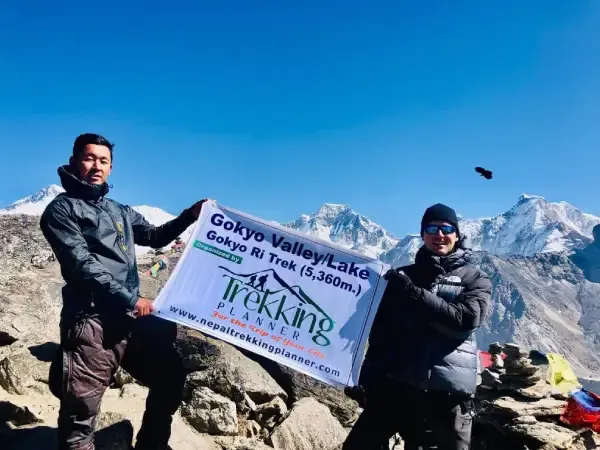
Today an early morning your guide will take you to the Gokyo Ri (5463m) for a sunrise view. From here you will have the chance to full part of Mt Everest and Cho-yu and lake in the valley and the biggest glacier of the named Na-Jumpa glacier. Back to hotel for breakfast and after breakfast in the afternoon you will have a chance to explore up to the fifth lake passing another fourth lake and enjoy the view. Stay overnight at the tea house.

Day 15

Trek to Dole (4,200m/13,780ft) 4-5 hrs walk

Max Altitude: 4,200m (13,779ft)
Meals: Breakfast + Lunch + Dinner
Accommodation: Yeti Inn

After a wonderful time in the Cho La pass and Gokyo, the trail descends all the way to Dole via Machhermo. Today's walk offers you a wonderful view of the mountain. Stay overnight at the tea house.

Day 16

Trek to Namche (3,440m/11,286ft) 4-5 hrs walk

Max Altitude: 3,440m (11,286ft)
Meals: Breakfast + Lunch + Dinner
Accommodation: Hotel Himalayan Culture Home/Moonlight Lodge

Today after breakfast the trailing star with big descent till Phortse Tanga then ascends to the Mongla dada from where the trail goes slows down all the way to Namche. Stay overnight at the tea house.

Day 17

Trek to Lukla (2,860m/9,383ft) 5-6 hrs walk

Max Altitude: 2,828m (9,278ft)
Meals: Breakfast + Lunch + Dinner
Accommodation: Hikers Inn/Everest Plaza Lodge/Sonam Lodge

Today after breakfast you will re-trace back to Lukla with a few up and down. Stay overnight at the tea house.

Day 18

Fly back to Kathmandu-(1,350m/4,430ft)-Hotel

Max Altitude: 1,350m (4,429ft)
Meals: Breakfast
Accommodation: Hotel Lo Mustang,/Hotel Thamel Park/Hotel Moonlight

Today the early morning your guide will take you to the airport for a short but scenic flight back to Kathmandu. Upon arrival, you will be picked up and transferred to the hotel by our airport representative. Stay overnight at the hotel.

Day 19

Final departure

Max Altitude: 1,354m (4,442ft)
Meals: Breakfast

Transfer to the international airport for the next destination flight. According to your flight time, we will pick you up from the hotel and transfer you to the airport for farewell. 
 

Still Confused?
No worries — team is ready to guide you everystep of the way.

Dates & Availability

Trip Duration
19 Days
Trip Starts & Ends Point
Kathmandu / Kathmandu
Plan your schedule
Select Departure Dates
Aug 2026
Sep 2026
Oct 2026
Nov 2026
Dec 2026
Jan 2027
Feb 2027
Mar 2027
Apr 2027
May 2027
Start Date
23 Aug, 2026
End Date
10 Sep, 2026
Guaranteed
Price
US$1599US$1799
Start Date
30 Aug, 2026
End Date
17 Sep, 2026
Guaranteed
Price
US$1599US$1799
  • Gokyo Cho La Pass Trekking via EBC-19 Days departs every day of the year.
  • This trip is fully customizable. We can customize the trip as per your need, please get in touch with us.
  • This trip is available on a Fixed Departure and a Private Group Basis.
  • We also provide only guide and porter service 
  • This trip can be booked privately if you travel solo, privately, or with family. if you want to do solo, privately, or with family, you can choose your suitable dates. 
  • Have a big group? We can help as per your needs.
  • We can help you make it fit your budget.
  • We accept instant booking and online payment.
  • If the given date is not appropriate for you, please get in touch with US
  • Trekking Planner also organizes various trips in small groups that can suit you. We recommend you reserve a seat by booking with us immediately for a wonderful experience (Call/email now for a private trip, [email protected], Mobile +977 98510 71767 (24 hrs) - WhatsApp, WeChat, and Viber)

Gokyo Cho La Pass Trek – 19 Days via EBC Cost Details

Trip Includes

  •  All airport pick-up drops are by private vehicle (for both international and domestic flights).
  •  Welcome and farewell dinner in an authentic restaurant.
  •  3-night twin/double sharing deluxe accommodation with breakfast at a 3-star hotel in Kathmandu.
  •  Guided sightseeing tours in Kathmandu with private vehicles (Entrance fees extra)
  •  Kathmandu/Ramechhap to Lukla back Kathmandu/Ramechhap flight with airport departure tax.
  •  National Park entrance fee and Trekkers’ Information Management System( TIMS card).
  •  A highly experienced, helpful, knowledgeable, friendly, English-speaking, well-trained, Government license holding guide. Price includes his salary, food, drinks, accommodation, transport, and insurance.
  •  1 porter for 2 guests with their insurance, salary, food, accommodation, and equipment.
  •  We provide an assistant to guide his salary, food, drinks, accommodation, transport, and insurance walking with the group to support where necessary as per the group size.
  •  Twin/Double sharing lodge accommodation in the mountain during the trekking.
  •  Three meals a day; Breakfast, Lunch, and Dinner and tea/coffee during the trekking.
  •  safe drinking water.       
  •  First aid kit box.
  •  Trekking Planner Nepal’s sleeping bag, down jackets, T-shirt, cap, duffle bags, city and trekking route maps – if necessary.
  •  Arrangement of emergency evacuation service (should have insurance for emergency evacuation and will be paid by your travel insurance company).
  •  Oximeter to check your pulse, oxygen saturation, and heart rate twice daily during the trek (very useful to identify Altitude Mountain Sickness(AMS) symptoms). This helps ensure your trek is in the safest hands possible.
  •  All applicable government and local taxes are as per the itinerary.

Trip Excludes

  •  Your Nepal Visa fees.
  •  All the International airfare to and from Kathmandu.
  •  Lunch and dinner in Kathmandu.
  •  Meals during the traveling time.
  •  Personal travel and health insurance as well as insurance for helicopter evacuation.
  •  In case of extra nights’ accommodation, lunch, and dinner in the city due to early arrival and late departure as well as early back/return from mountain/trekking (due to any reason) than the given time period of the itinerary. We can help you arrange an extra night's accommodation.
  •  Your personal expenses such as (laundry, baggage charge, phone calls, battery recharge, bar and beverage bill, boiled or bottled water, hot and cold shower, extra porter.. etc).
  •  The tips to the trekking crews and drivers.
  •  Extra expenses due to flight delays, strikes, weather conditions, or any event out of our control.

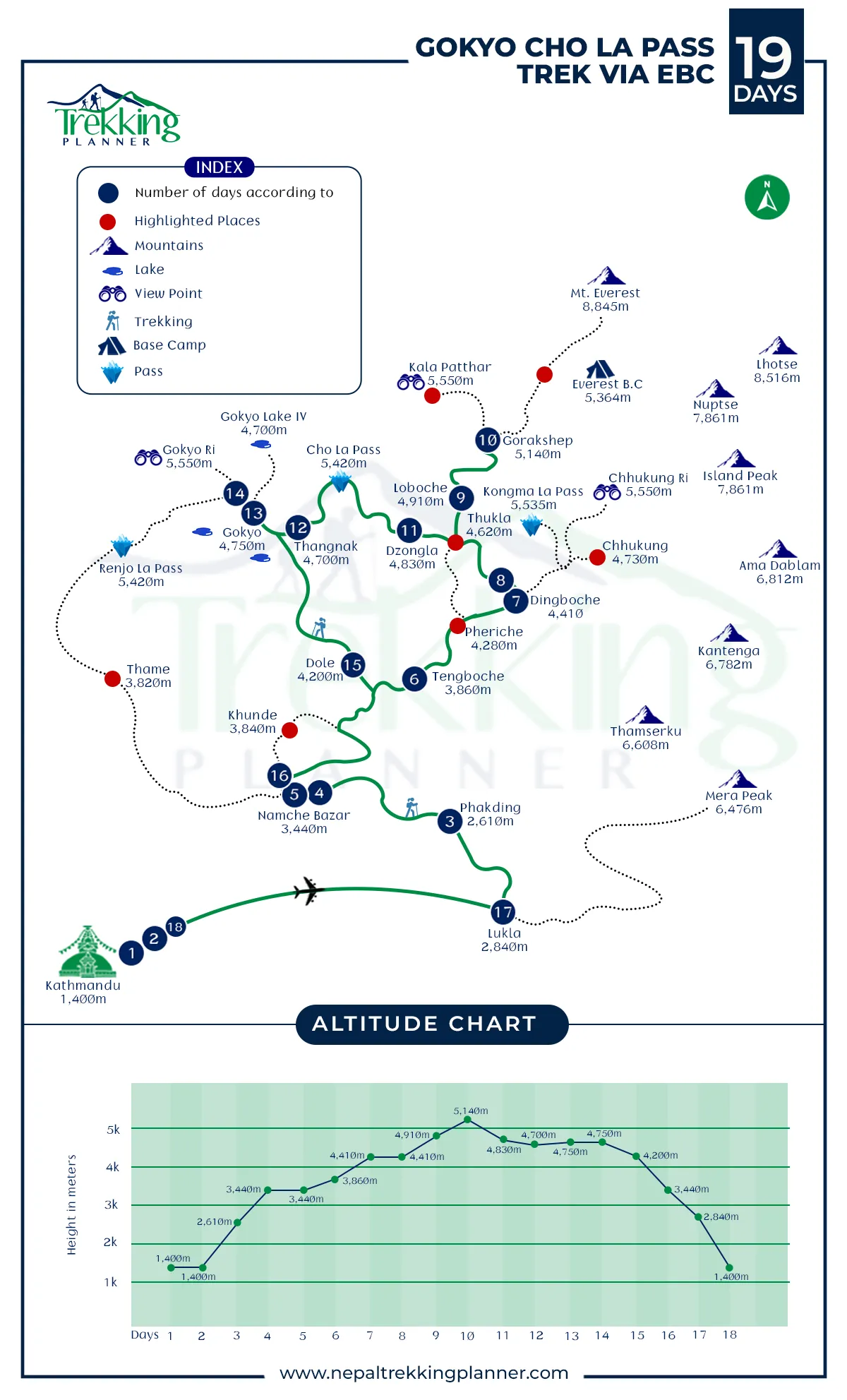
Interactive Map

StartMid DaysEnd

Infographic Map

Download

Essential Information

Gokyo Cho La Pass Trek difficulty level

The Gokyo Trek via EBC is generally considered challenging for several reasons.

The trek is definitely more challenging than the Classic Everest Base Camp Trek, as it combines Everest Base Camp with the challenging Cho La Pass at 5,420 m/17,782 ft and the Gokyo Valley. The trek itinerary involves continuous walking of about 5 to 8 hours per day for 19 days through challenging Himalayan terrain, landscapes, and high-altitude sections.

Altitude is one of the major factors that make this trek challenging. The trek easily reaches an altitude above 5000 m (16,404 ft). The most significant high-altitude destinations during the trek are the Everest Base Camp at 5,364 m/17,598 ft, Kalapatthar at 5,545 m/18,192 ft, and the Cho La Pass at 5,420 m/17,782 ft. At these high altitudes, the atmosphere contains significantly less oxygen than at sea level. Hence, walking along these high-altitude trails becomes more strenuous and physically exhausting. Also, the risk of altitude sickness increases significantly at these altitudes.

Crossing the Cho La Pass is considered the most challenging section of the Gokyo Cho La Pass Trek via EBC. This section involves a steep, physically demanding climb over rocky, uneven terrain. The trail may even be covered with snow or ice, depending on the season. Add to that freezing temperatures, strong winds, and changing weather conditions, and this section demands a lot from trekkers.

Despite its challenging stature, the Gokyo Cho La Pass Trek via EBC does not require advanced, technical mountaineering or climbing skills. With proper physical preparation, mental determination, a well-designed itinerary, and guidance from experienced guides, even novices can successfully conquer this challenging trek. Although challenging, completing the Gokyo Cho La Pass Trek via EBC is absolutely worth it.
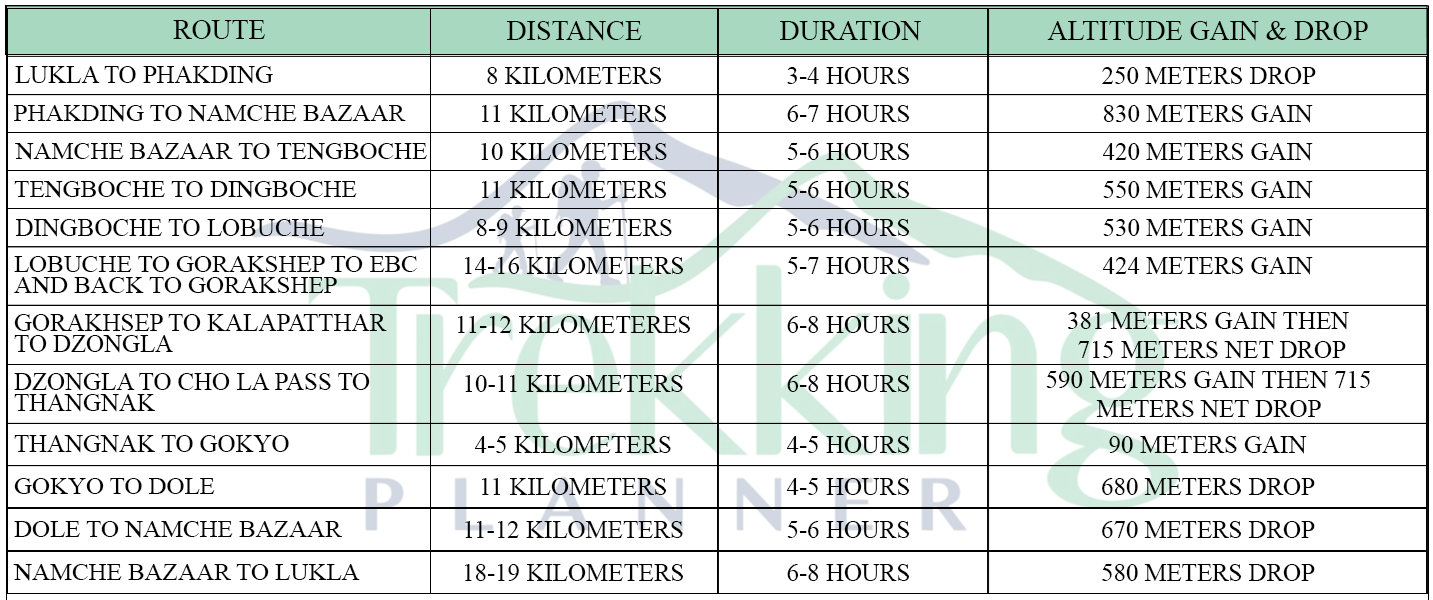
gokyo cho La pass altitude chart

What is the best time for Gokyo Cho La Pass Trek?

The Gokyo Cho La Pass trek via EBC can be done year-round. However, certain time frames or seasons offer the best trekking experience. The spring season (March to May) and the autumn season (September to November) are by far the best times to undertake the Gokyo Cho La Pass trek for several reasons. These factors include stable weather, crystal clear views of the surrounding peaks and landscapes, and comfortable temperatures for trekking. Here's a brief description of the different seasons for the Gokyo Cho La Pass Trekking:

1. Spring

Spring in Nepal lasts from March to May. It is one of the most popular seasons for the Gokyo Cho La Pass trek due to its clear, stable weather, greenery, blooming rhododendrons, and excellent visibility. All these factors blend in quite well and make spring an ideal time for the Gokyo Cho La Pass trek. The average daytime temperature at lower elevations such as Lukla and Namche Bazaar ranges from 10 to 18℃ (50 to 64℉). At higher elevations, including the Gokyo Valley and Cho La Pass, the average daytime temperature drops to around -5 to 10℃ (23 to 50℉). At night, the temperature can drop as low as -10℃ (50℉) at these higher elevations.

2. Autumn

The autumn season, which lasts from September to November in Nepal, is widely regarded as the best time for the Gokyo Cho La Pass trek. Autumn arrives after the monsoon season ends. Hence, after a rainy monsoon, the weather remains clear, the atmosphere feels fresh, and visibility is excellent, allowing crystal clear views of the surrounding landscapes. In addition, Nepal's major festivals, including Dashain and Tihar, fall in autumn, allowing trekkers to immerse themselves in the cultural festivities alongside their trekking adventure. The average daytime temperature at lower elevations ranges from 10 to 20℃ (50 to 68℉). Similarly, at higher elevations, the average daytime temperature ranges from 5 to 12℃ (41 to 53℉). At night, the average temperature drops to between -5 and -10℃  (23 to 14℉).

3. Off-season Trekking

Summer/Monsoon, from June to August, and Winter, from December to February, are considered off-seasons for the Gokyo Cho La Pass trek. During the monsoon, many sections of the trekking trail receive frequent rainfall, making it muddy and slippery. Monsoon season also increases the chances of flight cancellations and other delays due to unforeseen circumstances. However, the monsoon season can be the best choice for trekkers seeking a peaceful trekking experience, as the trails are much quieter and accommodations are generally unoccupied, which can reduce the overall cost of the trek.

On the other hand, winter brings harsh, colder weather, heavy snowfall at higher elevations, and other challenges. The average daytime temperature at lower elevations ranges from -5 to 5℃ (23 to 41℉). At night, the average can drop down as low as -10℃ (14℉). Similarly, the average daytime temperature at higher elevations, including the Gokyo Lake and Cho La Pass, fluctuates from -5 to -20℃ (23 to -4℉). At night, the temperature can drop significantly, down to -25℃ (-13℉).  But, similar to monsoon, trekkers who prefer quieter trails and a peaceful trekking experience and don't mind the challenging weather can always do the Gokyo Cho La Pass trek in winter. Accommodation and other logistics can also be cheaper, making the overall trek less costly than during peak seasons

Permits for the Everest and Gokyo Region?

The Gokyo Cho La Pass trek takes place within the Khumbu region of Nepal. The trekking route passes through Sagarmatha National Park, a protected area, and the Khumbu rural municipality. To enter the protected regions and complete the entire trek, trekkers require two different legal permits. Here's a brief breakdown of the permits required for the successful completion of the Gokyo Cho La Pass trek:

1. Khumbu Pasang Lhamu Rural Municipality Permit

The Khumbu Pasang Lhamu Rural Municipality Permit can be purchased directly at Lukla Airport on arrival or at the checkpoint in Monjo. This mandatory permit is required to enter the Khumbu region, and its revenue supports local communities, infrastructure, and trail maintenance. The current permit fees are:

  • SAARC countries and China NRs: 2000 per person (approx USD 13)
  • Other Countries: NRs: 3000 per person (approx USD 20)

2. Sagarmatha National Park Entry Permit

The Gokyo Cho La Pass trekking route passes through the Sagarmatha National Park, a UNESCO World Heritage Site and a restricted conservation area. Hence, every trekker must mandatorily obtain the Sagarmatha National Park Entry Permit to enter this restricted region. The permit helps conserve the fragile ecosystem and wildlife of the Everest region. The entry fees are as follows:

  • For foreigners: NPR 3,000 per person (approx USD 20)
  • For SAARC nationals: NPR 1,500 per person (approx USD 10)
  • For Nepalese: NPR 100 per person

Trekking Planner Nepal Pvt. Ltd. assists trekkers with all necessary permit arrangements and paperwork for the Gokyo Cho La Pass trek, preventing unnecessary hassle. 

 Kathmandu to Lukla Flight Information

The Gokyo Cho La Pass trek commences with a short flight to Lukla. Lukla is regarded as the gateway to the Everest region. The flight lasts about 30-40 minutes and is renowned worldwide as one of the most thrilling and scenic flights. The flight glides through beautiful green hills and landscapes before arriving at the Tenzing-Hillary Airport in Lukla.

1. Kathmandu to Lukla

Under normal circumstances, the flights to Lukla depart from the Tribhuvan International Airport in Kathmandu. Trekkers are strongly advised to arrive at the domestic terminal at least 2 hours before their flight. This prevents any last-minute rush and leaves ample time to complete baggage check-in and other security procedures. The flight lands at the Tenzing- Hillary Airport in Lukla. It is also widely known as Lukla Airport.

Situated among beautiful snow-capped peaks and landscapes, the Lukla airport is one of the highest civilian airports in the world, situated at an altitude of 2,846 meters (9,337 ft). This flight is also widely regarded as one of the most thrilling in the world due to the airport's location and its significantly short runway, 527 meters (1,729 ft) long.

Lukla flights operate on small aircraft. Hence, the baggage/luggage capacity in these flights is very limited. Each passenger is generally allowed 10 kg (22 lbs) of checked baggage and 5 kg (11 lbs) of hand-carry baggage. If the luggage weight exceeds the allowed limit, extra charges may apply.

Lukla flights are highly dependent on weather conditions. They are prone to frequent disruptions due to Lukla Airport's location. Also, during the peak trekking seasons of March to May and September to November, there may be disturbances due to heavy air traffic. Therefore, trekkers are strongly advised to include one or two spare days in their travel schedule, or else they will have to fly from Manthali Airport in Ramechhap.

2. Manthali to Lukla flight 

During peak seasons, most flights to Lukla are also operated from Manthali Airport in Ramechhap rather than Tribhuvan International Airport in Kathmandu. This is regarded as one of the best alternative approaches for trekkers flying to Lukla. The journey begins with an approximately 4-hour early-morning drive from Kathmandu to Ramechhap. Then, from Manthali Airport, the flight to Lukla takes around 20 minutes.

The cost of the domestic flight from Kathmandu to Lukla (or Manthali Airport to Lukla during peak season), along with the return flight after completing the trek, is included in the 19-day Gokyo Cho La Pass trekking package with Trekking Planner Nepal Pvt. Ltd.

3. Alternative option: Helicopter flight to Lukla

Trekkers seeking a more luxurious, hassle-free travel option can take a helicopter flight directly to Lukla. The helicopters flying from Kathmandu to Lukla can typically accommodate up to 5 passengers. If cost isn't a problem for trekkers, helicopter flights can offer greater flexibility in timing and comfort.

Having said that, helicopter flights are more expensive than the regular domestic flights to Lukla. So, helicopter flights are generally recommended to those who are seeking additional luxury or comfortable travel. With helicopter flight, trekkers do not need to worry about the airport and domestic flight hassles. It is the best choice for flexible travel or private group travel. Trekkers interested in this option can customize their package with Trekking Planner Nepal Pvt. Ltd. by upgrading to a helicopter flight.

Accommodation During the Gokyo Trek 

Accommodation is one of the key logistical aspects during the Gokyo Cho La Pass Trek via EBC. A comfortable accommodation facility is really important for trekkers to get good sleep and proper rest/recovery from the physical exertion of the day's trek, and to be mentally rejuvenated for the next day's trek.

During the start and end of the trek, trekkers will stay in comfortable, standard 3- or 4-star hotels with modern facilities in Kathmandu. When the trek starts in Lukla, there is a wide variety of accommodation options along the route.  The Gokyo Cho La Pass trekking route offers a range of accommodation options, from basic tea houses to more comfortable mountain lodges. Here's a breakdown of the accommodation options available during the Gokyo Cho La Pass trek: 

1. Tea houses

Tea houses are the most primary and common accommodation option available during the Gokyo Cho La Pass trek. Tea houses are available in almost all the settlements and overnight stops during the trek. These facilities are mostly family-run or locally operated. They provide only the most basic, essential facilities and amenities for trekkers during the Gokyo Cho La Pass trek. Tea houses generally offer twin-sharing rooms with beds, mattresses, pillows, and blankets, allowing trekkers to rest and recover comfortably after a long day of walking.

2. Guest houses

Guest houses are another popular accommodation option during the Gokyo Cho La Pass trek. Guest houses are available particularly in the popular settlements such as Lukla, Phakding, Namche Bazaar, and even up to Dingboche. Guest houses are more comfortable than traditional tea houses. They may offer additional amenities such as hot showers, Wi-Fi, and more. Also, tea houses are more expensive than other options due to their additional comfort and facilities.

3. Comfort Lodges

Comfort lodges are the best accommodation option available during the Gokyo Cho La Pass trek. These lodges can provide the highest-quality facilities available in the Everest region. These lodges are the best choice for trekkers seeking a high level of comfort. Some core comfort features these comfort lodges can provide include well-furnished rooms, attached bathrooms, comfortable beds, 24/7 electricity, hot showers, and high-speed, reliable Wi-Fi. These comfort lodges are available only at lower altitudes and in popular commercial settlements such as Lukla, Phakding, and Namche Bazaar. Also, comfort lodges are significantly more expensive than any other accommodation options.

4. Camping

Another possible accommodation option during the Gokyo Cho La Pass trek is camping. Camping is not a regular, standard accommodation option. Hence, camping requires detailed planning, preparation, and advance arrangement of resources such as tents, sleeping equipment, and food supplies. Camping can be the best choice for trekkers seeking a thrilling, adventurous experience of the Gokyo Cho La Pass trek. Hence, it is best suited for experienced trekkers rather than novices.

Food and Beverage Option During the Trek

Food is one of the most important aspects to monitor during the Gokyo Cho La Pass trek. The trek involves walking for multiple hours a day for several days on challenging, high-altitude trails. Hence, consuming quality food in the right quantities, with proper nutrition, is very important for trekkers to maintain energy levels throughout the trekking period. The accommodation facilities along the Gokyo Cho La Pass trekking route offer a wide variety of food and beverage options for trekkers. Although the food options can vary slightly from one location to another (especially as trekkers ascend to higher elevations), they can generally find a mix of traditional Nepali and popular international dishes throughout the journey. Here is a summary of the wide range of food and beverages available in the accommodation options during the Gokyo Cho La Pass trek via EBC:

  1. Breakfast: Bread, toast with jam or honey, eggs, pancakes, porridge, oatmeal, chapati, potatoes.
  2. Lunch and Dinner: Dal Bhat, Veg Fried Rice, Egg Fried Rice, Rice Pudding, Momo, Noodles, Pasta, Macaroni, Spaghetti, Pizza, Sandwiches, Potatoes, Fried Chips, Sherpa Stew, Burgers, Spring Rolls, Yak Steak, Thukpa, and others.
  3. Desserts: Apple pie with custard, Fried Mars Bars, Chocolate Pudding, Rice Pudding, Apple Filter, German Bakery Products, and Fried Snicker rolls.
  4. Beverages: Sherpa Tea, Masala Tea, Lemon Tea, Ginger Tea, Hot Lemon with Honey, Hot Chocolate, Coffee, and more.

Toilet and Washing Facilities 

The toilet and washing facilities during the Gokyo Cho La Pass trek via EBC can vary from one location to another, depending on altitude and remoteness. In lower-altitude settlements, such as Lukla, Phakding, and Namche Bazaar, toilet and washing facilities are more comfortable, whereas as the trek ascends towards higher altitudes such as Lobuche, Gorak Shep, and Gokyo, these facilities become less comfortable. The facilities are more basic. Here are some general aspects to consider related to the toilet and washing facilities during the Gokyo Cho La Pass trek via EBC:

1. Bathroom and hot shower facilities:

In lower-altitude settlements, including Lukla, Phakding, Namche Bazaar, etc., many accommodation facilities offer western-style flush toilets. Hot shower facilities are also commonly available in these locations, but generally at an additional cost. Some accommodation facilities may also offer attached bathroom facilities. Hence, trekkers generally have a comfortable experience with bathroom and hot shower needs at these lower-altitude settlements.

However, as the trek progresses, trekkers ascend to higher-altitude settlements, including Lobuche, Gorakshep, Dzongla, and Gokyo. At these locations, the facilities become very basic. Most of the accommodation facilities offer traditional squat toilets. The availability of hot showers also cannot be guaranteed at these high altitudes and relatively remote locations. Even if available, the additional cost can be much higher than the lower sections of the trekking route. Bathrooms are usually shared and located outside the room.

2. Washing Facilities

The accommodation facilities throughout the Gokyo Cho La pass provide basic washing facilities. At lower sections of the trek, running water is commonly available along with a wash basin. Hot water may also be available for an additional cost.

As the trek progresses towards higher altitudes, the temperature becomes significantly colder. Therefore, the availability of running water and hot water may become extremely limited. Even if these amenities are available, the cost can be relatively higher. Hence, trekkers generally prefer to maintain simple, essential hygiene with the resources available in these high-altitude settlements.

Therefore, carrying personal care and hygiene products such as wet wipes, hand sanitizer, soap, and a small towel as per the individual needs and comfort of trekkers is highly recommended during the Gokyo Cho La Pass trek.

Paying for toilets and washing facilities

The Gokyo Cho La Pass trek via EBC passes through some remote settlements where transporting and shipping basic resources is extremely difficult and expensive. Hence, trekkers may need to pay for certain facilities and amenities, such as hot water, hot showers, or even running water, at higher altitudes. These costs can range from $3 to $6. These costs help cover the cost of heating/ transporting water and other facilities in the remote settlements along the Gokyo Cho La Pass Trekking route.

Carrying Toilet Paper and Personal Hygiene Items

Trekkers are highly advised to carry their own tissues/toilet paper along with other personal hygiene products. The toilet, washing, and shower facilities cannot always be relied on during the Gokyo Cho La Pass trekking route (especially at higher altitudes) due to various unforeseen circumstances and the remoteness of some high-altitude settlements.

Personal care and hygiene items such as wet wipes, hand sanitizers, soap, toothbrush, toothpaste, and a personal towel can come in very handy during the trek. Also, since running water cannot be guaranteed at high elevations due to freezing temperatures, hand sanitizers and wet wipes in particular can be very useful for trekkers.

Trekking Planner Nepal Pvt. Ltd. recommends that trekkers prepare for basic facilities and amenities during the Gokyo Cho La Pass trek and adjust their expectations accordingly. The facilities will not be the same in these remote trails and settlements as those in urban cities. However, with proper preparation and a small personal hygiene kit, trekkers of different ages and experience levels can comfortably manage the toilets, bathrooms, and washing facilities as needed throughout their Gokyo Cho La Pass Trekking journey.

Internet and Communication Facility

Internet and communication facilities are mostly available throughout the Gokyo Lake Trek route. However, the speed, quality, and reliability of the internet and mobile networks can differ significantly based on a location's altitude and remoteness; in lower-altitude settlements such as Lukla, Phakding, Monjo, Namche Bazaar, etc. Better internet, communication, and service facilities are available. As trekkers gradually ascend towards higher-altitude settlements such as Dzongla, Lobuche, Gorakshep, and Gokyo, these facilities become unreliable and, in some cases, unavailable.

Trekking Planner Nepal Pvt. Ltd. provides its trekkers with free Nepalese SIM cards (NCELL). Still, additional charges are generally applied for data packages. Trekkers can use the SIM card for general calls and messaging, and also to access mobile internet in the regions where the network is available. However, mobile data is unreliable, especially at high altitudes and in remote sections during the Gokyo Cho La pass trek.

T-Mobile data and network coverage are generally available and relatively good in the lower sections of the trek.  Namche Bazaar, the most significant commercial settlement in the Khumbu region, generally offers the best communication facilities. But as trekkers ascend towards the higher sections of the trek, mobile data and network coverage gradually become weaker, unreliable, and sometimes unavailable.

Wi-Fi is typically available in most accommodations throughout the Gokyo Cho La pass trekking route. However, additional charges may apply for Wi-Fi. As with mobile data and network coverage, Wi-Fi is generally reliable in the lower-altitude sections of the trek, sufficient for messaging, sending photographs, checking weather conditions, etc. As the trek progresses and trekkers reach high-altitude sections, Wi-Fi speed can be very slow, unreliable, or simply unavailable due to weather, remoteness, or other unforeseen circumstances.

Phone and Gadget Charging on the EBC Trek

Phone and Gadget charging is one of the most important amenities during the Gokyo Cho La Pass trek. Trekkers require reliable phone and gadget charging facilities to charge their essential electronic devices, including mobile phones, cameras, smartwatches, power banks, and more. These devices are essential for trekkers to connect with their loved ones back home, capture memorable moments during the trek, check the weather conditions, and even navigate routes.

During the Gokyo Cho La Pass trek, charging facilities for gadgets are available at most accommodations along the route. But these facilities cannot always be guaranteed in high-altitude sections and remote settlements during the trek. Phone and gadget charging usually requires additional costs.  The extra cost for charging is typically around NPR 100-500 per device or per hour. Charging facilities are generally located in common dining areas, and there may be long queues.

Charging sockets are mostly compatible with the European-style plugs. However, the exact type can vary from one tea house to another. Therefore, carrying a universal travel adapter is highly recommended for better access. For a budget-friendly and convenient trekking experience, trekkers are highly advised to carry a reliable power bank with a capacity of around 10,000-20,000 mAh. Similarly, using power-saving mode, reducing screen brightness, and turning off unnecessary applications can help preserve the battery life of electronic devices.

Culture and Tradition of Everest Region

One of the major highlights of the Gokyo Cho La Pass Trek via EBC is the local ethnicity, culture, and traditions of the Khumbu region. The Khumbu region is home to the Sherpa people, who are well-renowned for their trekking and mountaineering culture. Moreover, these people provide warm hospitality, followed by a unique traditional and cultural heritage. The Gokyo Cho La Pass trek can immerse one in Tibetan Buddhist traditions, culture, and customs.

1. Sherpa Culture

The Sherpa people are the dominant ethnic community in the Khumbu region. The word "Sherpa" comes from the Tibetan language. "Sher" comes from the Tibetan word "Shar," which means "east," and "Pa" means "people." The Sherpa community traditionally follows Tibetan Buddhism. Their culture, customs, daily rituals, arts and architecture, festivals, etc., are deeply influenced by Buddhist beliefs. Traditional stone houses, prayer flags, mani walls, prayer wheels, and monasteries reflect the traditional and cultural heritage of the Sherpa community. 

2. Tibetan Buddhism and Spiritual Traditions

The communities residing in the Khumbu region prominently follow the Tibetan Buddhist traditions and customs. Traditional and cultural symbols such as ancient monasteries, chortens, mani walls, and prayer wheels can be found throughout the trek. The Tengboche Monastery is one such significant monastery along the Gokyo Cho La Pass trekking route. It is the grandest and most significant monastery in the Khumbu region. The monastery is a cultural center for Buddhist preachings and religious practices. Trekkers can also witness monks performing prayers and rituals, particularly during important religious occasions. When walking around religious monuments or spinning prayer wheels, trekkers are encouraged to do so clockwise as a sign of respect for local customs.

3. Festivals and Celebrations

Mani Rimdu, the largest Sherpa festival, is celebrated at Tengboche Monastery. The festival includes Buddhist prayers, religious ceremonies, traditional masked dances, and cultural performances. If you are traveling during the festival (October), you can experience it. Another important festival celebrated by the Sherpa community in the Everest region is Lhosar, the Tibetan New Year. Prayers, family gatherings, celebrations, and religious customs & rituals mark this festival. These festivals offer trekkers a deeper insight into the traditional, cultural, and spiritual beliefs of the people who have lived in the Khumbu region for many generations.

4. Traditional Lifestyle and Hospitality 

Due to the challenging geographical environment, life on Everest is traditional. With no modern infrastructure, such as transport, the people of Everest have preserved the area for centuries. Local communities have adapted to harsh climatic conditions, especially in high-altitude landscapes. Traditional farming, animal husbandry, trade, tourism, and mountaineering are the major occupations. The hospitality of the local people is another important angle in the traditions and culture of the Everest region. Tea houses, lodges, and guesthouses are often operated by local families, which allows trekkers to interact with the local community and directly experience the warmth and friendliness of the people of the Khumbu region.

Altitude Sickness and Acclimatization

The Gokyo Valley Trek Nepal takes trekkers to significantly higher altitudes than sea level and to places they've never experienced before. These high altitudes include the Everest Base Camp at 5,464 m/17,600 ft, Kalapatthar at 5,545 m/18,193 ft, and Cho La Pass at 5,420 m/17,782 ft. At these high altitudes, the atmospheric air contains significantly lower oxygen levels than at lower altitudes or at sea level. Hence, due to lower oxygen levels, trekkers can experience several symptoms together, known as altitude sickness or Acute Mountain Sickness (AMS).

Altitude Sickness can affect any trekker, regardless of age, fitness level, or medical history. Our Gokyo Cho Lass trekking package itinerary includes gradual ascent and acclimatization stops at Namche Bazaar and Dingboche, which help the body adapt to reduced oxygen levels at high altitudes. Nevertheless, trekkers should understand the signs, symptoms, causes, complications, and prevention methods of altitude sickness before beginning their trek.

Sign and Symptoms

The symptoms of Altitude Sickness may include:

  1. Headache
  2. Nausea
  3. Vomiting
  4. Fatigue / unusual tiredness
  5. Dizziness or lightheadedness
  6. Loss of appetite
  7. Difficulty sleeping
  8. Shortness of breath during exertion
  9. General weakness or lethargy

Trekkers must immediately inform their guides if they experience any of the above symptoms, particularly if they don't improve with rest. Ignoring the worsening symptoms and continuing to ascend can lead to more serious complications. 

Causes 

  • Some factors that are responsible for causing altitude sickness in trekkers include:
  • Ascending too quickly without allowing the body sufficient time for acclimatization
  • Sleeping at a significantly higher altitude too rapidly
  • Dehydration or insufficient fluid intake
  • Excessive exertion on the body without adequate rest
  • Alcohol consumption or smoking at high elevations
  • A personal history of altitude sickness
  • Ignoring early symptoms and continuing to ascend

Note: Physical fitness does not make a person completely safe from altitude sickness. Even experienced and physically fit trekkers can develop AMS, which is why gradual acclimatization and careful monitoring are essential throughout the Gokyo Cho La Pass trek. 

Complication

Mild altitude sickness symptoms often improve with proper rest and acclimatization. However, mild altitude sickness can often lead to serious complications if trekkers ignore the symptoms and continue ascending to higher elevations. The two main complications of Acute Mountain Sickness (AMS) are:

High-Altitude Pulmonary Edema (HAPE): HAPE is a serious form of altitude sickness in which fluid accumulates in the lungs. Warning signs may include severe and persistent cough, chest tightness, extreme weakness, and difficulty breathing even while resting. Immediate descent and emergency medical attention are essential. 

High-Altitude Cerebral Edema (HACE): HACE is a life-threatening condition of altitude sickness in which fluid causes the affected person's brain to swell. Symptoms may include severe confusion, brain fog, unusual behavior, loss of coordination, extreme drowsiness, and loss of consciousness. Immediate descent and emergency medical treatment are required.

If a trekker develops these complications of altitude sickness, continuing to ascend is dangerous. Our experienced guides will assess the situation and take the necessary safety measures, which may include rest, descent, medical assistance, or emergency evacuation when required. 

Prevention

Important preventive measures to mitigate the risks of altitude sickness include:

  • Follow the itinerary's gradual ascent and acclimatization schedule.
  • Walk at a slow and steady pace, especially at higher elevations.
  • Do not ignore primary symptoms of altitude sickness.
  • Stay properly hydrated by drinking water regularly throughout the day.
  • Eat regular, nutritious meals to maintain energy during the trek.
  • Avoid alcohol and smoking at high altitudes.
  • Get adequate rest and sleep whenever possible.
  • Inform your guide immediately if you experience any symptoms of altitude sickness.
  • Follow the advice of your experienced trekking guide and medical professionals.

With proper preparation, a steady pace, responsible acclimatization, and close communication with guides, most trekkers can safely enjoy the Gokyo Cho La pass trekking journey.

How to Prepare for the Cho La Pass Trek

The Gokyo Cho La Pass is a fairly demanding high altitude trek that requires good physical and mental preparation, proper gear and equipment, and proper guidance. The journey involves trekking through challenging high-altitude trails for several hours a day for 19 days. Here are some preparation tips:

1. Physical Fitness and Training

  • Focus on cardiovascular exercises like running, jogging, walking, hiking, or stair climbing.
  • Carry at least 8 kg in your backpack to simulate the weight of your backpack while hiking or climbing stairs.
  • Begin your physical fitness training at least a month before your trekking days.
  • Omit heavy lifting and focus on core and leg exercises.
  • Prepare mentally for long walking hours, basic teahouse accommodation, and a remote setting.

2. Altitude Acclimatization Practice

  • Choose the best itinerary based on your physical fitness and include proper acclimatization days, especially at Namche and Gokyo.
  • Follow the "climb high, sleep low" principle on rest days, such as hiking to Everest View Hotel from Namche or to Gokyo Ri from Gokyo.
  • Stay hydrated while drinking at least 3-4 liters of water per day during the hike.
  • Avoid drinking alcohol, smoking, and excessive caffeine during your hike.
  • Carry a pulse oximeter (included in your guide's first aid kit) to monitor early symptoms of Acute Mountain Sickness.
  • Get a medical check-up before departure.
  • Purchase travel insurance that covers high-altitude trekking and helicopter evacuation.

3. Choose the right time

  • Choose the best time to go for the Gokyo Cho La Pass Trekking.
  • Avoid off-seasons like winter and the monsoon, when the trekking trail can be dangerous.
  • Consult trekking agencies like Nepal Trekking Planner to pinpoint the best date for the trek.

4. Essential Gear

  • Bring the necessary gear for the trek. Pack light and prepare a gear checklist to avoid confusion.
  • Rent bulky items like sleeping bags, down jackets, and trekking poles in Kathmandu or Namche.
  • Remember to bring crampons, which are needed during your Cho La Pass crossing.
  • Ask your guide to check your equipment before the trek to ensure you have everything required.
  • Some essential items include layer cloths, sleeping bags, trekking poles, crampons, a daypack, a headlamp, and water tablets.

5. Permits, Guides and Logistics

  • Re-check all the necessary permits and documents required for the trek.
  • Hire a licensed guide specifically for Cho La Pass; their local knowledge is very valuable.
  • Hire a porter to keep your load light.
  • Consider including buffer days in your itinerary, especially for the weather-dependent Lukla flight.
  • Carry small denominations of Nepalese rupees, and ATMs are limited beyond Namche.

6. Tips for Female Trekkers

  • Prepare for irregular or unexpected periods at high altitudes.
  • Bring extra menstrual cups, tampons, or pads along with disposal bags and intimate wipes.
  • Carry period supplies in your daypack instead of using the porter bag.
  • For better management and less waste, consider using a menstrual cup.
  • Although not mandatory, for usage on the route and at night, bring a female urination device (such as Shewee).
  • Always keep your own hand sanitizer, wet wipes, and toilet paper on hand.
  • For quicker and cleaner trail restroom stops, use a pee towel.
  • For brief showers, bring deodorant wipes, dry shampoo, body wipes, and facial wipes.
  • Bring non-cotton underpants and sports bras that dry quickly.
  • As soon as you arrive, change into dry lodge attire.
  • Apply moisturizer, SPF lip balm, and high-SPF sunscreen every day.
  • Hire a trustworthy guide, especially if you're traveling alone (a female guide option is available).
  • Train with cardio and pack-weighted walks weeks in advance.
  • Discuss altitude medication with your doctor.
  • Stay well hydrated and follow the standard acclimatization itinerary.

Travel Insurance and Emergency Evacuation

Trekking Planner Nepal Pvt. Ltd. strongly recommends that every traveler purchase comprehensive travel insurance to cover them against unexpected circumstances during the Gokyo Ri EBC trek. During the trek, trekkers traverse remote Himalayan trails and difficult terrain, reaching high-altitude destinations including the Everest Base Camp at 5,364 meters (17,598 ft), Kalapatthar at 5,545 meters (18,192 ft), and Cho La Pass at 5,420 meters (17,782 ft). Although the trek's itinerary is carefully designed, unforeseen circumstances due to health issues, weather, or other reasons cannot be ignored.

Trekkers are strongly advised to purchase comprehensive travel insurance from a reputable insurance company. It's important that trekkers thoroughly review the policy to understand what is included and excluded in the insurance, and compare policies to find the best one. For the Gokyo Cho La pass trekking, trekkers should ensure that their travel insurance includes coverage for the following:

1. Trip cancellations and interruptions: unexpected factors (especially weather conditions) or personal emergencies may cause flight delays or even trip cancellations during the Gokyo Cho La Pass trek. Hence, trekkers must purchase an insurance policy that covers trip cancellations or interruptions.

2. Medical coverage: The Gokyo Cho La pass trek easily reaches elevations above 5000 meters. At these elevations, trekkers are highly vulnerable to medical emergencies, including altitude sickness (AMS). Therefore, the insurance policy trekkers purchase must cover them in the event of medical emergencies or evacuations during the trek.

3. Loss of Baggage: Theft and robbery are quite rare in Nepal. Still, baggage/luggage can be misplaced or damaged during international and domestic travel. Therefore, trekkers should choose a policy that covers loss, theft, or damage to baggage and other essential items. 

4. Emergency assistance: The insurance policy trekkers purchase must cover emergency assistance 24/7.  It should cover medical emergencies, evacuation, travel interruption, or other unexpected circumstances during the journey. 

5. Pre-existing Medical Conditions: Trekkers must ensure that the insurance policy covers their pre-existing conditions.

Trekkers should analyze the insurance policy carefully and understand its coverage, exclusions, claim procedures, and costs before the Gokyo Cho La Pass trek. It is highly advisable to compare insurance policies from different providers and choose the one that covers all the above-mentioned circumstances.

Responsible Trek in Everest Region 

Responsible trekking is an ethical approach to trekking that protects and preserves the natural and cultural heritage, as well as the fragile environmental ecosystem, of the Khumbu region during the Gokyo Cho La Pass trek. The trek passes through Sagarmatha National Park, a UNESCO World Heritage Site and a protected region.

Also, the Khumbu region is home to the Sherpa Community and other minor indigenous communities. Hence, every activity during this trek requires visitors to exercise care and respect so that these attractions are not exploited. By following responsible trekking guidelines, trekkers can contribute to sustainable tourism and help protect the environment in and around these Himalayan trails for future generations.  

What to Do During the Gokyo Cho La Pass Trek?

  • Respect local traditions and customs (especially when visiting religious sites such as monasteries, chortens, and prayer walls) by dressing modestly and asking permission before photographing.
  • Walk clockwise around stupas, mani walls, and prayer wheels as a sign of respect and understanding towards Buddhist culture.
  • Carry a reusable water bottle to reduce plastic waste.
  • Dispose of waste responsibly or carry it with you until you find a designated waste disposal center.
  • Stay on the marked trekking trails to protect the fragile vegetation and prevent soil or vegetation erosion.
  • Support local communities by staying in local tea houses/lodges and purchasing locally produced food products and handicrafts whenever possible.

What Not to Do During the Gokyo Cho La Pass Trek? 

  • Do not litter or leave any waste along the trail during the trek, including plastic food wrappers, plastic bottles, or cigarette butts, etc.
  • Do not disturb the wildlife, damage plants or natural vegetation, or get involved in any sort of activities that hamper the natural ecosystem in the Sagarmatha National Park.
  • Avoid disturbing or making excessive noise, especially in and around monasteries, local settlements, and wildlife habitats.
  • Avoid wearing excessively revealing clothes, especially in and around religious and cultural sites. It may not entertain the religious and cultural sentiments of the local people.
  • Never leave the marked trail or attempt to walk through difficult sections in unsafe conditions without your guide's advice.
  • Avoid using single-use plastics whenever possible and help keep the Himalayas clean for future generations.

Who Is This Trek Suitable For?

Beginners with a good level of physical fitness, strong determination, and those willing to listen to advice and suggestions from experienced guides and tour operators can definitely complete the Gokyo Lake trek via EBC. However, the Gokyo Cho La Pass trek is still considered challenging rather than beginner-friendly.

The trek involves walking an average of 5 to 8 hours per day for several days along difficult terrains with a mix of rocky, snowy, and icy conditions. Also, the trek reaches altitudes above 5,000 meters, including Everest Base Camp at 5,464 m/17,600 ft, Kalapatthar at 5,545 m/18,193 ft, and Cho La Pass at 5,420 m/17,782 ft. At higher altitudes than sea level, the risk of altitude sickness/Acute Mountain Sickness (AMS) increases significantly.

Although previous trekking experience is not necessarily required, beginner trekkers are highly recommended to start preparing a few weeks before the trek. Trekkers can get involved in physical activities such as hiking, jogging, stair climbing, cycling, and strength training to improve their cardiovascular and muscular fitness. Also, the trek itinerary is perfectly designed with a slow, gradual ascent, along with acclimatization days in Namche Bazaar and Dingboche to help trekkers adapt to the altitude gain.

Therefore, with proper preparation, determination, a positive attitude, guidance from experienced trekkers, and a carefully designed itinerary, many beginner trekkers have completed the Gokyo Cho La Pass trek.

Why Choose Trekking Planner Nepal Pvt. Ltd for this package?

  • With years of experience and enhancements to our operations, we have a proven track record in trekking operations.
  • Our trekking packages are operated in small groups; hence, trekkers get personalized care and service at all times.
  • Our team of professional, licensed guides possesses remarkable trekking knowledge, providing trekkers with excellent guidance, safety support, and personalized care.
  • We arrange delicious, nutritious meals throughout our treks to meet trekkers' nutritional needs and provide the best-quality gear and equipment.
  • Our on-field team, along with local guidance, assists with every minute activity and planning during the trek. 
  • At every stage of our trek, from itinerary planning to on-field protocols and emergency support, we prioritize your safety and comfort above all else.
  • Our representatives and consultants are there at your service 24/7. You get quick response and practical assistance from our team regardless of the complexity of the situation.
  • We run our tours across a wide range of destinations, offering customized or personalized itineraries for our clients. 
  • We genuinely and ethically follow responsible, sustainable trekking practices and protocols to preserve natural trails and cultural heritage for future generations in the destinations where we run our tours.
  • Returning travelers receive a special 10% discount along with their family members (spouse and children).
  • We give it our all to accommodate any last-minute bookings and manage travel arrangements and logistics for our clients' desired dates.
  • Our team always remains on standby on the ground to assist you in any unforeseen circumstances.
  • Our trek & tour packages can accommodate a range of budgets. From affordable group departures to private & customized tours, we can handle it all.

Conclusion

The 19-day Gokyo Cho La Pass trek is a remarkable trekking experience through the remote Himalayan trails of the Khumbu region in eastern Nepal. Starting with a scenic flight to Lukla, passing through vibrant settlements of the Khumbu region, and feeling the spiritual energy through ancient monasteries and Buddhist traditions. Then, standing at the base of the world's highest peak, passing the challenging Cho La Pass, and ultimately witnessing the beautiful turquoise Gokyo Lakes, every day of this journey offers an unforgettable experience for the trekkers.

At Trekking Planner Nepal Pvt. Ltd., we are dedicated to making your trekking journey safe, comfortable, and truly memorable. Our professional team of experienced guides, porters, and office coordinators, combined with carefully designed itineraries and quality services, strives to ensure you have the best possible experience throughout your journey.

If you are ready and willing to witness and explore the beautiful Gokyo Valley and Gokyo Lakes, passing through Everest Base Camp (EBC) and the challenging Cho La Pass, join us on the Gokyo Cho La Pass trek via EBC. Contact Trekking Planner Nepal Pvt. Ltd. today and start planning your journey to the Everest Base Camp.

Gokyo Cho La Pass Trek – 19 Days via EBC Equipments

If you are preparing for a high-altitude Himalayan adventure in Nepal, there is always some confusion about what to pack. It is essential to carry the right gear and equipment for a comfortable, safe, and enjoyable experience. All trekkers should properly pack and carry all the essential items. 

However, overpacking is another common mistake that can make the journey tiring. So here is a carefully crafted packing list that includes everything you need. From general items, cloth layers, headgear, footwear, to accessories and first aid, the list consists of light and smart packing items for every challenging mountain condition.

Note: You do not need to bring all the items mentioned below to Nepal. There are several trekking shops in Kathmandu or Pokhara where you can buy or rent high-quality gear at a reasonable price. So, feel free to pack light and purchase or rent any missing items after your arrival in Nepal. Also, members from Trekking Planner Nepal Pvt. Ltd. can also guide and assist you to find the best deals in gear and equipment in Thamel, Kathmandu.

What Does the Company Provide?

  • We give you a free duffel bag (must return), buffs, trekking cap, trekking map, and t-shirt during your pre-trip meeting in Kathmandu. The duffel bag will be used to pack your trekking supplies.
  • For every two participants, we assign one porter. The porter will carry the duffel bag, which should weigh around 10 kg/22 lbs., throughout the walk.
  • We can provide a down jacket for USD 35. In case of loss or damage, you need to pay back the cost of USD 100 per item.
  • We can provide a sleeping bag for USD 35. In case of loss or damage, USD 100 per item must be paid.
  • You can safely store your extra luggage (items not required on the trek) at the hotel in Kathmandu. Our team can happily assist and help.
  • Total luggage for the Kathmandu-Lukla flight is (15 kg/33 lbs.), including duffel (10 Kg/22 lbs.) and backpack (5 kg/11 lbs.).
  • We provide a free Nepal SIM card (Ncell) to all our trekkers during the pre-trip briefing in Kathmandu. Data packages can be purchased at an additional cost.
Upper Body Layers

  • Technical fabric base layer thermals are light for warmer months, heavy for colder months
  • Technical fabric t-shirts and sleeve sweaters or high-necks
  • Fleece jacket or down jacket
  • Windproof jacket for the walk as it gets windy
  • Waterproof rain jacket
  • Sports bras (women)
Lower Body Layers

  • Thermals inner
  • Hiking pants at least 3
  • Comfortable pants for teahouses
  • Waterproof, windproof shell pants
  • Hiking shorts
  • Technical fabric/quick drying undergarments (can be washed during the trek)
  • Sleeping clothes as per the comfortability
Footwear & Accessories

  • Marino Wool or warm socks
  • Hiking socks
  • Liner socks
  • Trekking/hiking boots (waterproof recommended)
  • Crampons (for mountain passes)
  • Casual shoes or sandals that are comfortable for the time in the tea house
  • Gaiters (lightweight for rain and snow)
  • Woolen gloves for the tea house
  • Hard-shell windproof outer gloves for the walk
  • Trekking poles
Head & Sun Protection

  • Sun hat or cap (We'll provide you with a trekking cap)
  • Warm woolen hat or beanie
  • Scarf/Neck Buff (highly recommended to get saved from wind and cold)
  • Polarized sunglasses
  • Headlamp or mobile torch light for nighttime
  • Sunscreen SPF- 50+
  • Lip balm or Vaseline
  • Ointment cream
Personal & Medical Kits
  • Sunscreen SPF- 50+
  • Lip balm or Vaseline
  • Ointment cream
  • Cough Syrup and strepsils (recommended for Khumbu Cough)
  • Creams and medicines for any allergies or personal conditions
  • Small towel
  • Toilet paper, small soap, and shampoo
  • Anti-Diarrhoea, Painkillers, Blister Plasters, and Anti-Inglammatories

(Note: Our guides carry medications, oxygen cans, and first aid kits during the trip. However, personal kits and medications are recommended.)

Travel Documents

  • Passport
  • Extra copies of passport-sized photos
  • Waterproof/ziplock bags for documents and valuables
Miscellaneous

  • Reusable water bottle
  • Water bladder for daypack
  • Water purification tablets or UV purifier
  • High-protein snacks (energy bars, nuts)
  • Power bank or extra batteries
  • Universal Plug Adaptar
  • Charging Cables
  • Travel lock
  • Camera and mobile phone
  • Pillowcase (in case of allergies)
  • Sleeping clothes
  • Cards / Book
  • Thermos for hot water at night

What Makes Trekking Planner Different?

Deep Dikshya Foundation

In the Himalayan nation of Nepal filled with eight out of the fourteen world’s highest mountains lies a chance of adventure that creates unforgettable memories. With all those memories and [...]

Explore More
Sustainable Toursim
Sustainable Toursim

Trek Responsibly. Leave a Positive Impact. At Trekking Planner Nepal Pvt. Ltd., sustainable tourism in Nepal is not just [...]

Explore More
Responsible Tourism
Responsible Tourism

Responsible tourism is not just a concept, it is the guiding philosophy of Trekking Planner Nepal. As a pure Nepalese-owned trekking company with over 20 years of experience, we believe [...]

Explore More

Gokyo Cho La Pass Trek – 19 Days via EBC FAQs

general-infoGeneral
What are the average temperatures during the day and night along the Gokyo Cho La Pass trekking route?

The average temperature ranges from 0 to -15 degrees at night and during the daytime and can vary from 5 to -15 degrees as we reach higher up at Gokyo Valley.

Can I rent or buy trekking gear and equipment locally in Lukla or Namche Bazaar?

Buying or renting trekking gear and equipment are available at Lukla and Namche Bazar but are a bit expensive, so buying or renting trekking gear at Kathmandu is advised before starting the trek, consult with a Trekking Planner Nepal representative at Kathmandu, and we will help to purchase or renting the equipment.

What types of wildlife might I encounter along the trail?

Wildlife is very rarely encountered. The animals we see the most along the way are yak mules, horses, and Himalayan goats. Rare birds can be sighted during the trail.

What is the distance and average daily walking duration during the Gokyo Cho La Pass Trek?

The daily walking distance ranges from 5-6 hours per day, but the walking duration may vary according to the pace of the trekkers during the Gokyo Cho la Pass trek.

Itinerary and duration
Based on personal preferences, can I extend or shorten the Gokyo Cho la pass trek duration?

Yes, the trek can be extended and even shortened based on the personal preference of the trekkers traveling. Trekking Planner Nepal is open to customization of the trek.

Can this trek be done reverse, starting from Everest Base Camp and ending at Gokyo?

Yes, it is possible to do the trek in reverse, and it's much easier as we start from a high altitude from Lobuche for doing the Cho la pass and spending the night at high altitude at Gorakshep also helps acclamation.

Best Time To Trek
How do I navigate the Cho La Pass if weather conditions become challenging?

The guide will help with navigating as Trekking Planner Nepal only sends the most experienced guides for doing the passes as doing the passes is considered difficult and requires proper navigation skills.

Prepration and suitability
How should I manage my luggage and belongings during the Gokyo Cho La pass trek?

The luggage should be managed before the trekkers have to prepare a day bag to carry during the daytime. Trekking Planner Nepal will provide duffel bags designed for the porters to carry, and they can place all the trekking stuff and items required for the trek there and leave the rest of the things at Kathmandu.

What are the arrangements for garbage disposal or waste management along the Gokyo Cho La Pass trail?

There are dustbins and places to throw the waste along the Everest region's trekking route, and they are available at a gap of 1-2 hours along the trekking trail.

Food, Accomodation and Facilities
Are any particular dietary considerations or special foods available during the Gokyo Cho la Pass trek?

Trekking Planner Nepal usually advises smoking less, not drinking alcohol, and avoiding meat and bakery products during the trekking trail of Everest and the Gokyo Cho La Pass route.

Are ATMs or banking facilities available along the Gokyo Cho La Pass trek?

Yes, ATMs and banking facilities are available along the trek at Lukla and Namche, and there is an ATM at Dingboche. Still, there is no guarantee of whether the ATM at Dingboche would work, so the last point for good ATM facilities is at Namche.

What are the bathroom facilities like along the trekking route of the Gokyo Cho la Pass trek?

There are Western-style commodes, and the bathroom is on the same floor outside the room. The attached bathroom in the room is also available at an extra cost.

Note that the attached bathrooms are not available at Dzongla and Machhermo.

Health and Safety
Are any specific vaccinations or health precautions recommended for the Gokyo Cho la Pass trek?

No special vaccinations are required, and the health precaution we recommend for the Gokyo Cho La Pass trek is to stroll, drink 3 liters of water, have a good diet, and don't rush during the tour, and try to sleep for at least 6 hours per day and obey the instruction of the guide.

How do I prepare for the varying altitudes encountered during the Gokyo Cho La Pass trek?

Going for walks before the trek, preparing mentally, and listening to the guide's advice are crucial, and the most important factor before trekking to Gokyo Cho la Pass trek is that having prior trekking experience can help a lot.

Are there any age restrictions or limitations for the Gokyo Cho La Pass trek?

No, there are no age restrictions or limitations for the Gokyo Cho La Pass trek; however, senior citizens and juniors below eight must be given special care during the trek, especially during passes.

Guides & Porters
What are the expectations regarding tipping guides, porters, and tea house staff?

The expectation for guides and porters to tip at Everest region depends upon the happiness and satisfaction of the trekkers. Still, guides and porters would be experiencing tips after the completion of the trek.

Permits & Logistics
Can I arrange for a helicopter evacuation in case of emergencies at the Gokyo Cho La Pass trekking trail, and what are the procedures?

Trekking planner Nepal arranges helicopter evacuation procedures in case of emergencies at the trekking trail of Gokyo Cho La Pass Trek. The process is that either the client has to bear the cost of evacuation or the insurance company has to pay the cost of evacuation.

What are the options for transportation back to Kathmandu after completing the Gokyo Cho la pass trek?

The transportation option is to take a flight back from Lukla or trek from Lukla to Tham Danda and take a jeep from Tham Danda to Kathmandu after completing the trek in the Everest region.

What kind of permits do I need, and where can I obtain them for the Gokyo Cho la pass trek?

Sagarmatha National Park permit and Khumbu rural municipality are required for trekking to Everest and the Gokyo Cho la pass route.

Add on Trips
Are there any cultural events or festivals along the Gokyo Cho La Pass trekking route?

Yes, there are cultural events during spring and autumn, like Dashain tihar mani Rimdu Lhosar and other more local cultural events at the monasteries of the Everest region.

Is it possible to combine the Gokyo Cho La Pass Trek with other treks in the region?

Yes, it is entirely possible, and Trekking Planner Nepal welcomes the trekkers for customization of the trip as it provides us with a new way of working, so we are entirely open to including or combining other trekking routes like the Renjo la Kongma la or any other places our clients and trekkers wish for.

Featured Trip
11%
Off
Price Per Person
US$1599
US$1799
  • 1 paxUS$1699
  • 2 - 8 paxUS$1599
  • 7 - 11 paxUS$1550
  • 12 - 20 paxUS$1520
  • 21 - 30 paxUS$1490
Talk to an Expert
Dipak Lamichhane
Travel Consultant
Dipak Lamichhane
+977 9851071767

What Our Clients Say

guestguestguest
1112+ Happy Clients
Testimonials from Google, TripAdvisor, Trustpilot & more.
5 out 5 based on the opinion of 12 people reviews

Trip Everest Base Camp and Gokyo

We had a great time in the Everest region. Our guide Dipendra from Trekking planner helped us, motivated us and gave us information about the trip. When we had some problems with the cold or...

A
Allard K - Mexico
November 20, 2024

Excellent experience doing the Gokyo Ri trek with Trekking Planner

I had an excellent experience during my solo trek to Gokyo Ri in November. The itinerary set by Trekking Planner was perfect (an extra stop at Phorse Tenga, that most hikers skip, but is useful...

R
Raxit Kagalwala - United States
November 13, 2024

14days Trek in EBC + Gokyo

I have made a 14 days trek of EBC + Gokyo trail with Trekking Planner and their guide Sonam. Sonam is one of the most professional guide i ever seen! He is a good leader,...

p
perrowong - Mexico
November 11, 2024
5 out 5 based on the opinion of 2 people reviews

Amazing!

We had the most amazing time! Pasang and his team could not have been better and the trek was incredible. Stunning scenery and nice and quiet routes compared to EBC. Thanks Pasang, Rinji, and the...

A
Alexander A - United Kingdom
April 11, 2024

We had an excellent trekking.

We had an excellent trekking with Tendi Sherpa. We were in the Khumbu, from Lukla to Gokyo an EBC. Tendi was a very good guide, profesional and friendly, and we also had the help of...

Jesus Mari Romon
Jesus Mari Romon - Canada
January 18, 2024

You May Also Like

Helicopter landing at Lukla airport during a scenic flight from Kathmandu
Helicopter
Helicopter
Duration: 1 Days

Helicopter Ride From Kathmandu to Lukla

KathmanduKathmandu
Per Person
US$500US$599
Trip Details
Pilgrims and visitors at Pashupatinath Temple in Kathmandu Nepal
Duration: 1 Days
5.0 (2 Reviews)

Kathmandu City Day Tour - 1 Day

KathmanduKathmandu
Per Person
US$55US$65
Trip Details
Everest Base Camp Trek 14 days
Vehicle Services
Vehicle Services
Accommodation
Accommodation
Flight
Flight
Foods and drink
Foods and drink
Duration: 14 Days
5.0 (59 Reviews)

Everest Base Camp Trek - 14 Days

KathmanduKathmandu
Per Person
US$1399US$1599
Trip Details
Gokyo Valley Trekking - 15 Days
Duration: 15 Days
5.0 (9 Reviews)

Gokyo Valley Trekking - 15 Days

KathmanduKathmandu
Per Person
US$1399US$1499
Trip Details
Need Help? Call Us+977 9851071767